
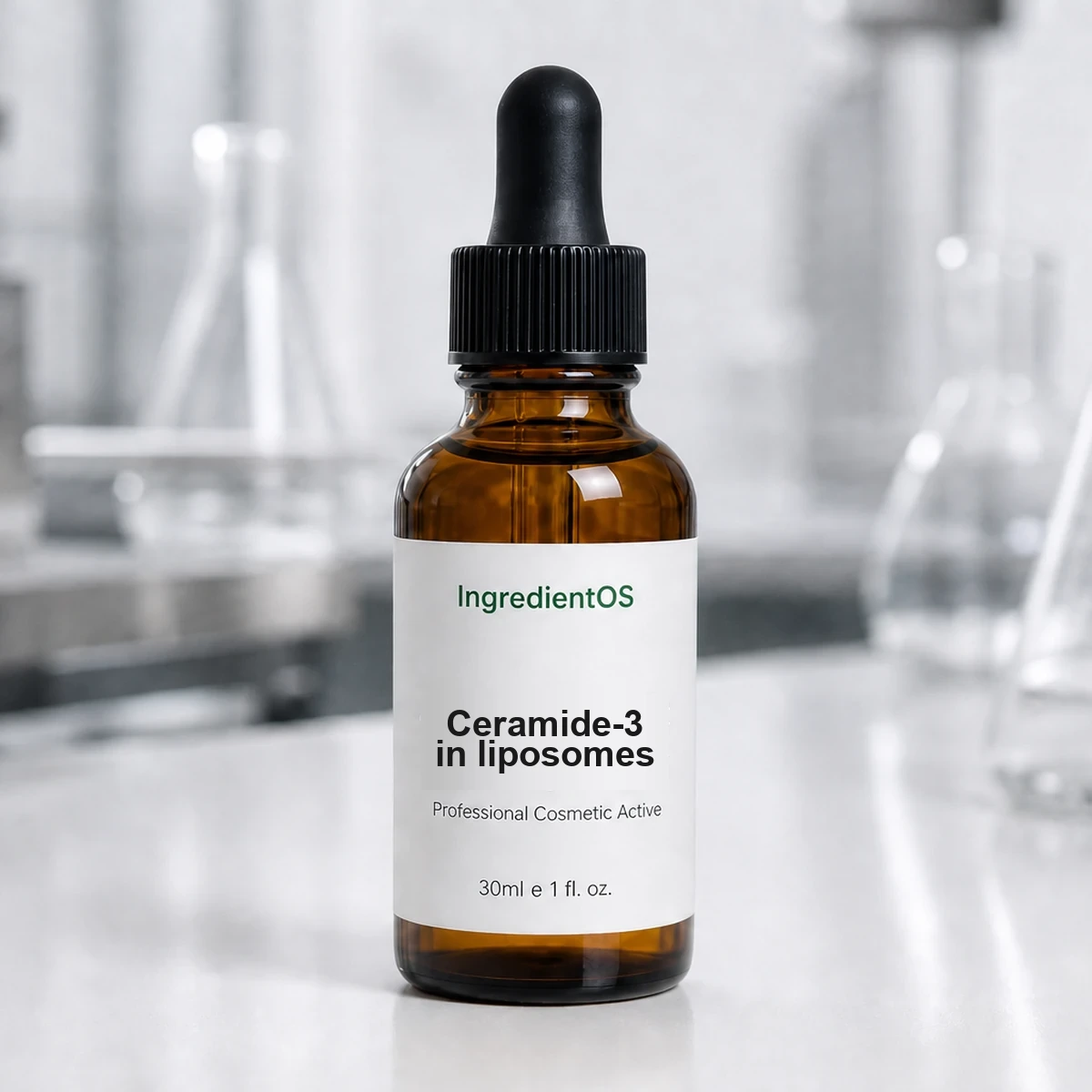
SKU: TM20051919
Ceramide-3 in liposomes
$15.99In stock
Usage Rate: Typical: use the supplied liquid active concentrate at supplier-recommended levels in leave-on formulas, delivering approximately 0.1–0.5% pure active in the finished product (1000–5000 ppm).
Packaging
Liquid sizes — 0.33 oz (10 mL) sample through bulk (US · metric)
Ships from FloridaSecure checkoutUsually ships in 1–2 business daysFree US shipping on $50+
AppearanceLiquid active concentrate
pHpH 6.0–7.0; 5.8–7.0
Description
Ceramide-3 in liposomes explained
Ceramide 3 is the older name of a skin lipid now usually called Ceramide NP. In pure form it is a waxy, high-melting solid that requires careful processing. In this product it is enclosed in liposomes, tiny vesicles made of phospholipids, which disperse in water. The result is a liquid concentrate that our product record lists as soluble in water and miscible with glycerin and propylene glycol. The exact INCI, ceramide content and phospholipid source are printed on the CoA for each lot.
Properties
Liposomal ceramides combine two benefits: the lipid itself, associated with a smooth, comfortable, well-moisturized look, and the phospholipid shell, which feels light and conditioning on the skin. The liquid can be added at low temperature, so it suits gels and serums where melting a wax is impossible. Products made with it feel soft rather than greasy, which suits daily face care and eye products.
Applications
Barrier serums, gel creams, light moisturizers, eye gels, hand creams, body lotions and after-sun gels are typical uses. Liposomal ceramides also work in leave-in hair care for a soft feel. They pair well with powdered Ceramide NP in richer creams, and with comforting actives such as IO Soothing Plant Active Liquid. Find more barrier ingredients in our cosmetic actives catalog.
How to use it
Add the liposomal liquid at cool-down, below 40 °C, with gentle mixing. Do not use high shear for long periods afterwards, as it can break the vesicles. Keep the pH in a mild range, roughly 5.0 to 7.0, and keep ethanol and strong surfactants low. Take the use level from the CoA for your lot.
Protecting the liposomes
Liposomes are delicate structures. Ethanol above modest levels, strong anionic surfactants, high electrolyte content and extreme pH all disturb them. Choose mild thickeners such as xanthan gum or hydroxyethylcellulose, add preservatives that are compatible with phospholipids and test the product at room and warm temperatures. A slight haze is normal in clear gels and indicates the liposomes are present. Stir the concentrate gently before weighing, because liposomal liquids can settle slightly during storage, and avoid pumping them through narrow, high-pressure lines in production, since strong mechanical stress can damage the vesicles.
Compatibility
The liquid is compatible with water, glycerin, propylene glycol, hyaluronic acid, panthenol, niacinamide and peptides. It is less suitable for cleansers, high-alcohol toners and products with a very low pH. Avoid strong oxidizers. Check viscosity with carbomer gels, since some liposomal products contain salts.
Characteristics
Form: liquid liposomal concentrate. Active lipid: Ceramide 3, also named Ceramide NP. Solubility per our record: water; miscible with glycerin and propylene glycol. INCI and content: on the CoA. Addition point: cool-down.
Original recipe: barrier gel serum, 100 g
Phase A: distilled water 84.70 g, glycerin 4.00 g, panthenol 1.00 g, xanthan gum 0.30 g. Disperse the gum in the glycerin, add to the water and stir until smooth. Phase B below 40 °C: Ceramide-3 in liposomes 5.00 g, niacinamide 2.00 g dissolved in a little water, sodium hyaluronate 0.10 g predissolved, allantoin 0.20 g dissolved in warm water from phase A. Phase C: preservative 1.00 g, soothing botanical extract 1.70 g. Mix gently and adjust pH to about 5.8.
Record the lot number in your batch log so every production run can be traced back to its certificate of analysis. Retain a small sample of each lot for at least the shelf life of the finished product, since it makes later quality questions much easier to answer.
Storage
Keep the bottle closed in a cool place away from light. Do not freeze, as freezing can damage liposomes. Ships from Florida in milliliter packs.
Product Specifications
Usage RateTypical: use the supplied liquid active concentrate at supplier-recommended levels in leave-on formulas, delivering approximately 0.1–0.5% pure active in the finished product (1000–5000 ppm).
SolubilityWater-soluble liquid active concentrate. Add directly to the water phase during cool-down.
StorageStore tightly closed in a cool, dry place away from light and heat. Respect the shelf life on the CoA.
TDS / CoA available on request. Contact us
Frequently Asked Questions
What is Ceramide 3?
An older name for the skin lipid now usually called Ceramide NP.
Why liposomes?
Liposomes carry the waxy ceramide in tiny lipid vesicles that disperse in water, so it can be added at low temperature.
When should I add it?
At cool-down, below 40 °C, with gentle mixing.
What should I avoid?
High levels of ethanol, strong surfactants and long high-shear mixing, which can break liposomes.


