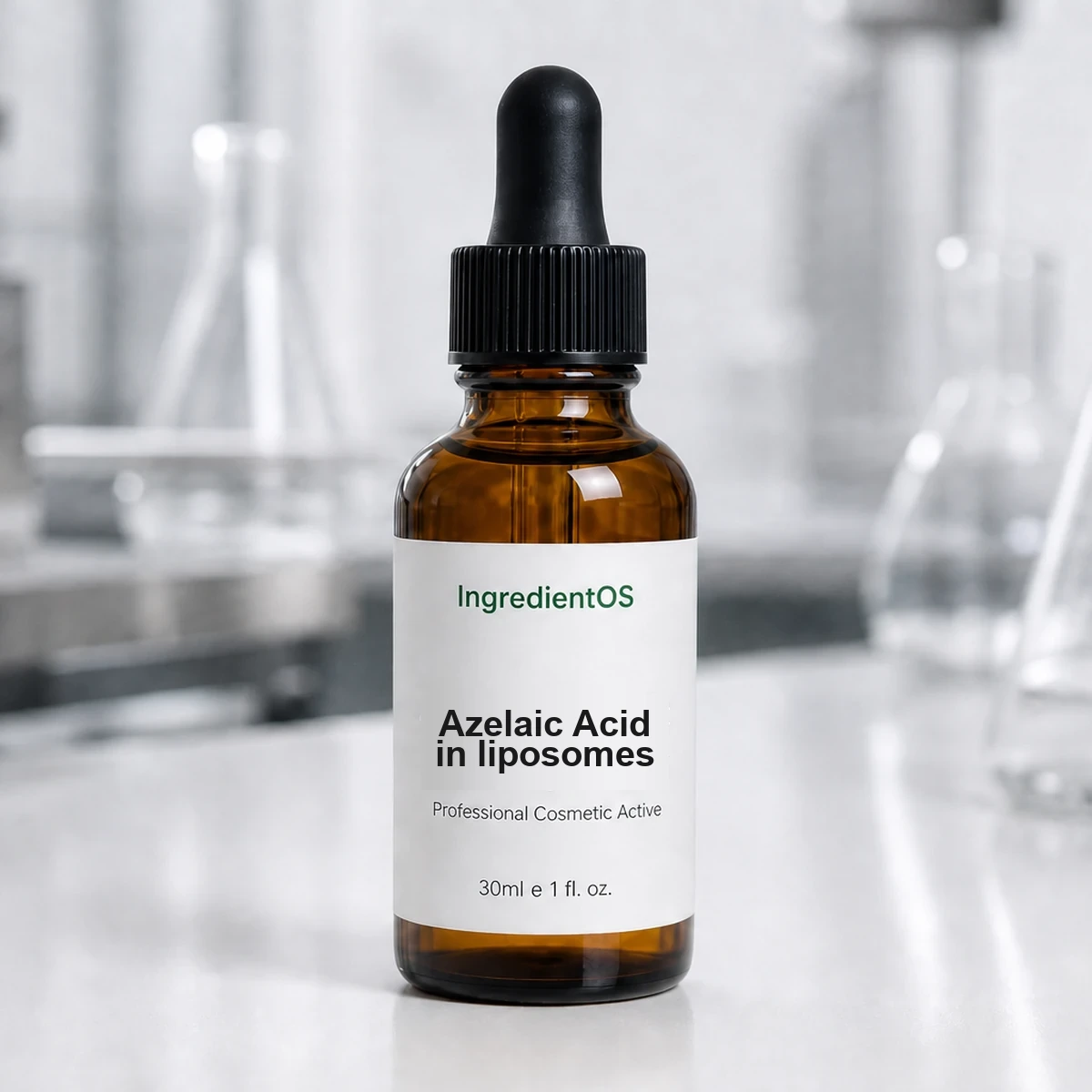
SKU: TM19052406
Azelaic Acid in liposomes
$15.99In stock
Usage Rate: Typical: use the supplied liquid active concentrate at supplier-recommended levels in leave-on formulas, delivering approximately 0.1–0.5% pure active in the finished product (1000–5000 ppm).
Packaging
Liquid sizes — 0.33 oz (10 mL) sample through bulk (US · metric)
Ships from FloridaSecure checkoutUsually ships in 1–2 business daysFree US shipping on $35+
Applicationcosmetics for blemish-prone skin; caring "post-blemish" means; cleansing cosmetic preparations; a buffer component in cosmetics; as a pH regulator
AppearanceLiquid active concentrate
Description
About Azelaic Acid in liposomes
Azelaic acid is a naturally occurring dicarboxylic acid found in grains such as wheat, rye and barley. In its pure crystalline form it dissolves poorly in water, which makes it awkward to handle in light products. This liquid concentrate supplies it in liposomes, so it can be added to the water phase of a serum or cream at cool-down. Supplier documentation lists uses in cosmetics for blemish-prone skin, caring post-blemish products, cleansing preparations and as a buffer and pH regulator. The full INCI and azelaic acid content are printed on the CoA for every lot.
Why liposomes help
Working with crystalline azelaic acid usually means milling, heating or using solvents, and the result can feel gritty. A liposomal liquid removes these steps and gives a smoother finish. It is a practical choice for small laboratories and for light textures such as gels and fluids.
Who buys these products
Customers with oily, blemish-prone or uneven-looking skin are the core audience. Many are in their teens and twenties, but adults with occasional breakouts and post-blemish marks are a growing group. They want products that feel light and non-greasy and help the skin look clearer and more even.
Product formats
Clarifying gel serums, light moisturizers for oily skin, spot gels, post-blemish serums and gentle cleansers are the main formats. Pair the concentrate with Niacinamide and with Salicylic Acid in Liposomes in separate or carefully balanced products. More ingredients are in our actives catalog.
Processing and pH
Prepare the base, cool it below 40 °C and stir in the concentrate gently. Avoid reheating, as liposomes are sensitive to heat and strong shear. Because azelaic acid can act as a buffer, measure the final pH after addition and adjust only with mild agents. Follow the CoA for the use level.
Post-blemish care
Marks left behind after blemishes are a frequent reason for buying a second product. A serum built around azelaic acid and niacinamide, used daily with, targets a more even-looking tone. Recommend patience and consistent use.
Cleansers
The supplier lists cleansing preparations among the uses. A mild gel cleanser with a low level of the concentrate fits a clarifying routine. Since contact time is short, keep the leave-on serum as the main product and present the cleanser as support.
Gentle routines
Blemish-prone customers often over-use strong products and end up with dry, uncomfortable skin. Introduce acids gradually.
Claims and testing
Consumer perception studies and standardized photographs on the finished product support claims about clearer-looking skin and a more even-looking tone. Use cosmetic wording such as for blemish-prone skin, helps skin look clearer and reduces the look of post-blemish marks.
Characteristics
Form: liquid concentrate, azelaic acid in liposomes. Addition: water phase at cool-down. Role: active and buffer component. Focus: blemish-prone and post-blemish care. INCI and azelaic acid content: on the CoA. Supply: milliliter packs.
Original recipe: clarifying gel serum, 100 g
Phase A: distilled water 80.30 g, glycerin 3.00 g, propanediol 3.00 g, hydroxyethylcellulose 0.70 g. Hydrate fully and cool. Phase B below 40 °C: Azelaic Acid in liposomes at the level on the CoA, here 6.00 g; niacinamide 4.00 g; zinc PCA 0.50 g; panthenol 1.00 g; preservative 1.00 g; green tea extract 0.50 g. Mix gently, measure and adjust pH to about 5.0.
Storage
Keep the bottle tightly closed in a cool place away from light. Reseal after use. Ships from Florida in milliliter packs.
Product Specifications
Usage RateTypical: use the supplied liquid active concentrate at supplier-recommended levels in leave-on formulas, delivering approximately 0.1–0.5% pure active in the finished product (1000–5000 ppm).
SolubilityWater-soluble liquid active concentrate. Add directly to the water phase during cool-down; avoid prolonged high heat.
StorageStore tightly closed in a cool, dry place away from light and heat. Refrigerate opened material where practical; respect supplier shelf life.
TDS / CoA available on request. Contact us
Frequently Asked Questions
What is Azelaic Acid in liposomes used for?
Products for blemish-prone skin, post-blemish care, clarifying cleansers, and as a buffer component in cosmetics.
Why a liposomal form?
Azelaic acid powder dissolves poorly in water; a liposomal liquid is much easier to add to water-based products.
How is it added?
Into the water phase during cool-down, below 40 °C.
Where is the azelaic acid content listed?
On the CoA for each lot.