Peptide PowdersSKU M10001
GHK-Cu Powder (Copper Tripeptide-1)
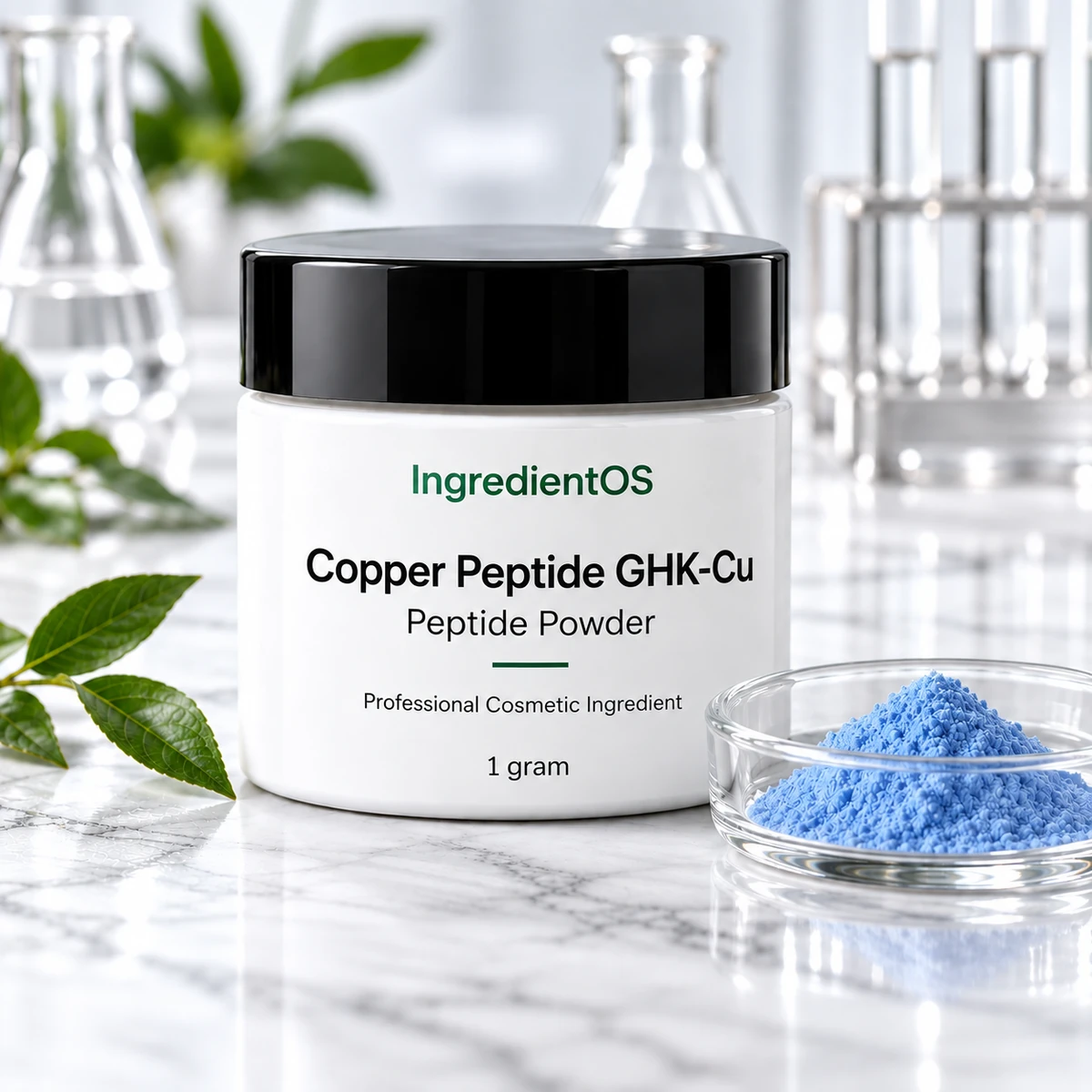
Be the first to reviewGHK is a small peptide made of three amino acids: glycine, histidine and lysine. It binds copper strongly, and the resulting complex, known as GHK-Cu or Copper Tripeptide-1, has an intense blue color.
For cosmetic formulation use only.
Raw material for topical cosmetic products.
$38.99In stock
Packaging
Powder sizes (metric · US)
Worldwide Shipping to 200+ Countries
Live international rates at checkout. Free shipping applies to US orders only; duties are paid by the recipient. Shipping details · Over 10 lb? Request a quote- Ships from Florida
- CoA available
- Usually ships in 1–2 business days
- Free US shipping on $35+
Overview
GHK is a small peptide made of three amino acids: glycine, histidine and lysine. It binds copper strongly, and the resulting complex, known as GHK-Cu or Copper Tripeptide-1, has an intense blue color. It is among the best-known peptide names in modern skincare. Our GHK-Cu Powder is the dry, undiluted form of this complex, sold as a raw material for topical cosmetic products.
Formulators who build a multi-peptide serum often weigh GHK-Cu next to a second powder such as Acetyl Hexapeptide-8, keeping each peptide in its own premix before combining.
Key data from the supplier specification
INCI: Copper Tripeptide-1. CAS: 89030-95-5. Molecular weight: 401.9 g/mol. Appearance: blue to purple powder. Country of origin: United States. Shelf life: 24 months. Typical level: 0.01 to 0.1 percent of the material in the finished product, according to supplier technical data and to be confirmed against the CoA for each lot. Follow the supplier TDS for the recommended phase and temperature.
Why choose the dry form
A dry copper peptide gives the manufacturer full control over concentration and carrier. It ships light, keeps well when sealed and can be weighed precisely for small batches. Because typical levels are low, a few grams go a long way.
Product ideas
A simple water-based face serum showcases the blue complex, and many brands keep a faint blue tint in the bottle as a visual signature of the ingredient. In creams, add the dissolved peptide to the cooled emulsion; a cushioned base with humectants and lipids suits mature and dry skin. For the eye area, combine a lower level with a light hyaluronic gel.
Compatibility
Strong chelating agents such as EDTA can pull copper out of the complex, so leave them out or use alternatives. Ascorbic acid and other strong reducing agents can also interfere, which is why copper peptide and pure vitamin C are usually placed in separate products. Very low pH can destabilize the complex; keep the finished product in a mild range. Avoid strong oxidizers and long heating.
Building a peptide range
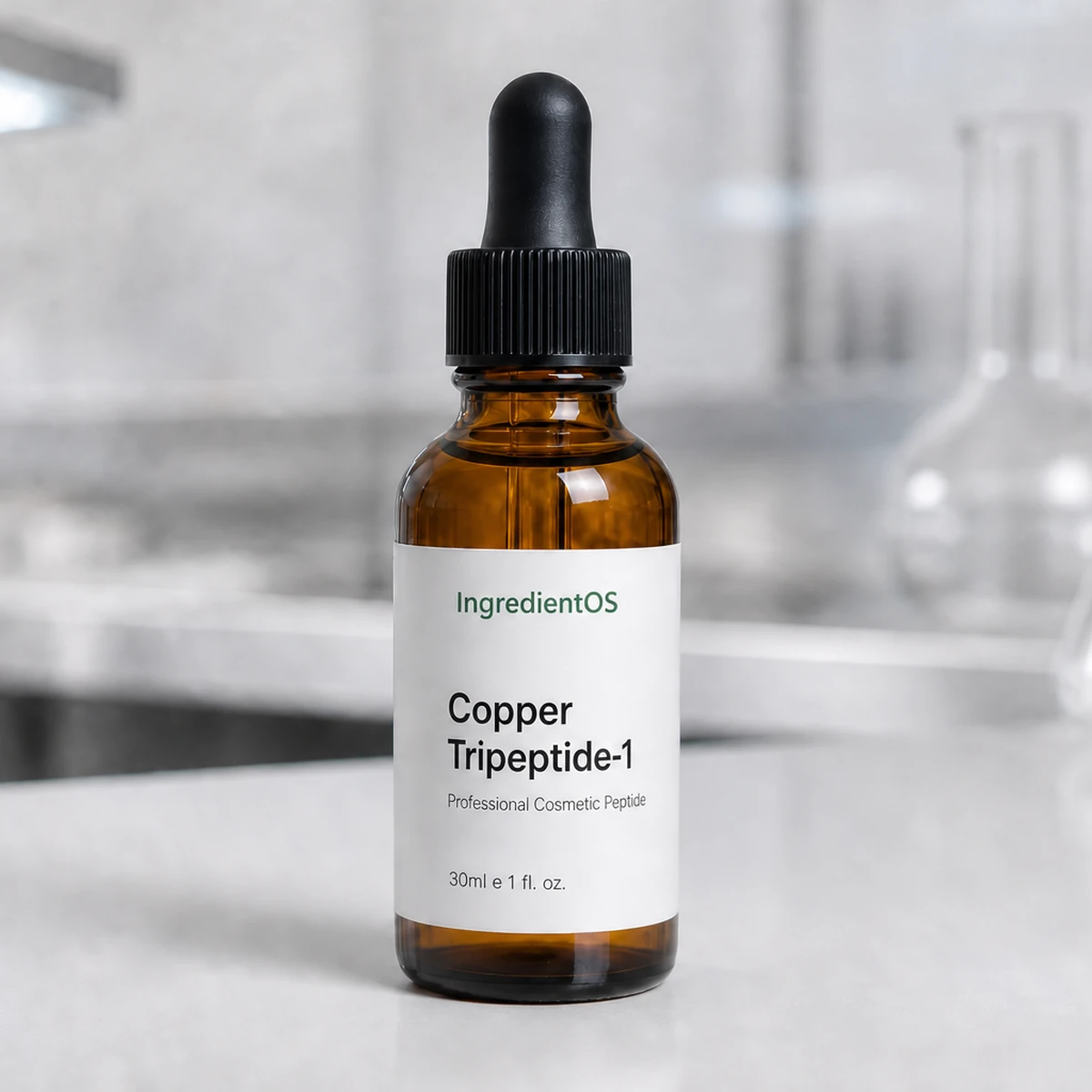
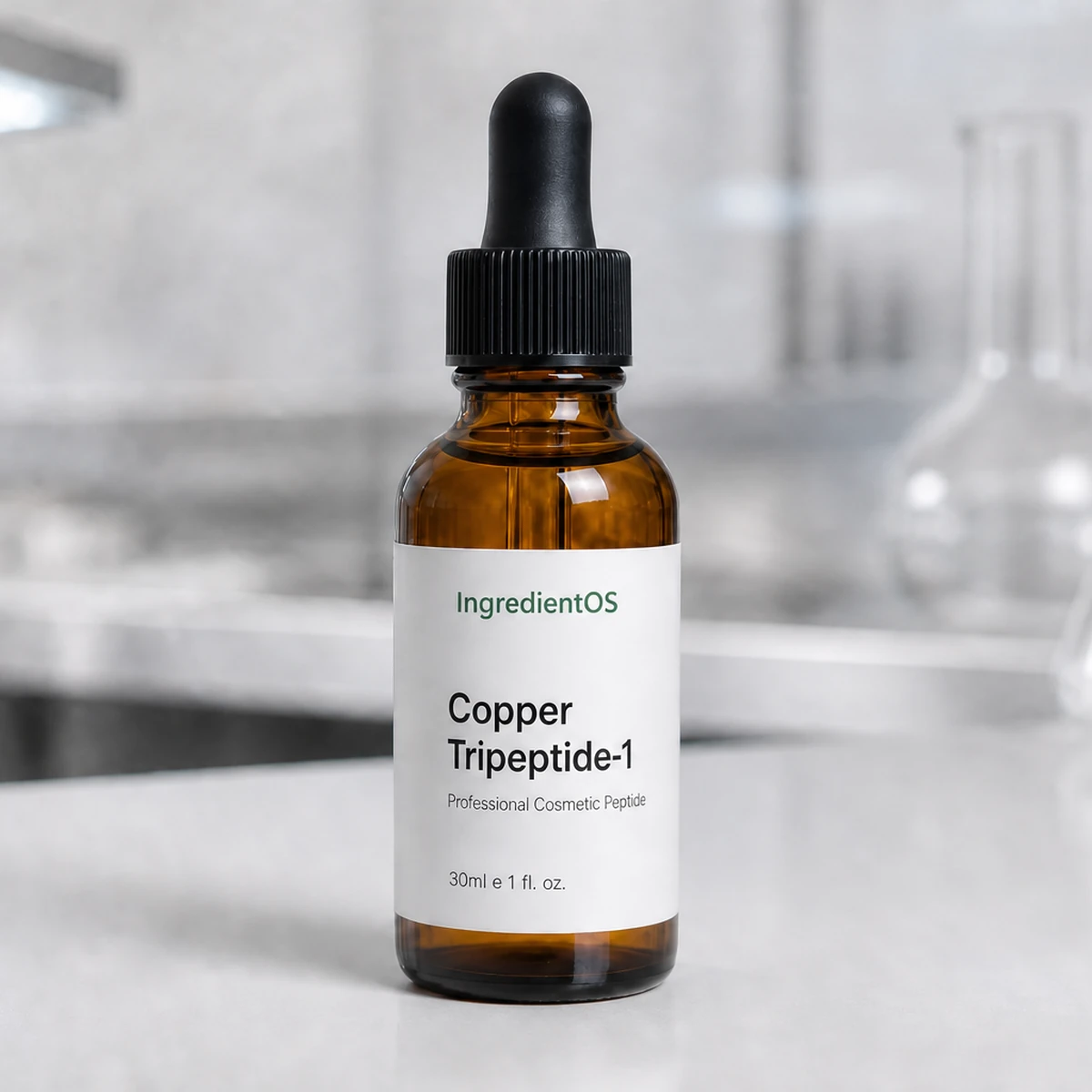
GHK-Cu is often the hero of a firming-look skincare range, sometimes combined with peptides that have a different role. For a pre-dissolved version, see our Copper Peptide GHK-Cu solution. The full list of dry peptides is in the peptide powders category. Keep product wording cosmetic and visual: firmer-looking, smoother-looking, more resilient-looking skin, supported by tests on the finished product.
Weighing tip
Because levels are so low, prepare a stock solution rather than weighing tiny amounts for each batch. For example, dissolve 1.00 g of the material in 99.00 g of preserved water to make a 1 percent stock, then add the stock by weight. Label it with the date and lot number and keep it cool.
Specifications
| INCI | Copper Tripeptide-1 |
|---|---|
| Appearance | Blue powder. Confirm appearance on CoA. |
| Recommended dosage | Typical: 0.01–0.1% of the powder in the finished formula, per supplier technical data for Copper Tripeptide-1 powder. Confirm against the CoA for your lot. |
| pH | Confirm on CoA |
| Storage | Store the powder tightly closed, cool and dry, away from light and moisture. Respect the supplier shelf life. |
How to use
- Recommended dosage
- Typical: 0.01–0.1% of the powder in the finished formula, per supplier technical data for Copper Tripeptide-1 powder. Confirm against the CoA for your lot.
Original recipe: blue copper serum, 100 g
Purified water 87.15 g, glycerin 4.00 g, propanediol 3.00 g, hydroxyethylcellulose 0.70 g, GHK-Cu Powder 0.05 g, sodium hyaluronate 0.10 g, panthenol 1.00 g, betaine 2.00 g, preservative 1.00 g, fragrance-free skin-conditioning extract 1.00 g. Disperse the cellulose in the glycerin and propanediol, add most of the water and stir until clear. Dissolve the GHK-Cu in the remaining water and add it with the other ingredients. Check the pH, aiming for about 6.0.
Precautions
Storage
Store the powder tightly closed, cool and dry, away from light and moisture. Respect the supplier shelf life.
Storage
Keep the container tightly sealed in a cool, dry place away from light. Close it right after weighing to keep moisture out.
- For cosmetic formulation use only. Raw material for topical cosmetic products.
- Cosmetic raw material for professional formulation. Not sold as a finished product.
- Handle with gloves and eye protection, as with any raw material, and follow the SDS.
- Test stability, compatibility and preservation in your finished formula before launch.
- Keep the container closed and out of reach of children.
Documents
A certificate of analysis comes with your order. TDS and SDS are sent by email when you request them.
Request documents
CoA, TDS, SDS, or a specification for this ingredient. We email the files within 1 business day.
Request a CoA, TDS, SDS, or specification.
FAQ
What is the INCI and CAS of GHK-Cu?
The INCI is Copper Tripeptide-1 and the CAS number is 89030-95-5.
What level is typically used?
The supplier specification gives 0.01 to 0.1 percent of the material in the finished cosmetic product. Confirm against the CoA for your lot.
How do I dissolve it?
Dissolve it fully in a small amount of water, then add the solution to the formula.
Where is it made?
The supplier specification lists the United States as country of origin.
Reviews
Be the first to review
More Peptide Powders
Related copper, eye and lash peptide powders: Acetyl Tetrapeptide-5, Myristoyl Pentapeptide-17, Biotinoyl tripeptide 1, Octapeptide 2.
Same INCI as a solution: GHK-Cu, Copper Tripeptide-1, Copper Peptide GHK-Cu.
Browse all peptide solutions · peptide powders · cosmetic peptides