SKU: TM21070718
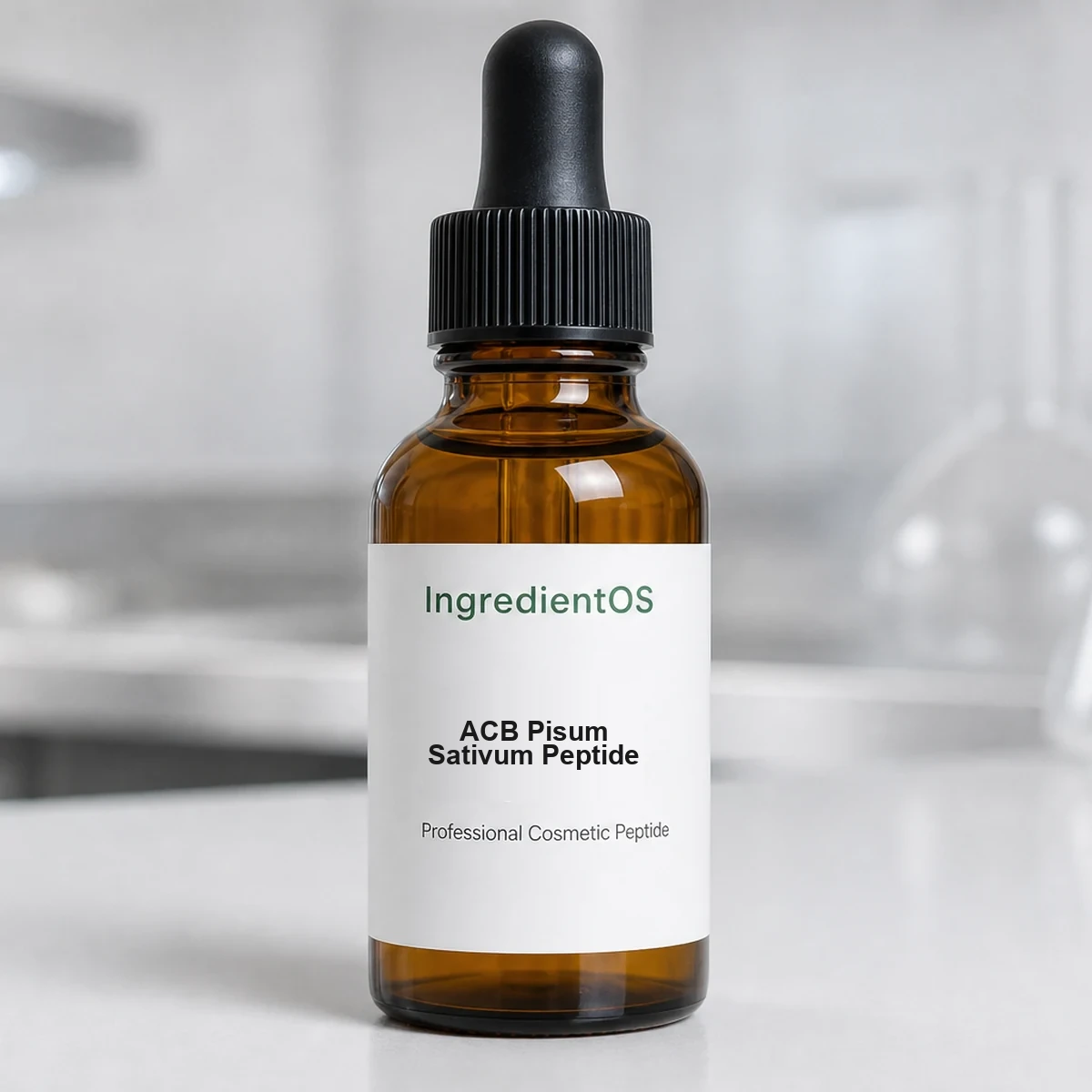
ACB Pisum Sativum Peptide
For cosmetic formulation use only.
Raw material for topical cosmetic products.
$24.99In stock
INCI: Pisum Sativum (Pea) Peptide, Leuconostoc/Radish Root Ferment Filtrate. CAS 90082-41-0.
Usage Rate: Follow the supplier CoA.
Packaging
Liquid sizes — 0.33 oz (10 mL) sample through bulk (US · metric)
Ships from FloridaSecure checkoutUsually ships in 1–2 business daysFree US shipping on $50+
ApplicationAnti-aging products for hair and skin; Protective, restorative agents; Products for and after after-sun; Styling; Shampoos, conditioners, masks to increase volume and for thicker-looking hair; Decorative cosmetics
Appearanceliquid
pH4.0-8.0
Description
Plant peptides from pea, ready to pour
ACB Pisum Sativum Peptide is a liquid built on peptides from the garden pea. The catalog INCI is Pisum Sativum (Pea) Peptide and Leuconostoc/Radish Root Ferment Filtrate, the second being a ferment-derived ingredient used in naturally positioned products. The listed CAS is 90082-41-0, the botanical pea registry used for this trade grade. Unlike defined synthetic peptides, this is a mixture of plant peptide fragments, so it is valued for conditioning and film-forming feel rather than for a single sequence. Confirm the full INCI on the CoA for each lot.
Hair first, skin second
The supplier specification positions this solution mainly for hair: shampoos, conditioners, masks and styling products aimed at volume and thicker-looking hair, plus after-sun and protective products. It also works in skin leave-ons that need a plant-based peptide story. If you want a defined sequence, look at our peptide solutions such as Biotinoyl Tripeptide-1. For another pea option, compare Natural Pea Peptide.
Formulating with the solution
Phase and pH
Add the liquid in cool-down, below 40 °C, into the water phase. The supplier specification gives a pH of 4.0 to 8.0 for the material. Check the pH of your finished product and adjust after the addition if needed.
Level
Take the use level from the supplier documentation for your lot.
Surfactant systems
In shampoos, add the peptide after the surfactants and thickener are in place, then check viscosity, because botanical peptides can shift the salt curve. In conditioners, add it after the emulsion has cooled.
Product ideas
Volumizing shampoo and matching conditioner, a leave-in conditioning spray, a light styling mousse, an after-sun hair mist, and a protective scalp tonic are all natural fits. In skin care, a plant-peptide gel or a light lotion with a clean-label story works well.
Pairing ideas
Panthenol, hydrolyzed proteins, glycerin, betaine and light film formers support the conditioning feel in hair products. For skin, hyaluronic acid and niacinamide are common partners. Add each one separately and record clarity and viscosity.
Example: volumizing leave-in spray
Water, glycerin, a light film former, ACB Pisum Sativum Peptide at the supplier level, panthenol, a mild fragrance and a preservative suited to sprays. A fine mist sprayer spreads the product evenly through damp hair.
Claims
Keep claims cosmetic: hair looks fuller, feels thicker and is easier to style; skin feels conditioned. Plant-based and ferment-derived wording should match the full INCI on the CoA.
Lot handling and storage
Record appearance and pH on arrival, compare them with the CoA, and keep the CoA with your batch records so each finished batch can be traced to its lot. Store tightly closed, cool and away from light.
Stability checks before scale-up
Run a small pilot batch first. Keep samples at room temperature, in a warm cabinet and in the fridge, and check color, odor, clarity, viscosity and pH at set intervals over several weeks. Test the product in the final pack as well as in glass, because pumps, droppers and tubes can change how a peptide product ages. Write every observation into the batch record next to the lot number of the raw material.
Ordering
This liquid is sold from a 0.33 oz (10 mL) sample up to gallon sizes, so you can trial it and then scale. It ships from Florida, usually within 1 to 2 business days, in the pack sizes shown above, and US shipping is free on orders of $50 or more.
Product Specifications
INCIPisum Sativum (Pea) Peptide, Leuconostoc/Radish Root Ferment Filtrate. CAS 90082-41-0.
Usage RateFollow the supplier CoA.
SolubilityWater-compatible commercial solution. Add during cool-down. Avoid prolonged high heat.
StorageStore tightly closed, cool, and dry, away from light and heat. Respect the supplier shelf life.
TDS / CoA available on request. Contact us
Frequently Asked Questions
What is ACB Pisum Sativum Peptide?
A liquid of pea peptides with Leuconostoc/Radish Root Ferment Filtrate, listed CAS 90082-41-0.
Is it a single peptide?
No. It is a mixture of plant peptide fragments, not a defined synthetic sequence.
Which products suit it?
Shampoos, conditioners, masks, styling and after-sun hair products, plus plant-peptide skin leave-ons.
When do I add it?
In cool-down, below 40 °C, then check pH and viscosity.
More Peptide Solutions
Related hair and scalp peptide solutions: Acetyl Tetrapeptide-3 + Red Clover Extract Hair Complex, IO, Acetyl Tetrapeptide 3, Biotinoyl Tripeptide-1, Hair Peptide Complex.
Browse all peptide solutions · peptide powders · cosmetic peptides