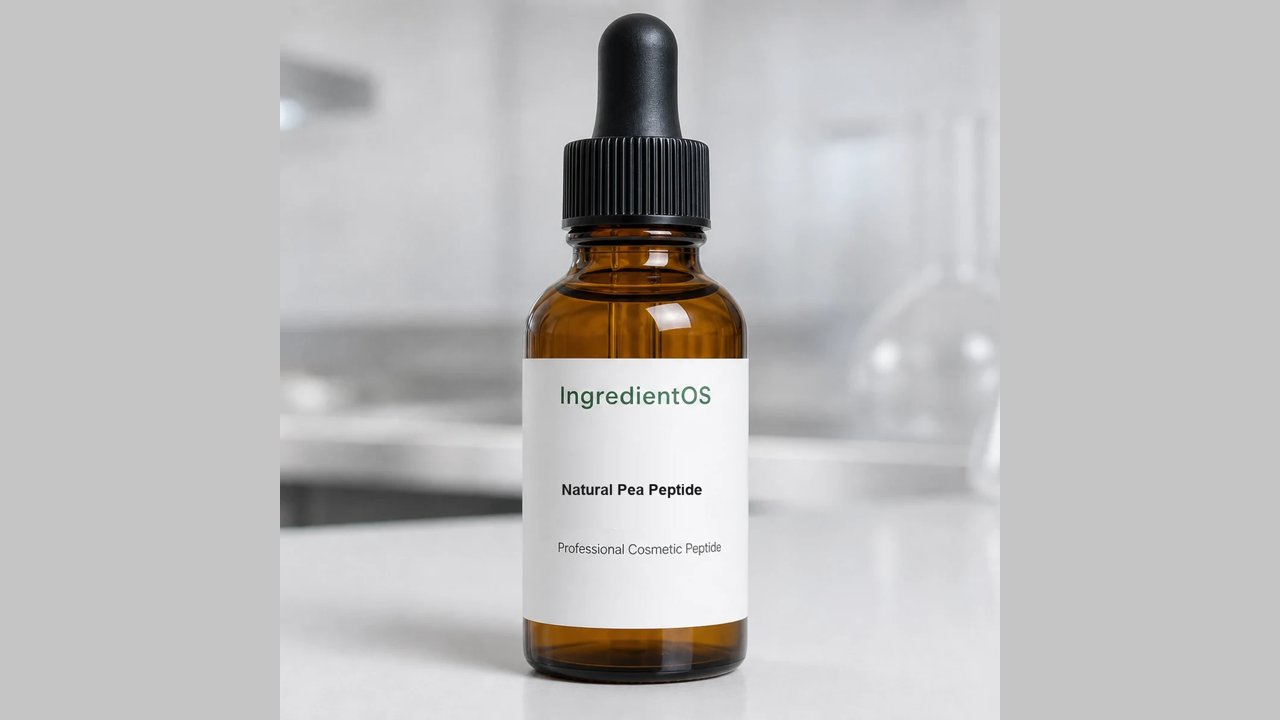
In skin care, pea peptide is a plant-derived, water-soluble peptide fraction listed as Pisum Sativum (Pea) Peptide and used mainly as a skin and hair conditioning ingredient, usually at 1 to 5% of a commercial solution. It suits brands that want a plant-based peptide on the label and a smoother, more hydrated feel in serums, essences, creams and leave-in hair products.
Pea peptide is not a single defined molecule like a synthetic signal peptide, so it behaves more like a refined hydrolysate. This article explains what the INCI covers, how it differs from related pea ingredients, where it fits in a formula, which partners work, and what to keep in mind about safety and claims.
What pea peptide is
The European CosIng database defines Pisum Sativum Peptide as the di- and tripeptide fraction isolated from pea protein by ultra-membrane filtration, with skin conditioning as its listed function. CAS 90082-41-0 is the botanical registry number commonly used for pea grades. Different manufacturers produce it in different ways; one consumer brand describes its grade as pea protein hydrolyzed by fermentation with Lactobacillus bulgaricus, with a pH of 4 to 7. Our Natural Pea Peptide is a medium-viscosity liquid, and its vehicle and preservative are confirmed on the CoA for each lot.
Pea peptide versus hydrolyzed pea protein
Hydrolyzed Pea Protein is a separate INCI, defined in the CIR 2022 assessment as a partial hydrolysate of pea protein made by acid, enzyme or other hydrolysis, with hair and skin conditioning functions. Pea peptide is the smaller fraction. In practice both are water-soluble plant ingredients that leave a light film on hair and skin, but the label name must match what you actually buy.
Pea peptide versus synthetic peptides
A synthetic peptide such as acetyl hexapeptide-8 is one exact sequence with one CAS, dosed at a defined level and marketed for a defined effect. Pea peptide is a mixture of short plant peptides. Its value is in the botanical story, the conditioning feel and the ease of formulation, not in a single targeted mechanism. Presenting it as a signal peptide would overstate what it is.
Use levels
Active Concepts, which supplies a pea peptide grade sold as ACB Pisum Sativum Peptide, suggests 1.0 to 5.0% and describes the material as water-soluble, clear to slightly hazy, with no added preservatives in its grade. Another grade documented by a consumer brand gives a recommended concentration of 1 to 5% as well. For our Natural Pea Peptide, take the level from the supplier documentation for your lot, since vehicles differ between products.
Where it fits on skin
The water-soluble nature of pea peptide makes it easy to place in serums, toners, essences, gels and the cool-down phase of emulsions. Typical finished products include plant-based hydrating serums, daily moisturizers, sheet-mask liquids and essences. Botanical peptides can carry a light color and a faint natural odor, so check both in clear gels and lightly scented items before you finalize the formula.
A hydrating serum outline
A simple architecture is water, glycerin or propanediol as a humectant, sodium hyaluronate for slip, panthenol, a clear-gel thickener and a broad-spectrum preservative, with the pea peptide added in cool-down below 40 °C with gentle mixing. Our product page lists panthenol, glycerin, sodium hyaluronate, hydrolyzed plant proteins and plant oils as good partners. Add each active separately and check clarity, odor and viscosity after each addition.
Where it fits on hair
Hydrolyzed plant proteins have been used for decades in hair care for conditioning and film formation, and pea peptide continues that tradition. Supplier literature positions pea peptide grades for a fuller, more voluminous look and a smoother feel. Good formats are leave-in conditioners, hair mists, scalp tonics and light hair serums, where the peptide is not rinsed away. Our sibling guide on DIY scalp serum actives for fuller-looking hair shows how pea peptide can sit next to dedicated hair peptides such as biotinoyl tripeptide-1.
For a leave-in hair mist, keep the base very light: water, a humectant, a low level of a conditioning polymer, the pea peptide in cool-down, a preservative suited to water-based products and a mild fragrance if desired. Test the spray pattern and the feel on dry and damp hair, since too much humectant can leave hair tacky in humid climates.
Pairing in emulsions
Pea peptide also works in creams and lotions. Add it after the emulsion has formed and cooled below 40 °C, the same point at which you would add other heat-sensitive water-soluble actives. Because it is a conditioning ingredient rather than a structural one, it should not change viscosity much, but botanical solutions can shift pH slightly, so measure the finished batch. Plant oils such as squalane-based or light seed oil blends pair naturally with a plant-based peptide story, and a stable humectant base keeps the finish soft rather than tacky.
Safety and allergen notes
The CIR Expert Panel reviewed 19 plant-derived proteins and peptides in 2022 and concluded that 18 of them, including hydrolyzed pea protein, are safe as used in the present practices of use and concentration. The report also discusses that proteins from legumes can cross-react, so consumers with known legume sensitivity may react. For a brand selling to the public, it is reasonable to mention the pea origin clearly on the label and in product copy. A patch test on a small area of skin remains the minimum for personal formulas.
Stability and testing
Run the finished product through room temperature, 40 °C and fridge storage for several weeks, and record color, odor, clarity, viscosity and pH. Plant protein fractions can encourage microbial growth if the preservative system is weak, so a preservative challenge test on the finished product is especially important. Store the raw material tightly closed, cool and away from light, and respect the shelf life on the CoA.
Claims that stay cosmetic
Keep claims to appearance and feel: skin that looks smoother and feels hydrated, hair that looks fuller and feels conditioned, a plant-based peptide formula. Avoid wording about hair growth or about changes inside the skin. If you buy pea peptide in quantity for a line, the sibling post on peptide cosmetic ingredients wholesale explains how to request documents and scale purchases.
Getting started
Order the 10 mL sample of Natural Pea Peptide, make a 100 g hydrating gel and a 100 g hair mist at the level from your CoA, and judge the feel and stability side by side with a peptide-free control. More liquid grades are collected in our peptide solutions section, and plant protein ingredients sit in our hydrolysates range.
Frequently asked questions
What is the INCI name of pea peptide?
The INCI name is Pisum Sativum (Pea) Peptide. CosIng describes Pisum Sativum Peptide as the di- and tripeptide fraction isolated from pea protein by membrane filtration, with skin conditioning as its function. CAS 90082-41-0 is commonly used for pea peptide grades.
How much pea peptide goes into a serum?
One supplier of a pea peptide grade suggests 1 to 5% of its solution. Other grades differ, so take the level from the documentation for the lot you bought.
Is pea peptide the same as hydrolyzed pea protein?
Not exactly. Hydrolyzed pea protein is a broader partial hydrolysate with its own INCI. Pea peptide refers to a smaller peptide fraction. Both are plant-based and water-soluble, but they are labeled differently.
Is pea peptide safe for people with legume allergies?
The CIR Expert Panel found plant-derived proteins and peptides safe as used, but its 2022 report notes that legume proteins can cross-react. Brands should consider allergen communication for consumers with known legume sensitivity.
Try it with a 1 g sample pack
Neat peptide powders in 1 g packs, INCI on every page, shipped from Florida.
Shop peptide powders