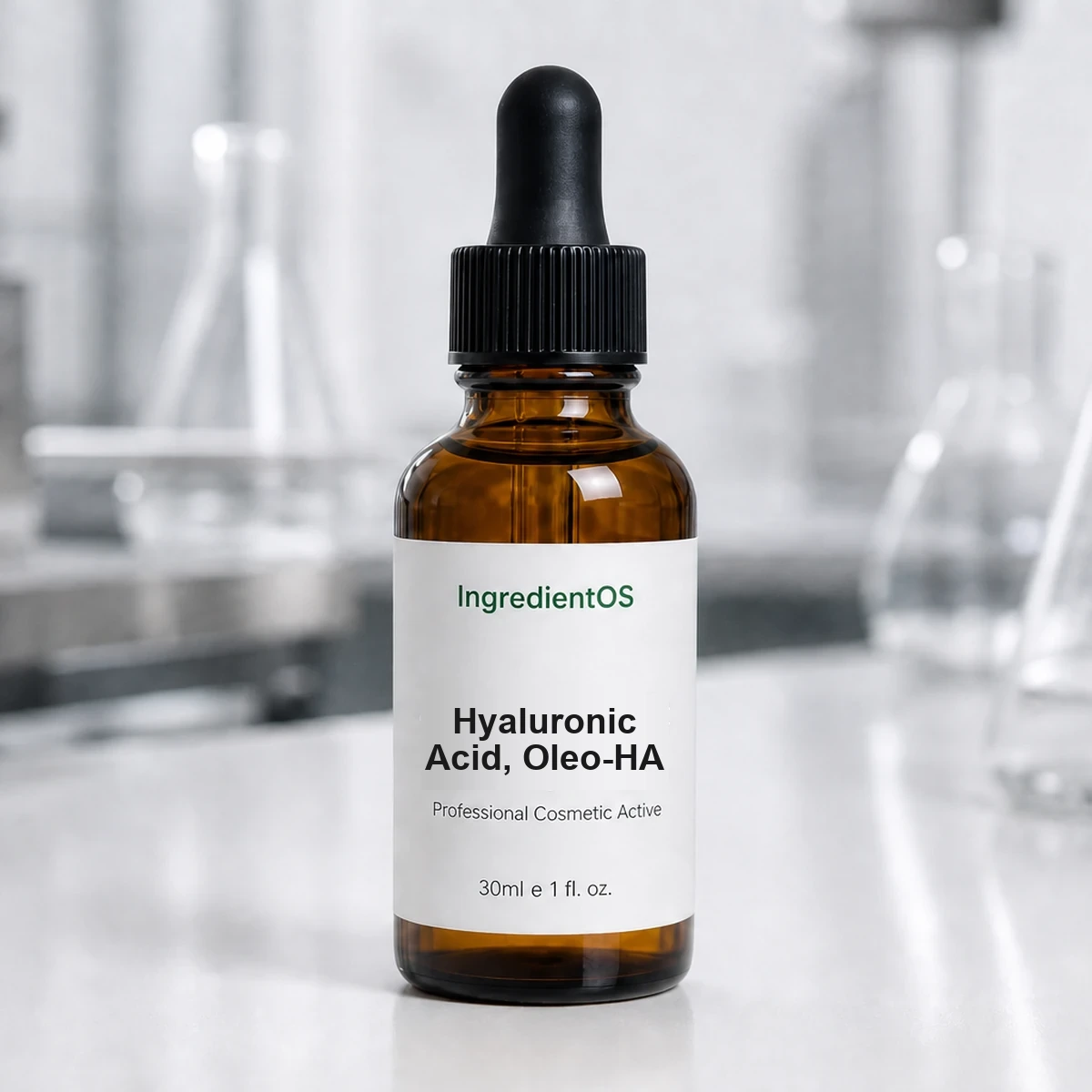
SKU: VV24082801
Oil-Soluble Hyaluronic Acid, IO
$15.99In stock
INCI: See CoA for full INCI
Usage Rate: Typical: use the ingredient at supplier-recommended levels in leave-on formulas, delivering approximately 0.1–0.5% pure active in the finished product (1000–5000 ppm).
Packaging
Liquid sizes — 10 mL sample through bulk (US · metric)
Ships from FloridaSecure checkoutUsually ships in 1–2 business daysFree US shipping on $50+
ApplicationHydration and moisture retention: The main purpose is to maintain optimal skin hydration levels. Improving skin texture: Helps make skin smoother and more elastic. Anti-aging: Reduces fine lines and prevents new ones from appearing, improving overall skin condition.
AppearanceThick plastic wax-like mass
pH5.0 - 7.5
Description
Classic hyaluronic acid lives in water. That is fine for gels and light serums, but many customers prefer oils, balms and rich creams, especially in winter or for dry, mature skin. Oil-Soluble Hyaluronic Acid is a concentrate from a group of hyaluronic formats developed to bring the familiar moisture ingredient into oil-rich products and emulsions.
Ingredient snapshot
is supplied as a liquid concentrate. The product card names three goals: hydration and moisture retention, a smoother and more elastic skin feel, and a place in appearance-focused cosmetic care. It lists a pH range of 5.0 to 7.5. The precise INCI, the carrier and the recommended phase are printed on the supplier CoA for each lot, and they should guide your formula because hyaluronic formats made for oil systems differ from one grade to another.
Why bring hyaluronic acid into oils
Customers associate hyaluronic acid with plump, comfortable skin and look for it on labels. An oil serum or balm built only from lipids softens the surface but adds no water-binding component. A hyaluronic format that tolerates oil-rich systems closes that gap and lets a brand tell a complete moisture story: lipids to reduce water loss, hyaluronic acid to hold water in the upper layers.
Product ideas
Rich night cream
A water-in-oil or high-oil oil-in-water cream with suits dry and mature skin. Add ceramide NP for a barrier-focused concept.
Facial balm
Balms based on butters and waxes are popular for cold climates and for the face, lips and cuticles. Follow the CoA to see whether the concentrate can be incorporated in an anhydrous system or needs a small water phase.
Bi-phase serum
A shake-before-use serum with an oil layer and a water layer offers a striking visual and gives both moisture components a place.
How to work with it
Add the concentrate at cool-down and follow the phase indication on the CoA. Stir until the mixture is fully uniform and check viscosity after twenty-four hours, as hyaluronic systems can thicken or thin as they settle. Keep the finished pH between 5.0 and 7.5. For a water-based partner in the same range, consider Crosslinked Hyaluronic Acid Concentrate Hyaluronic Acid. Our full list of moisture and appearance-focused cosmetic concentrates is in the actives category.
Claims and testing
Keep claims sensory and measurable: skin feels smoother, looks plumper and stays comfortable for hours. Instrumental hydration tests on the finished product support these statements. Avoid wording that implies a change in skin structure.
Formulation challenges to expect
Combining a water-loving polymer with an oil-rich product is never trivial. Watch for graininess in balms, which can appear when the concentrate is not evenly distributed or when the temperature at addition is too low for the waxes. In water-in-oil creams, add the internal phase slowly and with strong shear, then check droplet size under a microscope if available. Bi-phase serums need clean separation after shaking, so test the interface after a few days at room temperature and at 40 °C.
Run a small stability program before scaling: three temperatures, several weeks, and regular checks of odor, color, texture and pH. Record the lot number of the concentrate from the CoA in each batch sheet.
Original recipe: cushion night cream, 100 g
Phase A: water 60.60 g, glycerin 4.00 g, magnesium sulfate 0.70 g. Phase B: polyglyceryl-4 isostearate and cetyl PEG/PPG-10/1 dimethicone 4.00 g, caprylic/capric triglyceride 12.00 g, squalane 6.00 g, shea butter 4.00 g, beeswax 1.50 g. Phase C: 4.00 g as an example level per CoA, tocopherol 0.50 g, preservative 1.00 g, fragrance 0.20 g, panthenol 1.50 g. Heat B to 75 °C and A to 75 °C, add A slowly to B under strong stirring, cool and add C below 40 °C.
Storage
Store tightly closed, cool and protected from light. Close the bottle right after use.
Product Specifications
INCISee CoA for full INCI
Usage RateTypical: use the ingredient at supplier-recommended levels in leave-on formulas, delivering approximately 0.1–0.5% pure active in the finished product (1000–5000 ppm).
SolubilitySoluble in oil. Add to the oil phase.
StorageStore tightly closed in a cool, dry place away from light and heat. Refrigerate opened material where practical; respect supplier shelf life.
TDS / CoA available on request. Contact us
Frequently Asked Questions
What is ?
A hyaluronic acid concentrate in a format developed to work with oil-rich and emulsion products. Confirm the exact INCI on the CoA.
What pH range does it suit?
The product card lists 5.0 to 7.5.
Which products is it used in?
Hydrating serums, creams and products for smoother, more elastic-feeling skin, according to the card.
When should it be added?
During cool-down, following the phase guidance on the CoA for your lot.