SKU: TM26101705
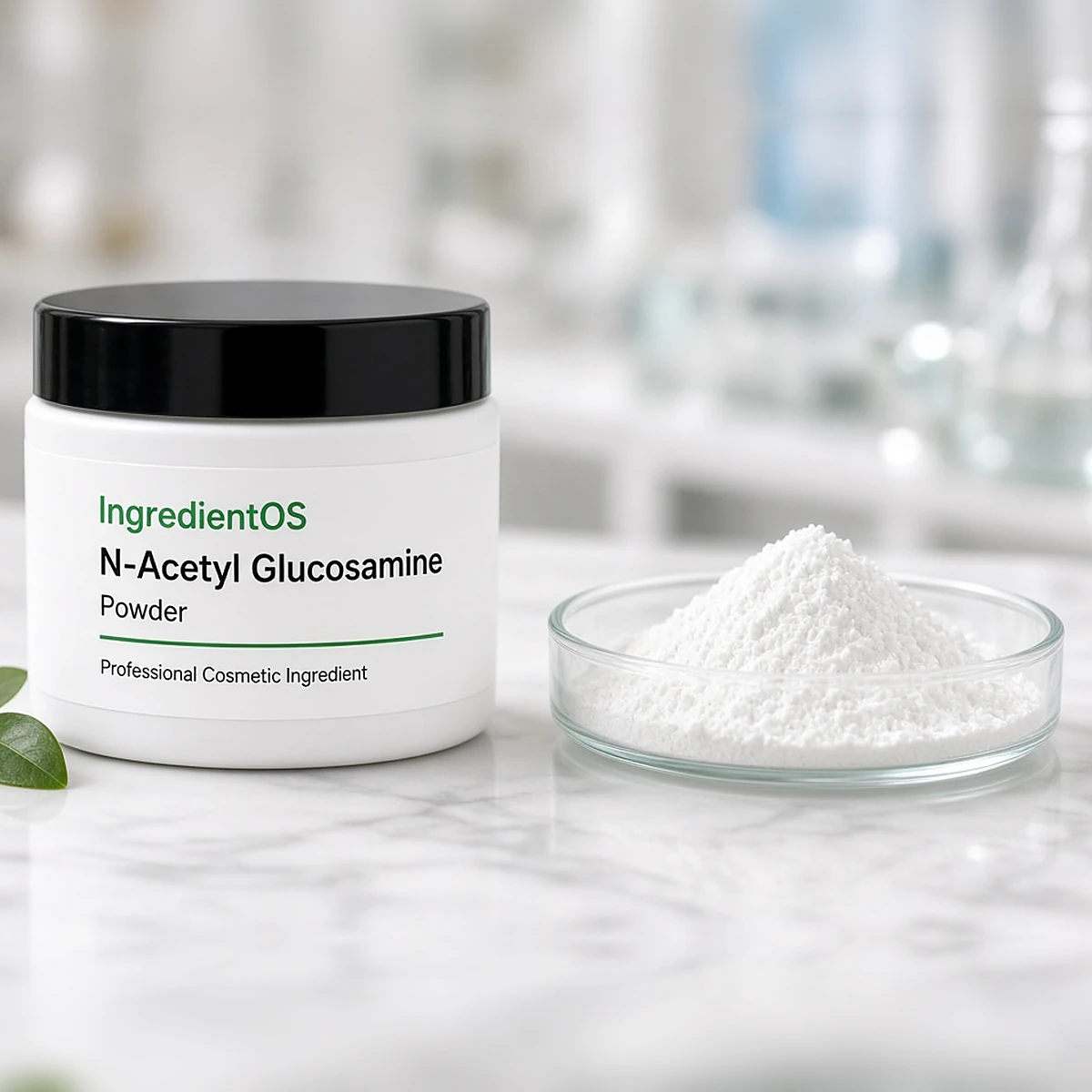
N-Acetyl Glucosamine NAG
- Skin-identical amino sugar
- Gentle exfoliation without acids
- Pairs with niacinamide for even tone
- Water-soluble, add below 50 °C
INCI: N-Acetyl Glucosamine. CAS 7512-17-6. EINECS 231-368-2.
Usage Rate: 1 to 4% in the finished formula, up to 10%. Dissolve in water and add below 50 °C.
Packaging
Powder sizes (metric · US)
Description
What N-acetyl glucosamine is
N-acetyl glucosamine, or NAG, is an amino sugar that the skin already contains in the spaces between its cells. It is one of the building blocks of hyaluronic acid, which is why it is described as a skin-identical ingredient. In cosmetics it is used to support the skin barrier, reduce the feeling of dryness and give a smoother, more even surface. It dissolves easily in water and has a mild profile, so it suits toners and serums for sensitive skin.
NAG sits with the hydrating and brightening materials in our cosmetic actives section. It is often paired with niacinamide, and the two together are a well known combination for an even skin tone.
Composition and label INCI
The INCI is N-Acetyl Glucosamine, CAS 7512-17-6, EINECS 231-368-2, with a molecular weight of 221.21. It is a white powder. This grade is made from the shells of crustaceans obtained as a by-product of the shellfish industry, so it cannot be described as vegan. Mention this on briefs for vegan or shellfish-free products.
What it does in skin care
Studies on NAG report higher moisture content and elasticity, more hyaluronic acid in the skin, lower water loss and a better barrier. It also normalizes the shedding of the outer skin layer, giving a gentle exfoliating effect similar in direction to alpha and beta hydroxy acids but without their sting. That makes it a good alternative for skin that does not tolerate acid exfoliation. In brightening products it helps reduce the look of dark spots, and the effect is stronger when niacinamide is in the same formula.
How to use it
Dissolve NAG in water and add it to the batch below 50 °C.
Compatibility notes
NAG works in water-based toners, gels, creams, lotions and silicone serums. It is compatible with humectants, hyaluronic acid, panthenol and most thickeners. Pair it with alpha arbutin or niacinamide in tone-evening serums, and keep the formula fully preserved.
NAG or glucosamine HCl
Glucosamine hydrochloride is the salt of the plain amino sugar and is acidic in solution. N-acetyl glucosamine carries an acetyl group on the nitrogen, which is the form found in hyaluronic acid and in the skin itself. It dissolves to a near neutral solution, which makes it easier to use in toners and creams for sensitive skin and is the reason most skin care brands specify NAG rather than the hydrochloride salt.
Pack sizes
Because the use rate is a few percent, NAG is used in larger amounts than most actives.
Bench example: smoothing tone serum
This 100 g bench batch shows one way to use the material. Weigh 82.5 g distilled water and dissolve 4 g N-acetyl glucosamine and 4 g niacinamide in it at room temperature. Add 5 g glycerin, 2 g propanediol and 1 g panthenol. Sprinkle in 0.5 g hydroxyethylcellulose and stir until it hydrates into a light gel. Add 1 g broad-spectrum preservative used at its supplier rate. Check that the pH sits between 5.5 and 6.5 and fill into dropper or pump bottles.
Where it fits in a product line
NAG fits daily toners, essences, moisturizers, eye creams and body lotions where a gentle renewal and tone claim is wanted without acids. The 5 g pack is a sample for testing, while the 1 kg and 4 kg packs suit regular production.
Storage
Keep the powder in a tightly closed container in a cool, dry place. Close the pack quickly after each use to keep moisture out. For cosmetic formulation use only.
Key Benefits
- Skin-identical amino sugar
- Gentle exfoliation without acids
- Pairs with niacinamide for even tone
- Water-soluble, add below 50 °C
Product Specifications
Frequently Asked Questions
Is this N-acetyl glucosamine vegan?
No. It is derived from crustacean shells, a by-product of the shellfish industry.
How much should I use?
1 to 4% is typical, and up to 10% in concentrated serums.
Will it stay clear in a toner?
Yes, at 10% or less. Higher levels can turn the solution hazy.
Can I combine it with niacinamide?
Yes. The pair is a well known combination for an even skin tone.