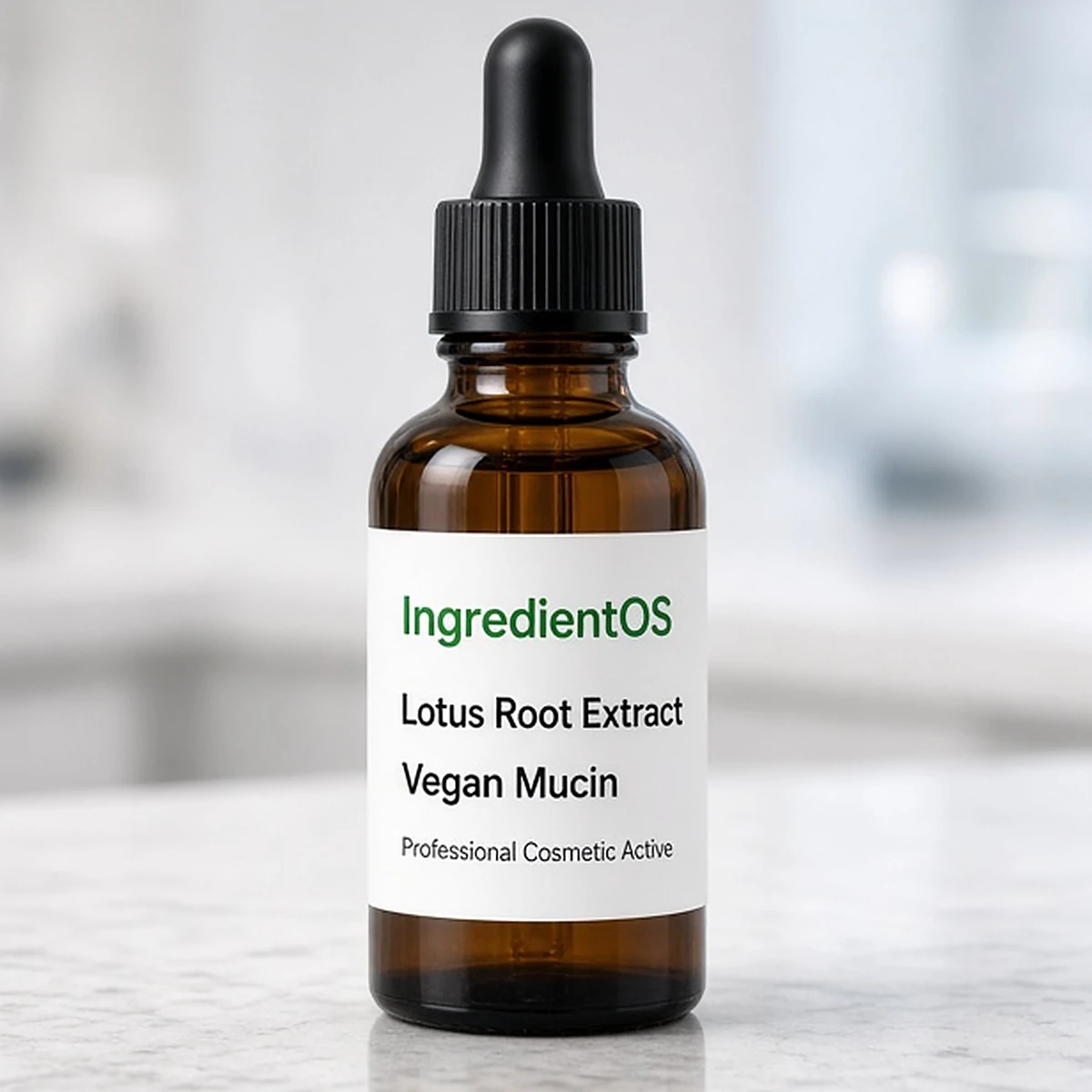
SKU: TM26101709
Lotus Root Extract Vegan Mucin
- Vegan phyto-mucin from lotus roots
- Plant alternative to snail mucin
- Upcycled roots from Jeju Island, Korea
- Cold process or cool-down below 45 °C
INCI: Nelumbo Nucifera Root Extract, 2,3-Butanediol. CAS: Nelumbo Nucifera Root Extract 85085-51-4; 2,3-Butanediol 513-85-9.
Usage Rate: 5% in the finished formula. Water phase, cold process or cool-down below 45 °C.
Packaging
Liquid sizes — 10 mL sample through bulk (US · metric)
Description
What lotus root extract is
This lotus root extract is a vegan phyto-mucin: a liquid rich in plant glycoproteins taken from lotus roots grown on Jeju Island in the Republic of Korea. The roots used are cosmetically imperfect ones that would otherwise be wasted, so the extract is an upcycled ingredient. Its slippery, cushioning feel is close to that of snail mucin, which is why it is positioned as a plant alternative to snail and other animal-based mucins in essences and serums.
It sits with the plant liquids in our botanical extracts section. For another light, water-based plant liquid, compare it with aloe vera juice, which is used as a soothing base rather than a mucin.
Composition and label INCI
The INCI is Nelumbo Nucifera Root Extract, 2,3-Butanediol. The CAS numbers are 85085-51-4 for the lotus extract and 513-85-9 for 2,3-butanediol. The butanediol is a naturally fermented polyol that the producer calls GreenDiol. It acts as the extraction solvent and a humectant, and it supports the stability of the liquid. Because the liquid already contains a glycol, check the total glycol load if your formula also uses butylene glycol or propanediol.
What it does in skin care
The producer reports test results for reduced wrinkle depth, less roughness and better elasticity. On the bench the main effect you notice is the texture: a smooth, cushioned slip and a dewy finish that suit Korean style essences. Claims on finished labels should stay cosmetic, such as smoothing, softening and comforting the skin.
Texture and feel
In gel creams it shortens the drag of carbomer and gums, and in toners it leaves a soft, hydrated finish rather than a bare one. If you want a thicker, more stringy mucin texture, combine it with a little sodium hyaluronate or a natural gum such as sclerotium gum.
How to use it
Add it to the water phase in a cold process. In a hot process, add it during cool-down below 45 °C after emulsification, which preserves its activity. Avoid long exposure to high temperatures. The extract is water-soluble and works in a finished pH range of 4.0 to 8.0, so it suits essences, serums, mists, toners, gels and creams.
Pairing ideas
Lotus root mucin pairs naturally with hyaluronic acid, panthenol and humectants. In a mucin essence, a little Saccharomyces ferment filtrate adds a second Korean favorite. In creams it softens heavier textures and adds slip without oiliness. Preserve the water phase fully.
Bench example: vegan mucin mist
This 100 g bench batch shows one way to use the material. Weigh 85.9 g distilled water, 3 g glycerin and 0.1 g sodium hyaluronate, and let the hyaluronate hydrate fully. Add 5 g lotus root extract, 2 g propanediol, 1 g panthenol and 1 g broad-spectrum preservative used at its supplier rate. Stir in 2 g aloe vera juice, check that the pH sits between 5.0 and 6.0, and fill into fine mist sprayers. The mist leaves a soft, dewy layer that can be used over makeup.
Where it fits in a product line
The extract suits vegan essences, ampoules, sheet mask serums, gel creams and facial mists, and any line that wants the mucin trend without animal ingredients. It works well as a lead story on its own or combined with other Korean actives.
Storage
Keep the container tightly closed in a cool place away from direct light and heat. Close the pack quickly after each use. For cosmetic formulation use only.
Key Benefits
- Vegan phyto-mucin from lotus roots
- Plant alternative to snail mucin
- Upcycled roots from Jeju Island, Korea
- Cold process or cool-down below 45 °C
Product Specifications
Frequently Asked Questions
Is lotus root extract really an alternative to snail mucin?
It is a plant mucin rich in glycoproteins with a similar slip and cushioned feel, and it is fully vegan.
What INCI goes on my label?
Nelumbo Nucifera Root Extract, 2,3-Butanediol.
How much should I use?
The recommended level is 5%, added cold or below 45 °C during cool-down.
Where does it come from?
From upcycled lotus roots grown on Jeju Island in the Republic of Korea.