SKU: T90102
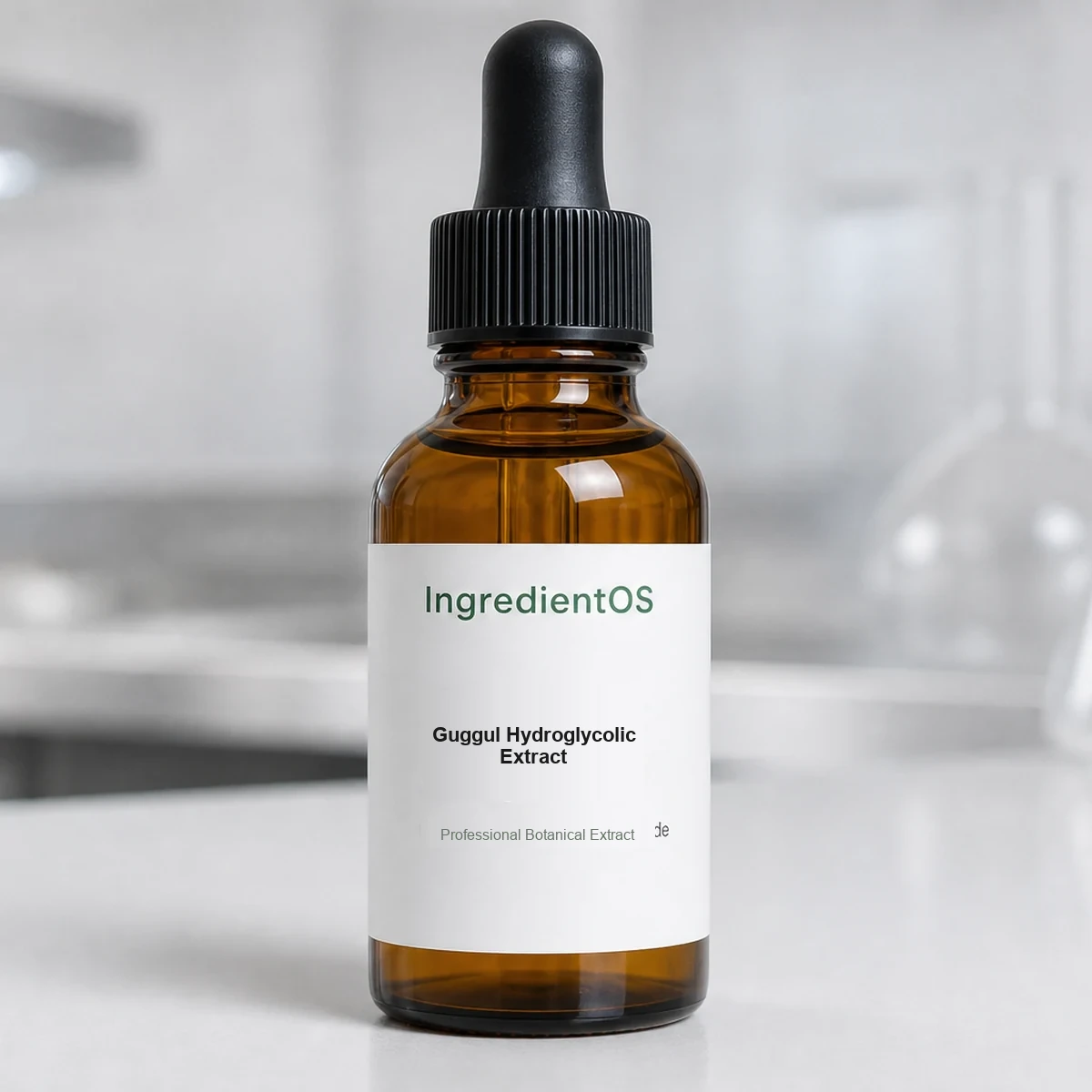
Guggul Hydroglycolic Extract
$15.99In stock
Usage Rate: Typical: use the supplied liquid active concentrate at supplier-recommended levels in leave-on formulas, delivering approximately 0.1–0.5% pure active in the finished product (1000–5000 ppm).
Packaging
Liquid sizes — 0.33 oz (10 mL) sample through bulk (US · metric)
Ships from FloridaSecure checkoutUsually ships in 1–2 business daysFree US shipping on $50+
AppearanceLiquid active concentrate
Description
Guggul Hydroglycolic Extract
Guggul comes from Commiphora wightii, also known as Commiphora mukul, a thorny tree of the dry regions of northwestern India and a relative of myrrh. Its bark releases a fragrant resin that has a long place in Ayurvedic tradition. Guggul Hydroglycolic Extract brings that plant into cosmetics as a water-soluble liquid, sold from a 0.33 oz (10 mL) pack. The exact INCI, carrier and recommended level are confirmed on the supplier CoA for each lot.
What hydroglycolic means
A hydroglycolic extract is made with a mixture of water and a glycol, such as propylene glycol, butylene glycol or glycerin. That solvent pulls out water-soluble plant compounds and gives a liquid that blends easily into water phases. The glycol adds a light moisturizing feel of its own and appears in the INCI on the label.
Products with an Ayurvedic identity
The extract is chosen mainly for its heritage and botanical story. A body lotion with warm, spicy fragrance notes, a daily face cream with a botanical identity, a light water-based serum or a toning lotion with herbal character all suit it.
Adding it to a batch
Stir the extract into the water phase during cool-down and check the finished pH. Plant extracts can bring color and a resinous odor, so test the fragrance and the look of clear products before you fix the formula. A preservation check is advisable, as with any botanical water phase.
Building a botanical range
For a broader plant-based story, pair guggul with bakuchiol or with centella asiatica oil extract in the oil phase. The Radiancyl maca extract fits a similar heritage concept. More plant extracts are collected in our botanical extracts section.
Product Specifications
Usage RateTypical: use the supplied liquid active concentrate at supplier-recommended levels in leave-on formulas, delivering approximately 0.1–0.5% pure active in the finished product (1000–5000 ppm).
SolubilityWater-soluble liquid active concentrate. Add directly to the water phase during cool-down.
StorageStore tightly closed in a cool, dry place away from light and heat. Respect the shelf life on the CoA.
TDS / CoA available on request. Contact us
Frequently Asked Questions
What plant is guggul from?
Commiphora wightii, also called Commiphora mukul, a tree of northwestern India related to myrrh.
Is this extract water-soluble?
Yes. It is a hydroglycolic extract, made with water and a glycol, so it blends into water phases.
What use level should I follow?
The INCI, carrier and level are confirmed on the supplier CoA for each lot.
Which products suit it?
Body lotions, face creams, light serums and toners with an Ayurvedic or botanical story.