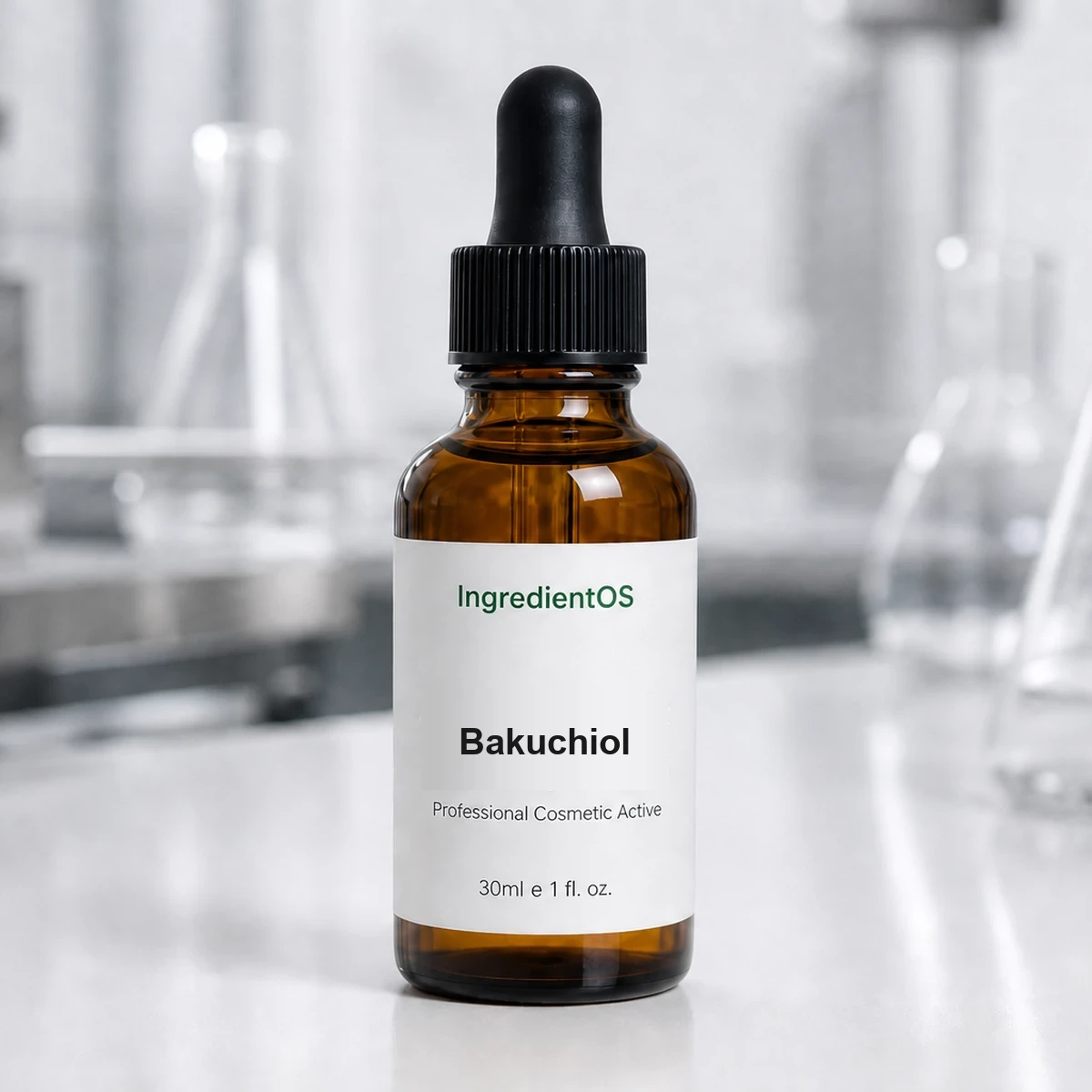
SKU: TM20030301
Bakuchiol
$15.99In stock
Usage Rate: Typical: 0.5–1.0% for pure bakuchiol (Sytheon, Sytenol A formulation notes). Scale to the bakuchiol content stated on the CoA for your lot.
Packaging
Liquid sizes — 0.33 oz (10 mL) sample through bulk (US · metric)
Ships from FloridaSecure checkoutUsually ships in 1–2 business daysFree US shipping on $35+
ApplicationCreams, lotions and serums (oil phase)
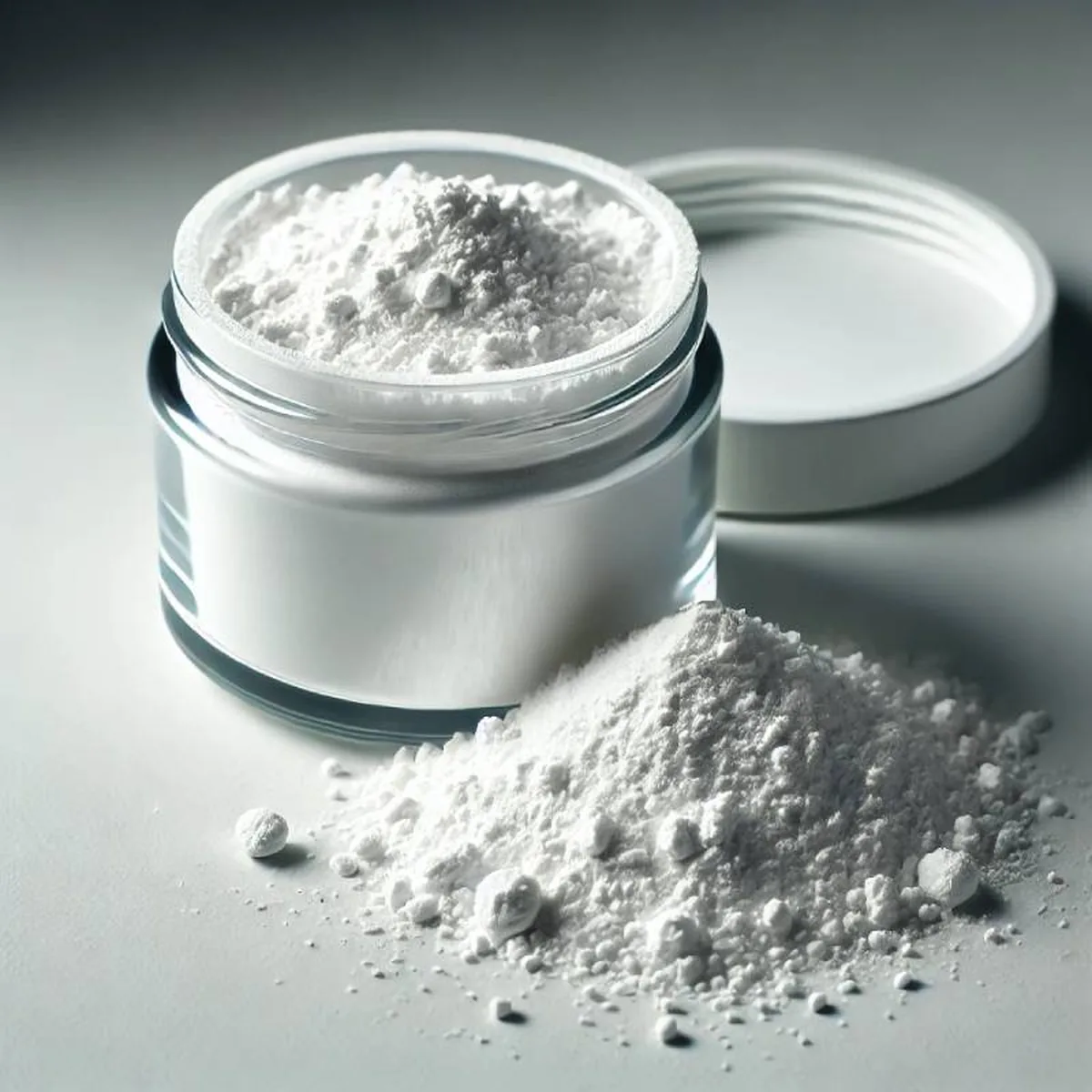
AppearanceYellow to amber viscous liquid. Confirm on CoA.
Description
What bakuchiol is
Bakuchiol, CAS 10309-37-2, is a meroterpene isolated from the seeds of Psoralea corylifolia, a plant known as babchi that has a long history in traditional Indian and Chinese herbal practice. Structurally it is not related to retinol, yet cosmetic research has compared the two, and bakuchiol has become known as a plant-based alternative to vitamin A. This page sells it as a yellow to amber viscous liquid by the milliliter. If the CoA lists a carrier, add the carrier INCI to your label.
Properties
Bakuchiol is oil-soluble and insoluble in water. It is valued in products aimed at smoother texture, finer-looking lines, a firmer look and a more even tone. Two practical advantages make it popular: it is not degraded by light the way retinol is, so it suits day creams and it is generally perceived as gentle, which suits sensitive-skin lines. It also behaves as an antioxidant in the oil phase.
Applications
Creams, lotions, serums, facial oils, eye creams and body lotions are the typical homes. Some brands build a retinol-free night range around bakuchiol, while others combine it with Retinol Oil for a dual-action story. In emulsions, its water-phase partners are often Niacinamide and humectants. More plant-based and vitamin actives are listed in our cosmetic actives catalog.
How to use it
Add bakuchiol to the oil phase of an emulsion, either during heating or, for maximum protection, to the cooled emulsion after premixing with a little ester such as caprylic/capric triglyceride. In facial oils, simply blend it into the oil base. Typical use for pure bakuchiol is 0.5 to 1.0 percent, as published by the original developer; confirm the right level for your grade on the CoA.
Positioning against retinol
Shoppers often ask whether bakuchiol replaces retinol. The honest answer for your marketing is that it is a different molecule with its own profile: plant-derived, light-stable and comfortable for daily use. Some brands present it as an entry step before retinol, others as a daytime partner to an evening retinol product. Either way, describe the look you aim for and let the INCI speak for itself.
Color and scent considerations
Bakuchiol is yellow to amber, and at higher levels it can tint white creams slightly. It also has a mild, characteristic odor. Both effects are usually acceptable at typical use levels. If you need a pure white cream, keep the level at the lower end and consider a light tint in the packaging. Test fragrance compatibility, as the natural scent can shift light floral accords.
Compatibility
Bakuchiol mixes with plant oils, esters, squalane, silicones, fatty alcohols and oil-soluble vitamins. It is stable across a wide pH range and combines well with niacinamide, hyaluronic acid, peptides and ceramides. It is not water-soluble, so it needs an emulsion or an oil-based product. Avoid strong oxidizers.
Characteristics
Form: yellow to amber viscous liquid, as stated on the lot CoA. INCI: Bakuchiol. CAS: 10309-37-2. Solubility: oil-soluble, insoluble in water. Typical use for pure bakuchiol: 0.5 to 1.0 percent. Supply: milliliter packs.
Original recipe: day and night smoothing cream, 100 g
Phase A: distilled water 68.30 g, glycerin 4.00 g, niacinamide 3.00 g, xanthan gum 0.20 g. Phase B: cetearyl olivate and sorbitan olivate 5.00 g, caprylic/capric triglyceride 8.00 g, squalane 5.00 g, shea butter 2.00 g. Heat A and B to 75 °C, emulsify and cool. Phase C below 40 °C: Bakuchiol 1.00 g premixed with caprylic/capric triglyceride 1.00 g, panthenol 1.00 g, tocopherol 0.50 g, preservative 1.00 g. Mix until smooth and adjust pH to about 5.5.
Storage
Keep the bottle closed in a cool, dark place. Reseal after each use to limit oxidation. Ships from Florida in milliliter packs.
Product Specifications
Usage RateTypical: 0.5–1.0% for pure bakuchiol (Sytheon, Sytenol A formulation notes). Scale to the bakuchiol content stated on the CoA for your lot.
SolubilityOil-soluble; insoluble in water. Add to the oil phase or dissolve in an ester or oil before use.
StorageStore tightly sealed between 10 and 30 °C, away from light and heat (Sytheon TDS). Reclose after use and respect the shelf life on the CoA.
TDS / CoA available on request. Contact us
Frequently Asked Questions
What is bakuchiol?
A meroterpene from the seeds of Psoralea corylifolia, the babchi plant. CAS 10309-37-2.
Is bakuchiol oil-soluble?
Yes. It is oil-soluble and insoluble in water; add it to the oil phase or dissolve it in an ester.
Can it be used in the daytime?
Yes. Unlike retinol it is not degraded by light, so it suits day and night products.
Can I combine it with retinol?
Yes. Many brands combine both in the same product for a layered story.