
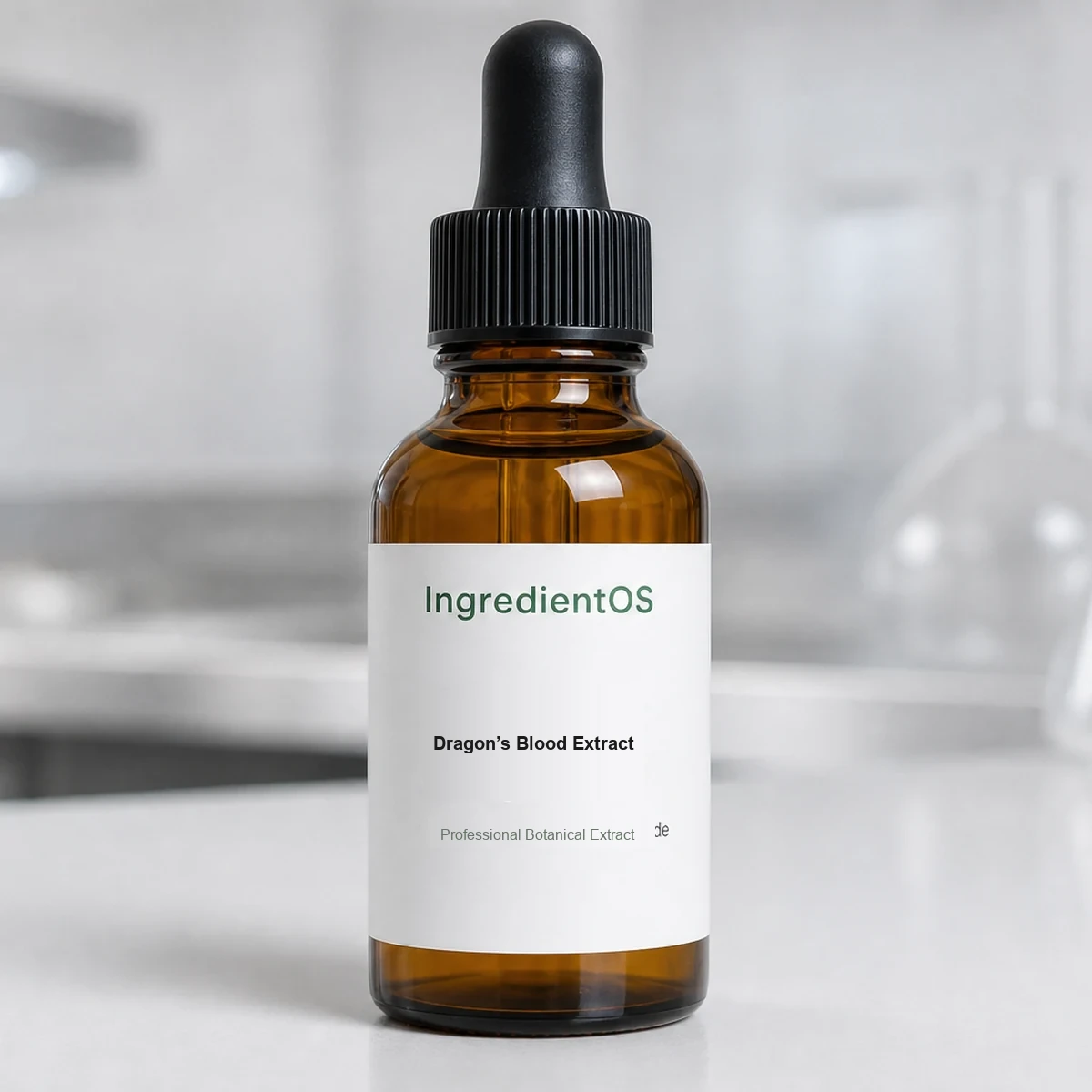
SKU: 900059
Dragon’s Blood Extract
$15.99In stock
INCI: Glycerin, Aqua, Croton Lechleri Resin Extract
Usage Rate: 3-5%, added to the active phase
Packaging
Liquid sizes — 0.33 oz (10 mL) sample through bulk (US · metric)
Ships from FloridaSecure checkoutUsually ships in 1–2 business daysFree US shipping on $50+
AppearanceLiquid active concentrate
Description
Dragon's Blood Extract in brief
Dragon's Blood Extract is a botanical liquid from the resin of Croton lechleri, the sangre de drago tree of the Amazon rainforest. It is prepared in glycerin and water by the French producer Cabiosa, and its INCI is Glycerin, Aqua, Croton Lechleri Resin Extract. The liquid is red orange to brown and dissolves in water. Formulators add it to the active phase at 3 to 5% of the finished product. This listing sits in our botanical extracts range and is aimed at natural and plant focused brands that want a striking, story rich extract.
From tree sap to cosmetic extract
Croton lechleri is a fast growing tree of the upper Amazon. Its bark yields a dark red sap that has given the tree its common name. The sap is collected, purified and prepared as a water and glycerin extract that is easy to use in cosmetics. Glycerin is a natural humectant, so the base itself adds a little moisture to the formula. For a natural brand, the rainforest origin, the deep red color and the unusual name combine into a memorable product story.
Benefits in a formula
The resin is a natural film former. When it dries on the skin, it leaves a thin, smooth layer that gives an immediate soft and protected feel. Skin looks smoother, more even and more radiant. The extract suits products for skin that feels dry, tight or stressed, and products that promise a quick visible improvement in skin texture. Keep the language cosmetic and sensory.
Formulating with a natural extract
Add the extract to the water phase of a gel or serum, or to an emulsion at cool-down below 40 °C, at 3 to 5%. Natural extracts work best at a skin friendly pH of about 5 to 6. The red to brown color shows in clear and white products, so use it as a design feature: a rosy gel serum, a terracotta clay mask or a warm toned cream. For a botanical face mask, the extract fits with kaolin and aloe vera gel, and in a natural serum with fermented rice extract for a glow concept. You can compare more plant extracts in our botanical extracts section.
Natural and clean beauty fit
The extract has a short, readable INCI with no synthetic carriers. Glycerin and water make it suitable for natural cosmetic concepts, and its name is easy to communicate. Brands can build a full dragon's blood line, from a gentle cleanser to a serum and a cream, around one hero ingredient.
Product ideas
Botanical serums, rosy gel masks, clay masks, smoothing day creams, eye gels, body lotions and natural care for skin that feels dry or stressed are the main uses.
Sample recipe: red clay smoothing mask, 100 g
Distilled water 65.60 g, kaolin 18.00 g, red clay 4.00 g, glycerin 5.00 g, Dragon's Blood Extract 4.00 g, xanthan gum 0.40 g, panthenol 1.00 g, preservative 1.00 g, fragrance 0.20 g, citric acid solution 0.80 g. Disperse xanthan in glycerin, add to the water and stir until smooth, sprinkle in the clays, then add panthenol, the extract, preservative and fragrance and adjust to about pH 5.5.
Sourcing and labeling
On the ingredient list it appears as Glycerin, Aqua and Croton Lechleri Resin Extract. In marketing copy, sangre de drago from the Amazon is a strong and accurate story. Keep the product page honest about the color, so consumers expect the warm tint.
Testing a natural formula
Natural formulas with plant extracts need careful preservation and stability testing. Run a challenge test on the finished product and a four week test at 40 °C, checking color, odor, pH and viscosity. Resins may darken slightly over time, which is normal for a natural extract and can be reduced with opaque packaging.
Storage
Keep it in a cool, dark place in a tightly closed container. A certificate of analysis comes with every lot.
Product Specifications
INCIGlycerin, Aqua, Croton Lechleri Resin Extract
Usage Rate3-5%, added to the active phase
SolubilityWater-soluble
StorageStore tightly closed in a cool, dry place away from light and heat. Refrigerate opened material where practical; respect supplier shelf life.
TDS / CoA available on request. Contact us
Frequently Asked Questions
What is the INCI of Dragon's Blood Extract?
Glycerin, Aqua, Croton Lechleri Resin Extract.
What dose is typical?
3 to 5% of the finished product.
Which plant does it come from?
From the resin of Croton lechleri, a tree of the Amazon basin known locally as sangre de drago.


