SKU: 670170
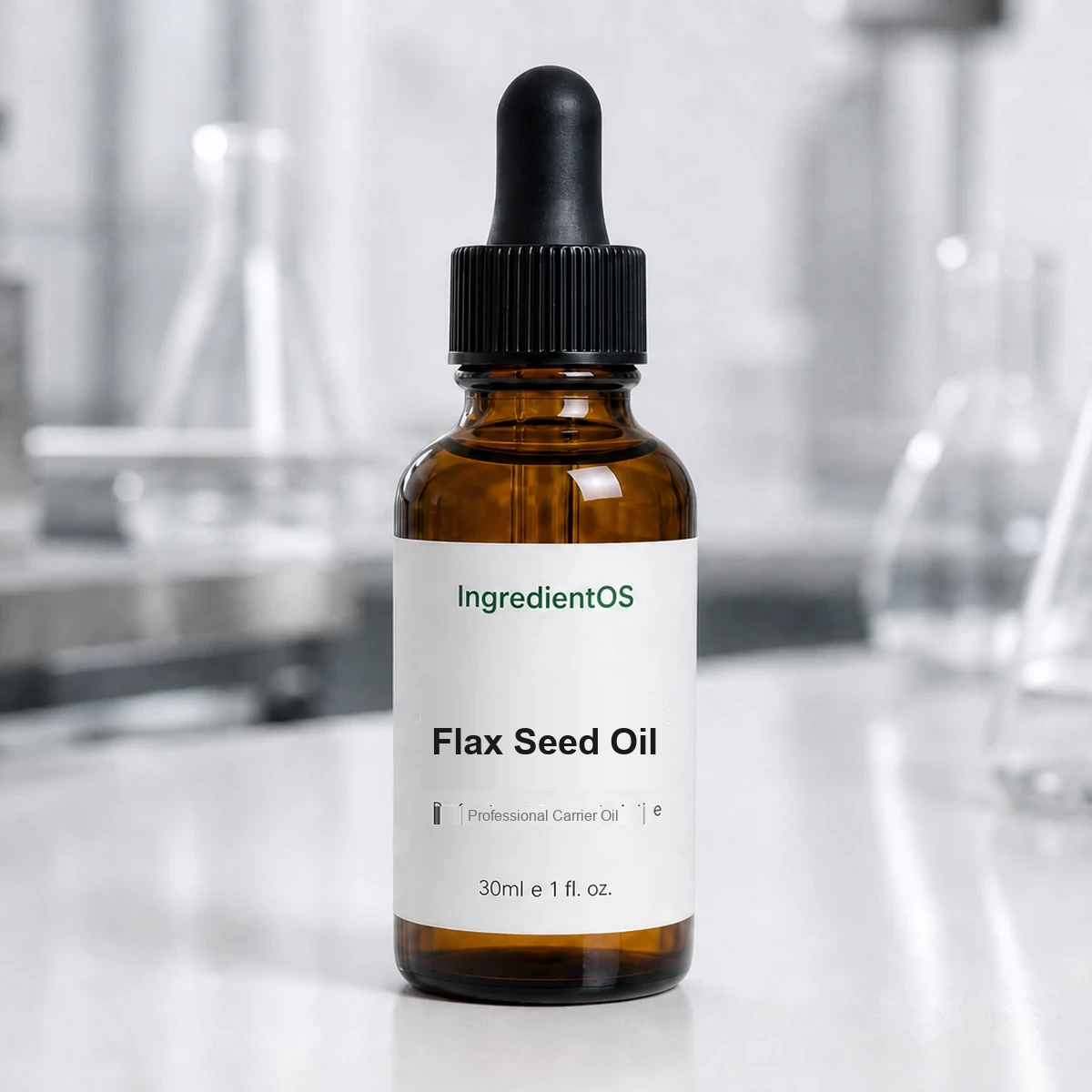
Flax Seed Oil
$15.99In stock
Usage Rate: Typical: use the supplied liquid active concentrate at supplier-recommended levels in leave-on formulas, delivering approximately 0.1–0.5% pure active in the finished product (1000–5000 ppm).
Packaging
Liquid sizes — 0.33 oz (10 mL) sample through bulk (US · metric)
Ships from FloridaSecure checkoutUsually ships in 1–2 business daysFree US shipping on $35+
Applicationedible oil for salads, facial cosmetics, professional cosmetics for beauty salons, massage oils, care products
AppearanceGolden yellow oil. Confirm on CoA.
Description
Flax has been cultivated for thousands of years for its fibers, used to make linen, and for its seeds. Flax Seed Oil, also known as linseed oil, is pressed from those seeds. In cosmetics it is valued for its fatty acid profile, especially its high content of alpha-linolenic acid, and for a light feel that absorbs quickly.
Fatty acid profile
Flax seed oil is one of the richest plant sources of alpha-linolenic acid, an omega-3 fatty acid. It also contains linoleic and oleic acids. This profile gives it a light, dry-touch feel compared with many oils, and makes it attractive for products for dry and mature skin. The exact specification of each lot is confirmed on the CoA.
The oxidation challenge
Polyunsaturated fatty acids react easily with oxygen. Flax seed oil can turn rancid quickly if exposed to air, light or heat. This is the most important practical point when working with it. Always add an antioxidant, use opaque packaging with minimal headspace and keep both the raw material and the finished product cool.
Applications listed in the supplier specification
Facial cosmetics, professional salon cosmetics, massage oils and care products. The supplier specification also mentions edible use; this listing is a cosmetic raw material and should be used as such.
Facial oil
A blend of flax seed oil with more stable oils such as jojoba and squalane gives a balanced facial oil.
Creams
In the oil phase of creams, a modest proportion of flax seed oil adds a light, nourishing feel.
Massage oil
Salon massage oils benefit from its glide, but blend it with stable oils to extend shelf life.
Formulating guidance
Use flax seed oil as part of an oil blend rather than alone. Add mixed tocopherols or another antioxidant as soon as the bottle is opened. Avoid heating it for long periods; add it to the oil phase near the end or to the cooled emulsion where possible. Good partners include cosmetic jojoba oil for stability and rosehip seed oil for a rich seed oil story. More oils are listed in carrier oils.
Claims
Use sensory wording: softer, smoother, nourished-feeling skin, a light, quickly absorbed finish.
Who buys it
Formulators of natural oil blends, salon professionals and handmade cosmetics makers who value plant oils with a clear fatty acid story.
Testing
Monitor odor at every stability checkpoint. A paint-like or fishy note indicates oxidation. Peroxide value testing gives an objective measure if available.
Packaging
Dark glass or opaque airless containers with minimal headspace. Small sizes encourage customers to use the product while it is fresh.
Blending for stability and feel
A good flax seed oil product depends on its partners. Jojoba, which is technically a liquid wax ester, is very stable and gives a satin feel. Squalane adds lightness and stability. Caprylic/capric triglyceride makes the blend feel drier and helps it spread. Keeping flax seed oil at a moderate share of the blend gives most of its sensory and fatty acid benefits while greatly improving shelf life. Test the blend in an open dish at room temperature for a week to see how quickly any off-odor develops, which is a simple way to compare different antioxidant levels. In salon massage oils, choose a share that keeps the glide pleasant through a long massage without leaving the skin tacky.
Original recipe: omega facial oil, 100 g
Jojoba oil 35.00 g, squalane 30.00 g, flax seed oil 15.00 g, caprylic/capric triglyceride 15.00 g, rosehip seed oil 3.50 g, mixed tocopherols 1.00 g, rosemary leaf extract in oil 0.50 g. Combine the oils at room temperature, add tocopherols and rosemary extract immediately, stir until uniform and fill into dark dropper bottles with minimal headspace.
Storage
Keep the bottle tightly closed in a cool, dark place, ideally refrigerated after opening. Use within the period stated on the CoA.
Product Specifications
Usage RateTypical: use the supplied liquid active concentrate at supplier-recommended levels in leave-on formulas, delivering approximately 0.1–0.5% pure active in the finished product (1000–5000 ppm).
SolubilityOil-soluble; insoluble in water. Add to the oil phase.
StorageStore tightly closed in a cool, dry place away from light and heat. Respect the shelf life on the CoA.
TDS / CoA available on request. Contact us
Frequently Asked Questions
What is flax seed oil rich in?
Alpha-linolenic acid, an omega-3 fatty acid.
Why is it sensitive?
Its high level of polyunsaturated fatty acids makes it oxidize quickly. Add an antioxidant and store it cool and dark.
Which products is it used in?
Facial oils and creams, salon cosmetics, massage oils and care products.
Is this listing for food use?
It is sold as a cosmetic raw material. Do not repurpose it for food without a food-grade specification.