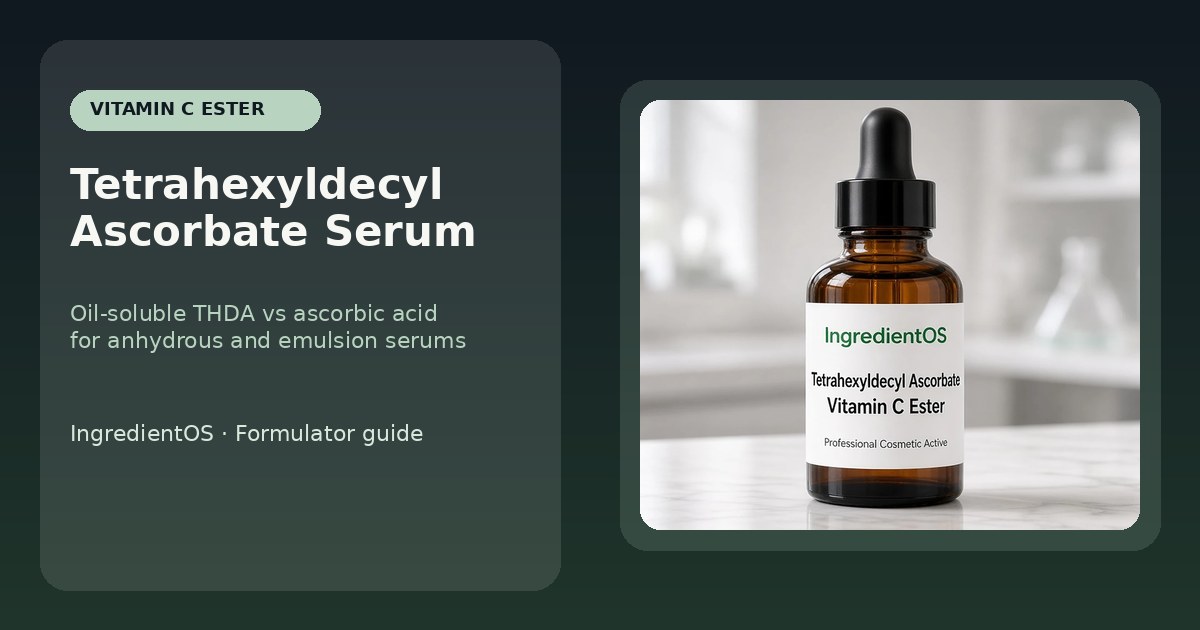
A tetrahexyldecyl ascorbate serum puts vitamin C into the oil phase instead of a low-pH water phase. Tetrahexyldecyl ascorbate, often shortened to THDA or THD ascorbate, is a liquid tetraester of ascorbic acid that dissolves in oils, esters and silicones, so it suits anhydrous dropper serums and the oil phase of light emulsions where pure L-ascorbic acid would never dissolve or stay stable.
This guide is written for formulators choosing between THDA and ascorbic acid for a serum brief. It covers chemistry and INCI, the two serum formats that actually work, use levels and process temperatures from typical supplier ranges, how THDA compares with ascorbic acid and with other esters, and how to keep claims cosmetic. It complements our broader aminopropyl ascorbyl phosphate vs other vitamin C derivatives comparison, which focuses on water-phase phosphates, and our ascorbyl palmitate antioxidant for oils guide, which treats the powder ester mainly as an oil protector.
What Tetrahexyldecyl Ascorbate Is on the Label and on the Bench
INCI, CAS and Physical Form
The INCI name is Tetrahexyldecyl Ascorbate and the CAS number is 183476-82-6. Chemically it is ascorbic acid esterified with four branched hexyldecyl chains, which removes water solubility and turns the molecule into a clear to pale yellow viscous liquid. Our Tetrahexyldecyl Ascorbate is a non-deodorized grade: it keeps a faint characteristic odor that usually disappears at leave-on use levels, or that a light fragrance or bisabolol can cover if a brand wants a completely neutral scent.
Why the Ester Exists
L-ascorbic acid is water-soluble, strongly acidic in solution and quick to oxidize once dissolved, which is why classic water vitamin C serums sit near pH 3 and need opaque, air-limiting packs. THDA was developed so brands could put a vitamin C story into oils, balms and emulsions without that low-pH constraint. On skin, esterases can release ascorbic acid from the ester over time; on the bench, you should still treat THDA as its own raw material with its own solubility, dose and stability rules, not as a drop-in percentage swap for ascorbic acid.
Tetrahexyldecyl Ascorbate Serum vs Ascorbic Acid
Phase and Solubility Decide the Format
Ascorbic acid belongs in a water serum. THDA belongs in an oil serum or in the oil phase of an emulsion serum. If the brief is a clear, watery gel with a strong acid sting and a short shelf life after opening, ascorbic acid is still the classic answer. If the brief is a facial oil, a silicone-light serum, a milky emulsion or a product for customers who dislike low-pH sting, THDA is the practical vitamin C. Trying to force THDA into a preservative-heavy water gel without oils or a proper emulsifier simply leaves droplets floating and a weak, uneven dose.
pH, Feel and Tolerance
Ascorbic acid serums are typically finished near pH 2.5 to 3.5 so enough undissociated acid remains available; that acidity is also why some users report sting. THDA itself is not an acid buffer, so it does not pull an emulsion down the way ascorbic acid does. For emulsions carrying THDA, supplier guidance commonly allows a finished pH between about 3 and 6, and our product card follows that window. Anhydrous oil serums have no meaningful pH, which removes the acid-sting variable entirely and is one reason THDA oil serums are positioned for sensitive-feeling skin.
Stability and Packaging
Dissolved ascorbic acid browns and loses titer when air, light, heat and metal ions are present. THDA is markedly more stable in normal cream and oil bases, which is why it appears in moisturizers and eye creams that sit on shelf for months. It is not immortal. Heat above roughly 45 °C for long holds, clear jars and large headspace still age the ester, so amber droppers, airless pumps and cool storage remain good habits. Pairing with tocopherol in the oil phase is standard practice for lipid antioxidant systems and matches how many brands build THDA facial oils.
When a Brand Uses Both
Some lines keep a morning ascorbic acid water serum for customers who want that classic format, and a THDA moisturizer or oil serum for evening or for sensitive-skin SKUs. That is a range architecture choice, not a requirement. Do not mix high-level ascorbic acid and THDA in one water-heavy formula just to print two vitamin C names; the phases, pH targets and stability needs fight each other. If you want a second water-phase ascorbate instead, magnesium ascorbyl phosphate or the aminopropyl ascorbyl phosphate comparison linked above are the cleaner options.
Building the Serum: Anhydrous Oil vs Light Emulsion
Anhydrous Oil Serum
An anhydrous tetrahexyldecyl ascorbate serum is the simplest build. You weigh a light emollient blend, stir in THDA at room temperature until uniform, add tocopherol if desired, fill into amber droppers and close tightly. No water means no water-phase preservative, but cleanliness, low water activity and intact seals still matter. A starting frame used on our product page for a 100 g bench batch is roughly 60 g squalane-type emollient, about 25 g caprylic/capric triglyceride, 10 g of a light plant oil such as jojoba, 3 g THDA and 0.5 g tocopherol, with optional bisabolol or a light fragrance to soften the natural odor of a non-deodorized grade. Treat that as a process example for your own stability work, not as a finished, marketed formula.
Light Emulsion or Milky Serum
When marketing wants a lighter, less oily finish, put THDA in a small oil phase and emulsify into water. Heat the oil phase only as high as the emulsifier needs, keep THDA addition below 80 °C per common supplier process notes, emulsify, cool under gentle stirring, then add water-phase actives such as niacinamide, panthenol or a humectant below about 40 °C. Finish in the pH 3 to 6 window and confirm viscosity after 24 hours, because some emulsifiers thin overnight when the oil phase carries a sizable ester load. At 5% and above, THDA is no longer a trace active; it becomes part of the emollient system and can change spread, gloss and emulsion demand, so adjust the rest of the oils rather than stacking it on top of a full fatty phase.
Use Levels Without Invented Efficacy Numbers
Our card lists a typical finished-formula use of 0.5 to 3%, with room up to 10% in concentrated serums. Industry sheets for related THDA grades often cite similar leave-on bands, and some markets discuss functional whitening listings around 2% in Korea and 3% in Japan for specific registered grades. Those regulatory listings are not universal cosmetic rules and do not replace your safety assessor. Start inside 0.5 to 3% for a first prototype, raise only when cost, feel and your own panel support it, and always confirm the assay and recommended range on the CoA for the lot you buy. Do not copy competitor percentage claims about collagen or melanin onto your label unless you measured them on your finished formula.
Partners, Conflicts and Sibling Esters
Good Partners in a Serum Line
THDA blends with squalane, light esters, plant oils and many silicones. Tocopherol or tocopheryl acetate powder in the oil phase supports the antioxidant story for lipids. Niacinamide in the water phase of an emulsion lets one product carry vitamin C and vitamin B3 without the old heated ascorbic-acid conflict. Encapsulated retinol in a night cream is a common commercial pairing because the oil-soluble vitamin C ester does not force the low pH that unsettles some retinoid systems. More antioxidant and tone-focused materials sit in our cosmetic actives section.
What to Keep Separate
Strong oxidizers, unnecessary prolonged heat and copper-rich actives in the same oil phase are poor company for any ascorbyl ester. A pure L-ascorbic acid water serum is better as a separate SKU than as a co-solute with THDA. High-shear mixing after a delicate emulsion has formed can also throw oil droplets and make the dose look speckled; add THDA with the oils, emulsify once, then keep later stirring gentle.
THDA Versus Ascorbyl Palmitate
Formulators often confuse the two lipophilic vitamin C esters. Ascorbyl palmitate is a powder used mainly at low levels to help protect oils from oxidation, which is why our ascorbyl palmitate guide focuses on that antioxidant role and on CIR-reported use bands around a few tenths of a percent. THDA is a liquid chosen as a featured skin-care active at higher leave-on levels in serums and creams. You can use both in one range, but they answer different briefs: ascorbyl palmitate for oil longevity, THDA for the vitamin C serum story in lipid systems.
Labels, Claims and How to Choose
List the INCI as Tetrahexyldecyl Ascorbate in concentration order. Keep claims cosmetic: a brighter, more even-looking tone, a fresh and radiant look, antioxidant care for the formula and comfort for customers who dislike acidic serums. Avoid language about treating a pigment condition, changing melanin biology, healing skin or replacing sunscreen. Daily sun protection remains a separate, regulated product category; THDA is not a sun-protection filter.
Choose a tetrahexyldecyl ascorbate serum when the brief is oil-soluble, non-acidic and shelf-stable vitamin C. Choose ascorbic acid when the brief insists on a classic low-pH water serum and the brand accepts the packaging and stability cost. For water-phase derivatives instead of either extreme, return to the aminopropyl ascorbyl phosphate comparison. Ready packs of THDA ship from the actives catalog with CoA visibility on the card, so you can lock a dose against the lot you actually weigh.
Frequently asked questions
Is tetrahexyldecyl ascorbate the same as ascorbic acid in a serum?
No. Ascorbic acid is water-soluble and usually needs a low pH near 3. Tetrahexyldecyl ascorbate is an oil-soluble liquid ester that goes into anhydrous serums or the oil phase of emulsions, typically with a finished emulsion pH between about 3 and 6.
What use level should I start with for a THDA serum?
A practical starting band is 0.5 to 3% of the finished formula, with some concentrated serums going higher up to about 10%. Confirm the recommended range and assay on the CoA for your lot before you lock a dose.
Can I add tetrahexyldecyl ascorbate to a clear water gel?
Not without oils or an emulsifier. THDA is oil-soluble and will not dissolve in water. Use an anhydrous oil serum or a light emulsion that gives the ester a proper oil phase.
How is THDA different from ascorbyl palmitate?
Ascorbyl palmitate is a powder ester used mainly at low levels to help protect oils. Tetrahexyldecyl ascorbate is a liquid used as a featured vitamin C active in serums and creams at higher leave-on levels.
Try it with a 1 g sample pack
Neat peptide powders in 1 g packs, INCI on every page, shipped from Florida.
Shop peptide powders