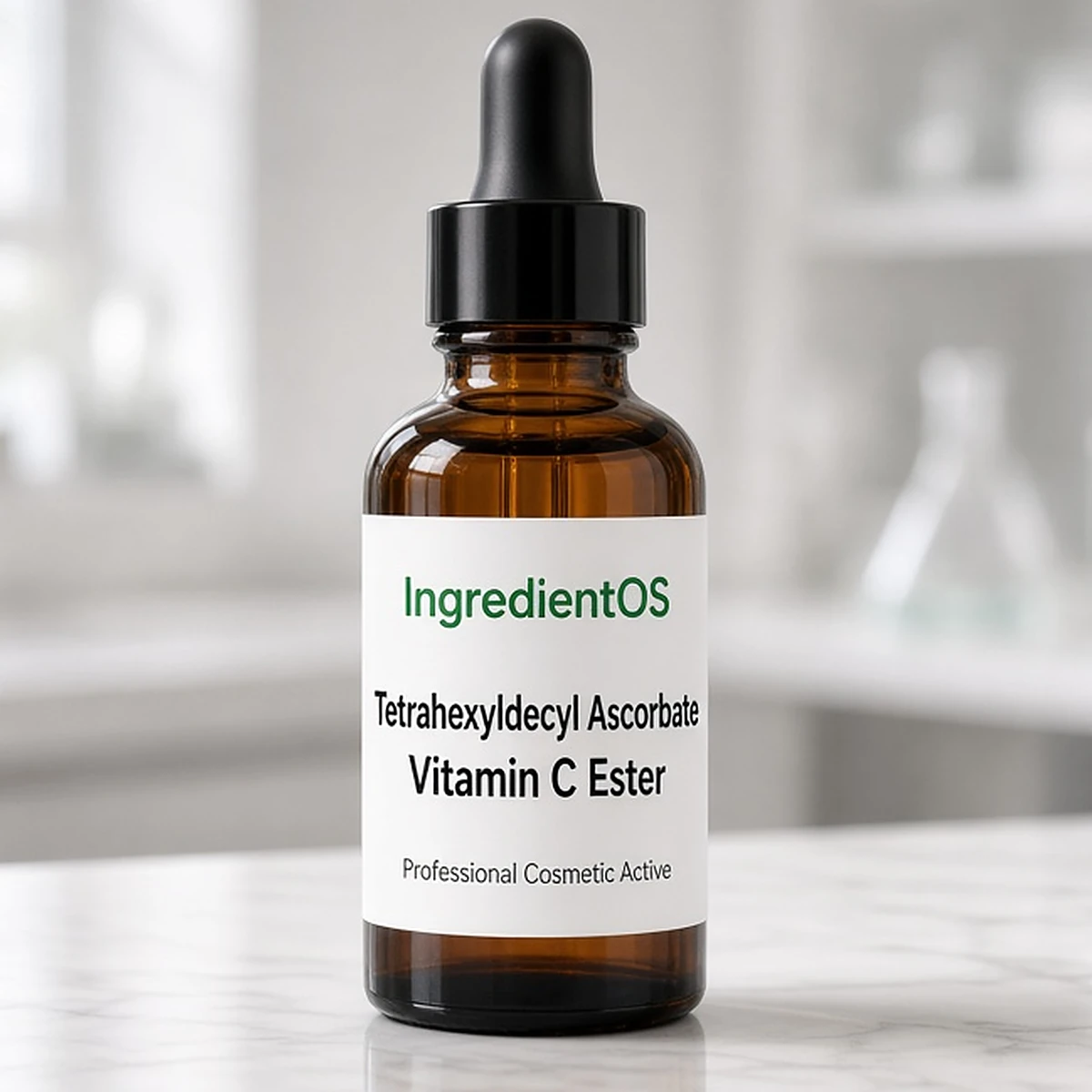
SKU: TM26101704
Tetrahexyldecyl Ascorbate THDA
- Stable oil-soluble vitamin C ester
- Non-acidic and gentle on sensitive skin
- Oil phase below 80 °C
- Non-deodorized grade, faint natural odor
INCI: Tetrahexyldecyl Ascorbate. CAS 183476-82-6.
Usage Rate: 0.5 to 3% in the finished formula, up to 10%. Oil phase below 80 °C.
Packaging
Liquid sizes — 10 mL sample through bulk (US · metric)
Description
What tetrahexyldecyl ascorbate is
Tetrahexyldecyl ascorbate, usually shortened to THDA, is an oil-soluble ester of vitamin C. Four branched fatty chains are attached to the ascorbic acid core, which turns a water-soluble and easily oxidized molecule into a liquid that blends into oils, esters and silicones. The result is a very stable vitamin C option for anhydrous serums, facial oils and the oil phase of emulsions, where pure ascorbic acid cannot be used at all.
THDA sits with the vitamin C materials in our cosmetic actives section. Formulators often compare it with ascorbyl palmitate, another lipophilic vitamin C ester. Ascorbyl palmitate is a powder used mostly as an antioxidant for oils, while THDA is a liquid chosen as a skin care active in its own right.
Composition and label INCI
The INCI is Tetrahexyldecyl Ascorbate and the CAS number is 183476-82-6. This grade is non-deodorized: it is a colorless to light yellow liquid with a faint, characteristic odor. In most creams and serums that odor disappears at use level, and a light fragrance or essential oil covers it fully if needed.
What it does in skin care
THDA works as an antioxidant that inhibits lipid peroxidation, so it helps protect skin lipids from oxidative stress caused by sun exposure and pollution. Studies on the ester point to support for collagen in the skin and to a brighter, more even tone, because it reduces melanin formation. Unlike ascorbic acid, it is not acidic, so it does not exfoliate and is well tolerated by sensitive skin.
How to use it
Add THDA to the oil phase at temperatures below 80 °C, or simply stir it into an anhydrous base at room temperature. In emulsions, keep the finished pH between 3 and 6. Do not apply the raw material directly to the skin; use it only diluted in a finished product.
Compatibility notes
THDA blends with squalane, light esters, plant oils and silicones. It pairs well with encapsulated retinol in night creams and with niacinamide in the water phase of an emulsion, which lets one product carry both vitamin C and vitamin B3.
THDA or ascorbic acid
The two materials solve different problems. L-ascorbic acid is water-soluble, needs a pH near 3 and oxidizes quickly once dissolved, so it suits fresh water serums. THDA is oil-soluble, stays stable for the shelf life of a normal cream and does not lower the pH, so it suits emulsions, oils and products for daily use by sensitive skin. Some brands use both: a small amount of ascorbic acid in a water serum and THDA in the matching moisturizer.
Bench example: vitamin C facial oil serum
This 100 g bench batch shows one way to use the material. Weigh 60 g squalane, 25.5 g caprylic/capric triglyceride and 10 g jojoba oil into a clean beaker. Add 3 g tetrahexyldecyl ascorbate and 0.5 g tocopherol and stir gently until uniform. Add 1 g of a light fragrance or bisabolol if you want to soften the natural odor. Fill into amber dropper bottles and close tightly. Because the serum contains no water, it needs no water-phase preservative, but keep it away from light.
Where it fits in a product line
THDA is the natural vitamin C for oil serums, balms, eye creams and moisturizers where a gentle, non-acidic active is needed.
Storage
Keep the container tightly closed in a cool place away from light and heat. Close the pack quickly after each use to limit air contact. For cosmetic formulation use only.
Key Benefits
- Stable oil-soluble vitamin C ester
- Non-acidic and gentle on sensitive skin
- Oil phase below 80 °C
- Non-deodorized grade, faint natural odor
Product Specifications
Frequently Asked Questions
Is THDA water-soluble?
No. It is oil-soluble and goes into the oil phase or an anhydrous base.
What does non-deodorized mean?
The liquid keeps its faint natural odor. At use level it is usually not noticeable.
How much should I use?
Typical use is 0.5 to 3%, and up to 10% in concentrated serums.
Will it sting like ascorbic acid?
THDA is not acidic, so it does not exfoliate and is well tolerated by sensitive skin.