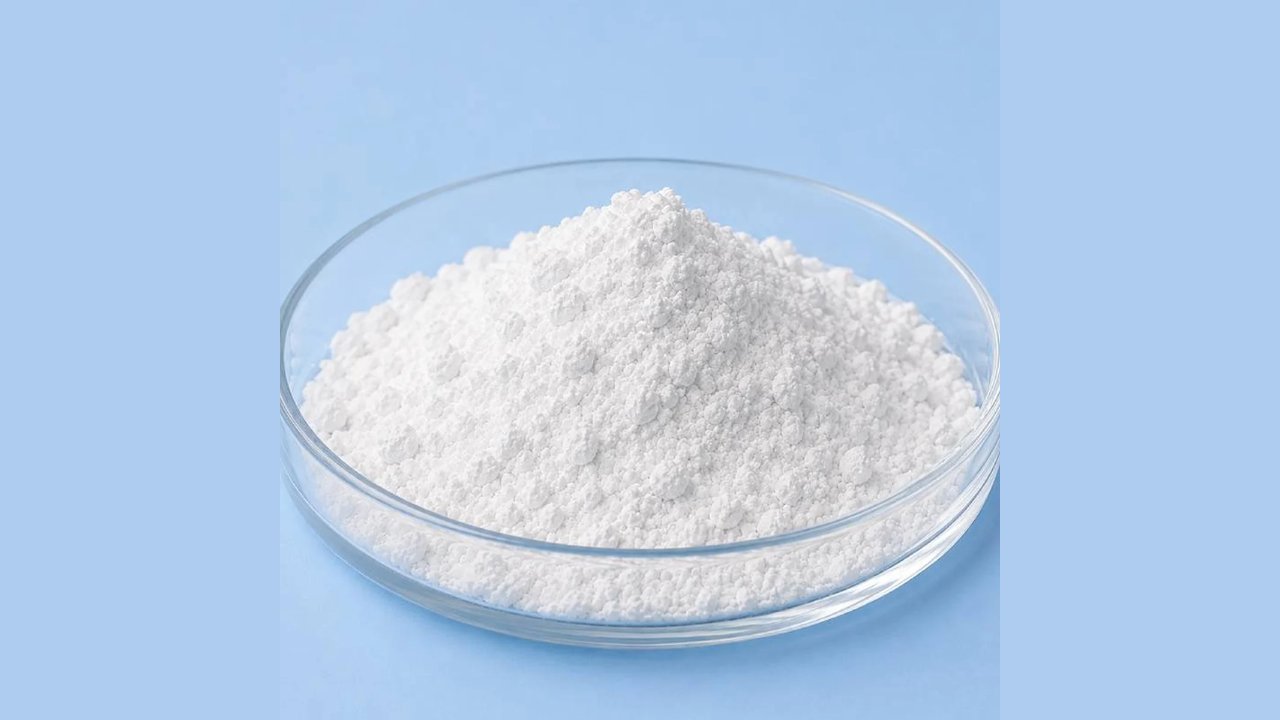
As an antioxidant, ascorbyl palmitate protects the oil phase of a cosmetic from rancidity at low levels, usually 0.01 to 0.2% of the formula, and it works best alongside vitamin E, which it helps regenerate. It is the oil-soluble ester of vitamin C and palmitic acid, so it dissolves in warm oils and the oil phase of emulsions rather than in water.
Many listings sell ascorbyl palmitate as a brightening vitamin C, but most of its real-world use is quieter: keeping plant oils, butters and oil-soluble actives fresh for the life of the product. This article covers that protective role, how to dose and dissolve it, which partners make it work, and when a vitamin C claim on the label is justified.
What ascorbyl palmitate is
The INCI name is Ascorbyl Palmitate. Chemically it is ascorbic acid joined by an ester bond to palmitic acid, a C16 fatty acid. The fatty tail makes the molecule compatible with lipids, which plain ascorbic acid is not. Our Ascorbyl Palmitate Vitamin C ester is a white to pale yellow powder, listed as soluble in the fatty phase, oils, lipids and emollients.
It is one of the most widely used vitamin C derivatives in cosmetics. The Cosmetic Ingredient Review report on ethers and esters of ascorbic acid, published in 2017, cites 2017 FDA voluntary registration data with Ascorbyl Palmitate reported in 2,557 formulations, mostly leave-on products, far ahead of any other ester in that group. The same panel concluded that these esters are safe in the present practices of use and concentration.
Why oils need an antioxidant
Unsaturated plant oils such as rosehip, grapeseed, sunflower and evening primrose react slowly with oxygen. The result is rancidity: an off odor, a change in color and a drop in quality that consumers notice quickly in facial oils and balms. Light, heat, trace metals and air in the headspace of a bottle all speed it up. An antioxidant does not stop oxidation forever, but it slows the chain reaction so the product reaches the end of its shelf life smelling as it should.
Water-based preservatives do nothing for this problem. Preservatives control microbes; antioxidants protect lipids. An anhydrous oil serum may not need a preservative at all, but it almost always benefits from an antioxidant system.
Use level
The CIR safety assessment of 1999 reports that ascorbyl palmitate is used in cosmetics at concentrations between 0.01 and 0.2%. That is the antioxidant range, and it matches the figure on our product page for protecting the oil phase. One European supplier of an ascorbyl palmitate grade recommends 0.1 to 0.5% for the same purpose. The 2017 CIR update lists a maximum reported use of 0.52% in lipstick. Our product page notes up to about 1% in creams that feature vitamin C on the label.
For a facial oil or balm, a sensible way to work is to start near the low end, run accelerated stability with and without the antioxidant, and increase only if the protected sample still develops odor before the control. More is not automatically better, and higher levels increase the risk of a faint yellow tint over time.
The partnership with vitamin E
How regeneration works
Tocopherol, vitamin E, is the classic oil antioxidant. When it intercepts a free radical it is itself oxidized and loses activity. Ascorbyl palmitate can donate an electron back to oxidized tocopherol and restore it, so the pair lasts longer than either one alone. A 2022 study that examined alpha-tocopherol, ascorbyl palmitate and a phospholipid in bulk sunflower oil described this regeneration in detail and found the three-part system stabilized through continuous regeneration of tocopherol.
This is why supplier guidance usually presents ascorbyl palmitate together with tocopherols, and why many formulators add both. Our product page suggests pairing it with alpha tocopherol acetate. Note that tocopheryl acetate is the esterified, more stable form of vitamin E and is valued mainly as a skin-conditioning ingredient; for maximum in-oil antioxidant action many formulators prefer free tocopherol or mixed tocopherols, and some use both.
Chelating trace metals
Copper and iron traces speed up oil oxidation. In emulsions, a chelating agent in the water phase supports the antioxidant system. In an anhydrous oil there is no water phase to hold a classic chelator, so starting with fresh oils from a supplier that publishes a peroxide value on the CoA is the best defense.
How to dissolve it
Ascorbyl palmitate is a solid that must be melted or dissolved into the oil phase. Our product page recommends warm oils, ideally below about 60 to 70 °C, with a short heating time. A practical method is to weigh the powder into a small portion of the oil phase, warm gently while stirring until it disperses, and then combine it with the rest of the oils as they cool. In emulsions, add it to the oil phase shortly before emulsification or during cool-down if your process allows it to disperse fully.
Do not try to dissolve it in water. It is only sparingly soluble there, and in water-rich, near-neutral systems it tends to break down faster than the phosphate derivatives. For a water-based serum the sibling guide aminopropyl ascorbyl phosphate vs other vitamin C derivatives compares the water-soluble options in detail.
Where it fits best
Ascorbyl palmitate earns its place in facial oils built on unsaturated oils, lip balms and sticks, body butters, cleansing balms, oil-rich night creams and anhydrous serums that carry oil-soluble actives. It is also useful in emulsions where the oil phase contains sensitive botanical oils. In a water-free product it avoids the hydrolysis problems that water-soluble vitamin C derivatives face, which is the main reason it remains popular with balm and oil brands.
Brightening claims: what is reasonable
A fact sheet on vitamin C in cosmetics from a German Chemical Society working group lists ascorbyl palmitate at up to 4% for a lightening role, alongside its main antioxidant role, but it also notes that ascorbyl palmitate is much less stable than ascorbyl phosphate salts. If you want a brightening story, the honest approach is to keep the claim cosmetic, describe a radiant or more even-looking complexion, and base any figures on tests of your finished product. If the ingredient is in the formula only at an antioxidant level, list its function as antioxidant and avoid implying a vitamin C benefit.
Storage and handling
Air and light slowly degrade vitamin C esters. Keep the pack tightly closed, cool, dry and away from light, and reseal it immediately after weighing. In finished products, opaque or amber packaging, airless pumps and a small headspace all extend the life of the antioxidant system. Track odor and color in stability samples at room temperature and at 40 °C; a protected oil should stay closer to its starting odor than an unprotected control over the same period.
Getting started
Order a 10 g trial pack of ascorbyl palmitate, make two small batches of your oil blend, one with ascorbyl palmitate and vitamin E and one without, and compare them over several weeks of warm storage. The difference in odor usually answers the question of whether the oil needs protection. Other vitamins and antioxidants sit in our cosmetic actives section.
Frequently asked questions
How much ascorbyl palmitate protects an oil?
The CIR safety report gives typical cosmetic use concentrations of 0.01 to 0.2%, which is the antioxidant range. One supplier recommends 0.1 to 0.5% for oil-phase protection. Start low and confirm with your own stability test.
Why combine ascorbyl palmitate with vitamin E?
Ascorbyl palmitate can regenerate oxidized tocopherol, so the pair protects oils for longer than either alone. A 2022 study in bulk oils described this regeneration mechanism in detail.
Is ascorbyl palmitate water soluble?
No. It is oil soluble and only sparingly soluble in water, so it belongs in oils, balms, sticks or the oil phase of an emulsion. For water-based serums a derivative such as magnesium ascorbyl phosphate is easier.
Can I heat ascorbyl palmitate?
Briefly. Our product page suggests dissolving it in warm oils below about 60 to 70 °C and keeping the heating time short, because heat, air and light all speed up its degradation.
Try it with a 1 g sample pack
Neat peptide powders in 1 g packs, INCI on every page, shipped from Florida.
Shop peptide powders