SKU: J20006
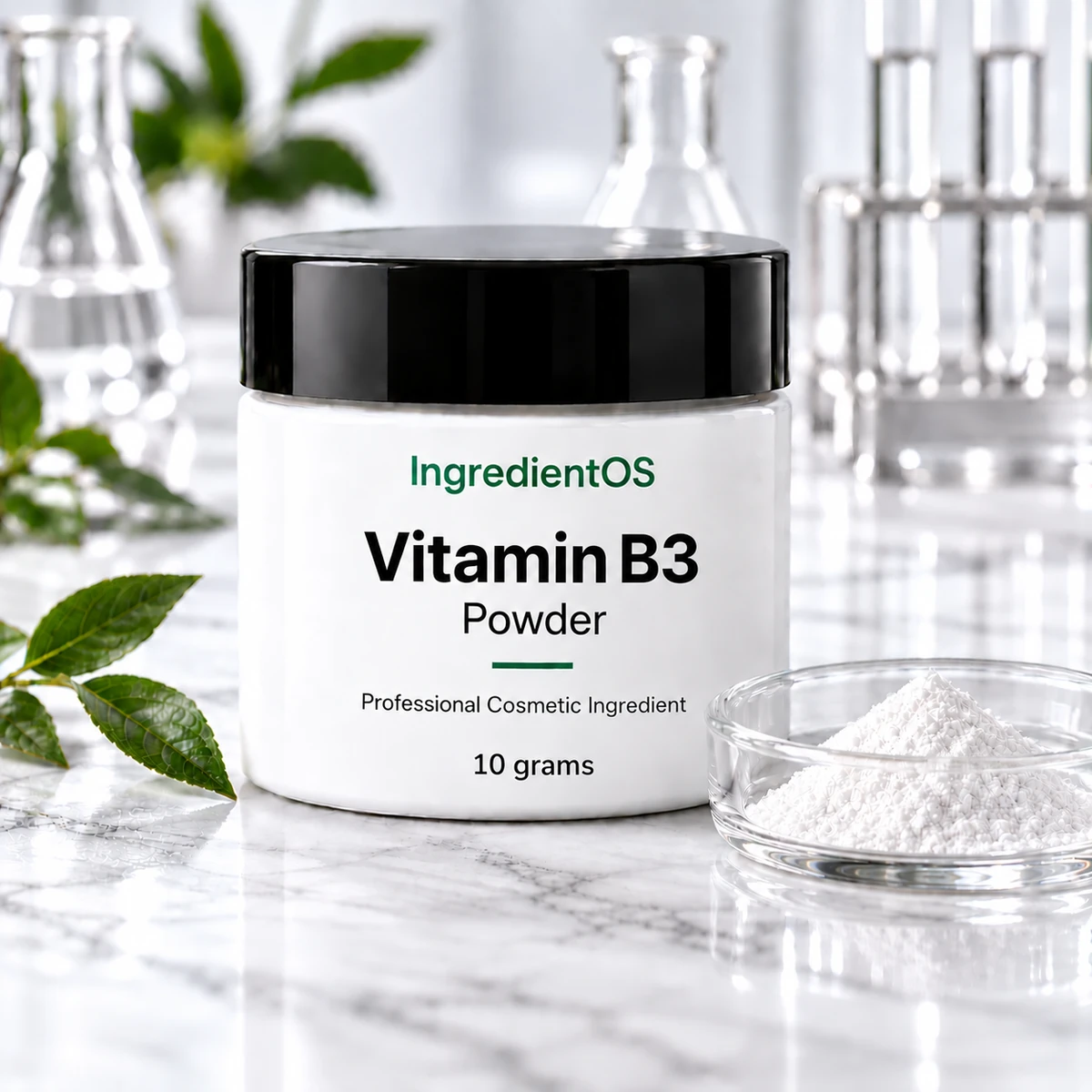
Vitamin B3 Powder (Niacinamide)
$9.99In stock
INCI: Niacinamide. CAS 98-92-0.
Usage Rate: Typical: 2–5% (Artekas). Avena Lab TDS: 1–6%, 5% typical.
Packaging
Powder sizes (metric · US)
Ships from FloridaSecure checkoutUsually ships in 1–2 business daysFree US shipping on $50+
ApplicationSerums, toners, gels and creams (water phase)
AppearanceWhite crystalline powder. Confirm on CoA.
pH5 – 5.5
Description
Vitamin B3 Powder at a glance
Vitamin B3 Powder is niacinamide, a white crystalline powder with CAS 98-92-0 that dissolves readily in water. The supplier specification gives a typical level of 2 to 5%, and one supplier data sheet lists 1 to 6% with 5% as typical. The pH in the supplier specification is 5 to 5.5. Niacinamide is among the best-studied and most widely used skincare actives. Confirm purity on the supplier CoA.
Why niacinamide is so popular
Niacinamide is a versatile, well-tolerated ingredient. In cosmetics it is used for a more even-looking skin tone, a smoother texture, less visible pores, less shine and a stronger-feeling skin barrier. It fits almost any product type and works well with many other actives, which makes it a staple in modern skincare lines.
Product formats
Serums
Classic water-based niacinamide serums.
Toners
Light toners for daily use.
Gels
Gel moisturizers for oily skin.
Creams
Day and night creams with niacinamide in the water phase.
Processing
Dissolve niacinamide in the water phase. It is heat-stable enough to add before heating, but many formulators add it at cool-down for simplicity. Keep the final pH around 5 to 6, as very low pH can convert part of it to nicotinic acid, which may cause flushing.
Good partners
NMN powder extends the vitamin B3 story. Zinc PCA suits oily-skin serums, and Ceramide NP supports barrier creams. Browse more in the actives catalog.
Testing
Check clarity, pH and color over time. Measure skin tone evenness, shine and hydration for claims.
Claims
Skin tone looks more even; pores look smaller; skin feels smoother and balanced.
Characteristics
Form: white crystalline powder. INCI: niacinamide. CAS: 98-92-0. Solubility: water. Typical level: 2 to 5% (one data sheet: 1 to 6%, 5% typical). pH: 5 to 5.5. Listed uses: serums, toners, gels and creams in the water phase. Grade: supplier CoA.
Original recipe: niacinamide serum, 100 g
Distilled water 87.70 g, niacinamide 5.00 g, glycerin 3.00 g, panthenol 1.00 g, sodium hyaluronate 0.30 g, xanthan gum 0.20 g, phenoxyethanol and ethylhexylglycerin 1.00 g, allantoin 0.20 g, sodium citrate 0.80 g, citric acid 0.80 g. Pre-wet the hyaluronate and xanthan in glycerin, add to the water, dissolve niacinamide, panthenol and allantoin, add the preservative and adjust the pH to about 5.5.
Choosing the level
Lower levels around 2% suit sensitive skin and daily moisturizers. Around 5% is common in serums focused on tone and texture. Higher levels exist but can tingle for some users, so test carefully.
Combining with vitamin C
An old myth said niacinamide and vitamin C should not be combined. In practice, many stable products contain both. If combining them, test pH and color stability carefully.
Oily skin products
Niacinamide pairs well with zinc, light gels and mattifying powders for oily skin. Keep textures light and non-greasy.
Directions for users
Suggest using the serum morning and evening after cleansing, followed by a moisturizer and daytime.
Lab tip
Dissolve niacinamide fully before adding thickeners, which speeds up mixing.
Lot records
Keep each CoA with the batch file and note the lot used.
Flushing and pH
At low pH and high temperature, a small amount of niacinamide can turn into nicotinic acid, which causes a temporary warm flush on some skin. Keeping the pH in the mid range and avoiding long heating prevents this. It is one of the reasons the supplier specification pH of 5 to 5.5 is a sensible target.
Record keeping
Note the pH of every batch before filling, so any drift between lots is caught early.
Storage
Store closed in a dry place. Close the container after use.
Product Specifications
INCINiacinamide. CAS 98-92-0.
Usage RateTypical: 2–5% (Artekas). Avena Lab TDS: 1–6%, 5% typical.
SolubilityWater-soluble. Dissolve in the water phase.
StorageStore tightly closed in a cool, dry place away from direct light and moisture. Respect the shelf life on the CoA.
TDS / CoA available on request. Contact us
Frequently Asked Questions
How much niacinamide is used?
Typically 2 to 5%; one data sheet gives 1 to 6% with 5% typical.
What pH suits it?
The supplier specification gives 5 to 5.5.
Which products use it?
Serums, toners, gels and creams, in the water phase.