
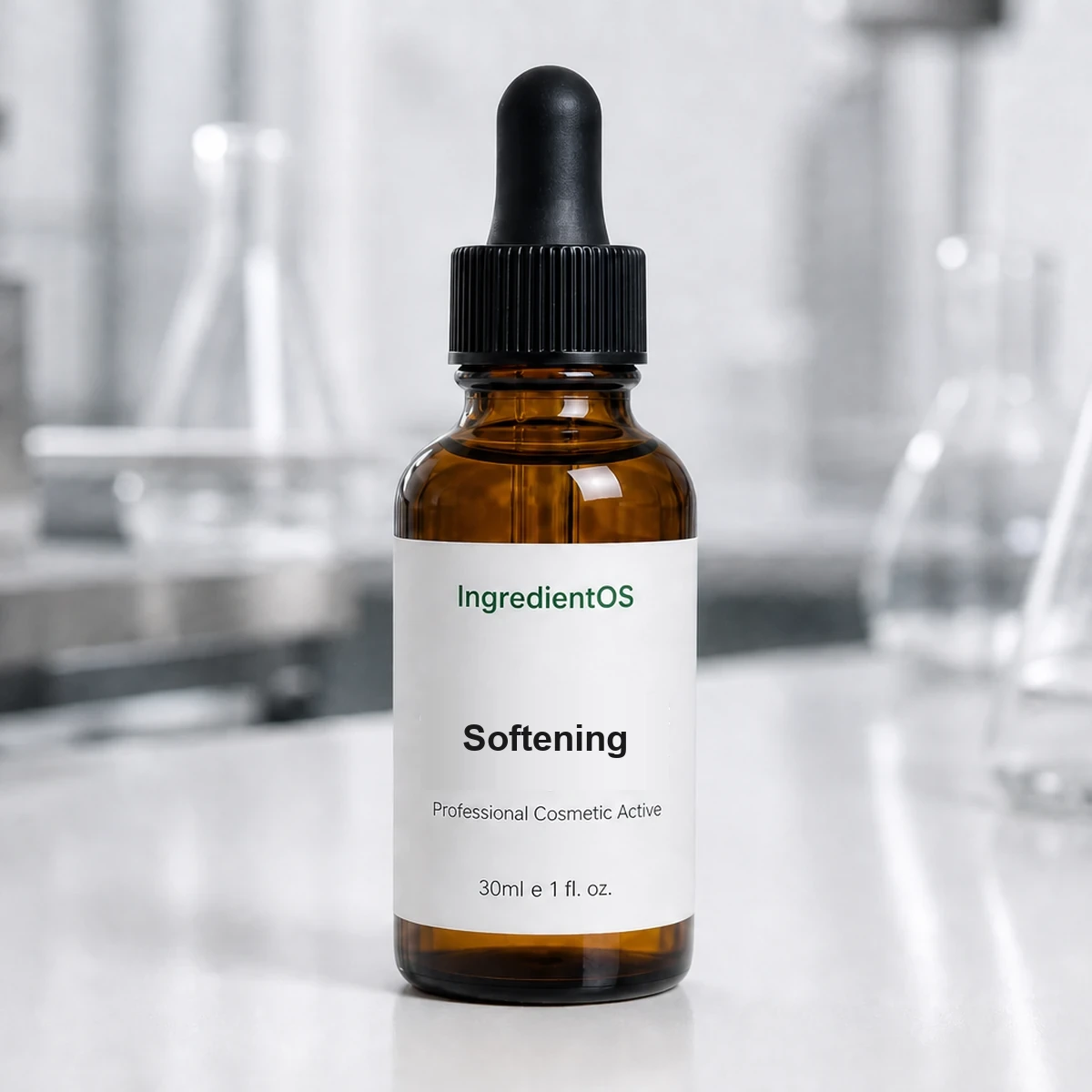
SKU: J90251
Softening
$15.99In stock
Usage Rate: Typical: use the supplied liquid active concentrate at supplier-recommended levels in leave-on formulas, delivering approximately 0.1–0.5% pure active in the finished product (1000–5000 ppm).
Packaging
Liquid sizes — 0.33 oz (10 mL) sample through bulk (US · metric)
Ships from FloridaSecure checkoutUsually ships in 1–2 business daysFree US shipping on $50+
AppearanceLiquid active concentrate
Description
Softening at a glance
Softening is a branded liquid active with a name that describes the result brands want from it: skin that feels softer and smoother. It confirms that the material is a liquid and that it dissolves in water, and it leaves the composition and the recommended level to the supplier CoA. For the lab, that means the material is handled like any water-phase active, with the CoA kept next to the batch sheet for labeling.
Reading a short record
Many trade-name complexes reach the market with a brief specification and a more detailed supplier file. Before you write an ingredient list, take the INCI from the CoA of the lot you used, because blends can differ between suppliers even when the trade names sound similar.
Products that suit a softening active
Hand and foot creams
Hands and feet are where rough, dry skin shows most. A hand cream with a softening active, glycerin and a light butter gives a quick, visible change in how the skin feels. Foot creams often add urea for a smoother look on heels.
Body lotions after the shower
Applied to damp skin, a light lotion spreads fast and leaves the skin comfortable. Softening dissolves in the water phase, while plant oils in the oil phase provide slip and a supple after-feel.
Face toners
A watery toner is a light way to bring the active to the face. Keep the base simple and let a humectant carry the moisture feel.
How to process it
Add Softening to the water phase after the emulsion has cooled, or stir it into a cold-process toner or gel. Mix until the batch is uniform. Take the use level from the supplier documentation for your lot. Check pH and viscosity of the finished product, as with any new active.
Compatibility
Water-soluble partners such as glycerin, panthenol, betaine, urea and allantoin are natural companions. In emulsions, plant oils such as Oat Seed Oil or Refined pistachio oil add a cushioned feel in the oil phase. More water-phase options are listed under cosmetic actives.
Evidence and wording
The most convincing claims for a softening product come from a simple panel. Ask testers to rate how soft and smooth their skin feels before use and after one or two weeks. Use their answers to shape the pack text, and keep the wording about feel and look. Avoid claims about changes inside the skin unless the supplier provides suitable test data for the specific active.
Characteristics
Form: liquid. Solubility: water. INCI and level: on the supplier CoA. Addition point: water phase, during cool-down. Typical products: hand and foot creams, body lotions, toners.
Original recipe: softening hand cream, 100 g
Phase A: distilled water 67.30 g, glycerin 5.00 g, xanthan gum 0.20 g. Phase B: glyceryl stearate citrate 3.00 g, cetearyl alcohol 3.00 g, shea butter 5.00 g, caprylic/capric triglyceride 6.00 g, oat seed oil 2.00 g. Phase C: Softening 5.00 g, panthenol 1.50 g, allantoin 0.20 g, preservative 1.00 g, fragrance 0.80 g. Heat A and B to 75 °C, emulsify, cool and add C below 40 °C.
Lot records and labeling
Because the composition of Softening travels with the CoA, the lot number matters more than usual. Write it on every batch sheet, keep a retained sample, and copy the full INCI from the CoA into your label file. If a new lot arrives with a slightly different color or odor, compare it with the retained sample and make a small test batch before full production. This habit keeps the finished hand cream or lotion consistent from one season to the next and gives you a clear trail if a customer ever asks about an ingredient.
Storage
Store the bottle closed in a cool place away from light. Use clean tools when you take out a portion.
Product Specifications
Usage RateTypical: use the supplied liquid active concentrate at supplier-recommended levels in leave-on formulas, delivering approximately 0.1–0.5% pure active in the finished product (1000–5000 ppm).
SolubilityWater-soluble liquid active concentrate. Add directly to the water phase during cool-down.
StorageStore tightly closed in a cool, dry place away from light and heat. Respect the shelf life on the CoA.
TDS / CoA available on request. Contact us
Frequently Asked Questions
What is Softening?
A trade-name water-soluble liquid active for products focused on a softer skin feel.
How do I add it?
To the water phase, preferably during cool-down.
Where are the INCI and level?
On the supplier CoA for each lot.


