
SKU: VV23113008
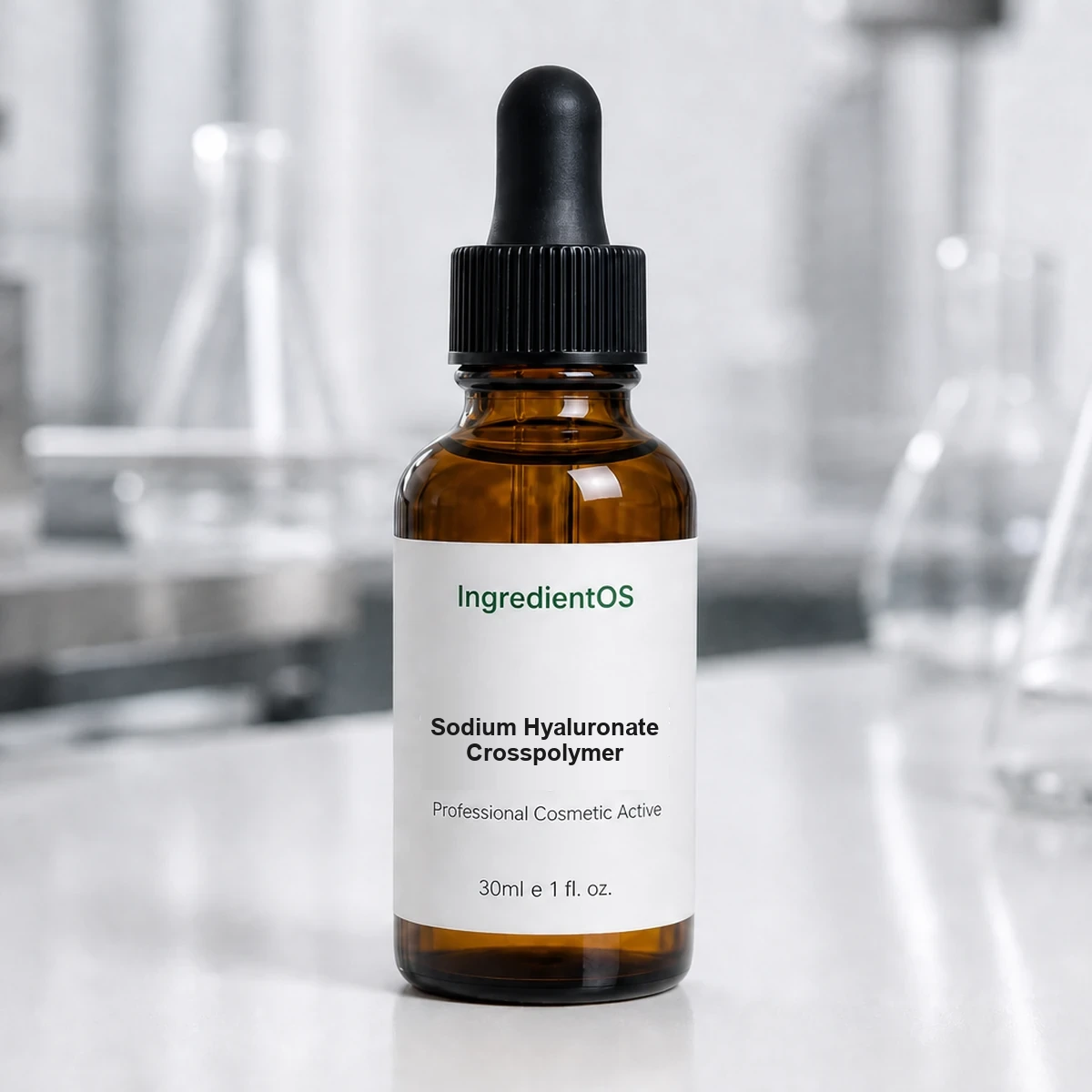
Sodium Hyaluronate Crosspolymer
$15.99In stock
Usage Rate: Typical: use the supplied liquid active concentrate at supplier-recommended levels in leave-on formulas, delivering approximately 0.1–0.5% pure active in the finished product (1000–5000 ppm).
Packaging
Liquid sizes — 0.33 oz (10 mL) sample through bulk (US · metric)
Ships from FloridaSecure checkoutUsually ships in 1–2 business daysFree US shipping on $50+
Applicationmoisturizers; wrinkle filling products; daytime; tonal means; loose and compact powders;
AppearanceLiquid active concentrate
pH3.0-7.0
Description
Sodium Hyaluronate Crosspolymer explained
Sodium Hyaluronate Crosspolymer is hyaluronic acid that has been cross-linked. Ordinary sodium hyaluronate consists of long, separate chains. When those chains are linked together, they form a three-dimensional network, a kind of soft mesh that holds water and stays on the skin as a flexible film. This page sells the material as a liquid in milliliter packs. Our product record lists water, glycerin and propylene glycol as compatible solvents. The exact INCI, polymer content and carrier are on the CoA for each lot.
Properties
The cross-linked network gives a longer-lasting, more elastic hydrating film than linear hyaluronic acid of similar weight. On the skin it feels smooth and slightly cushiony rather than sticky. This makes it popular in products that promise a plumper, smoother look and in makeup, where it can improve slip and comfort. It complements linear hyaluronic acids of different weights, such as Low Molecular Weight Hyaluronic Acid 10-20 kDa, which work at a different level of the skin surface.
Applications
The record names moisturizers, products for filling the look of fine lines, daytime after-sun care, foundations and tinted products, and loose and pressed powders. In practice brands use it in plumping serums, gel creams, lip treatments with a water phase, primers, BB creams and sheet mask essences. Pair it with Hyaluronic acid liquid 1% for a multi-weight hyaluronic story. More humectants and actives sit in our cosmetic actives catalog.
How to use it
Add the liquid to the water phase before thickening or to the cooled batch below 40 °C with gentle mixing. Avoid long, very high shear, which can break the network and reduce viscosity. In emulsions, add it after emulsification. Keep the pH in a mild range and take the use level from the CoA. In powders and anhydrous makeup, follow the supplier method, since the material must be dispersed in a small amount of compatible solvent first.
Texture design tips
The crosspolymer adds body to gels, so you may need less thickener than usual. Start with a lower amount of your main gelling agent, add the crosspolymer and measure viscosity before adjusting. Combined with glycerin and a light silicone or ester, it gives the sought-after bouncy feel of a premium hydrating serum. In foundations, it helps the product glide and keeps skin feeling comfortable through the day.
Compatibility
The material is compatible with water, glycerin, propylene glycol, other hyaluronic acids, panthenol, niacinamide and most nonionic emulsifiers. High levels of electrolytes and strong acids can reduce viscosity. Avoid strong oxidizers and enzymes that break down hyaluronic acid. Cationic polymers may interact with the anionic network, so test them first.
Characteristics
Form: liquid. Solubility per our record: water, glycerin, propylene glycol. Uses per our record: moisturizers, plumping-look products, day after-sun care, tinted products, powders. INCI and content: on the CoA. Addition point: water phase or cool-down.
Original recipe: bouncy hydrating serum, 100 g
Phase A: distilled water 84.60 g, glycerin 4.00 g, panthenol 1.00 g, hydroxyethylcellulose 0.30 g; hydrate until clear. Phase B below 40 °C: Sodium Hyaluronate Crosspolymer 5.00 g, Hyaluronic acid liquid 1% 3.00 g, niacinamide 1.00 g dissolved in a little water. Mix slowly until uniform. Phase C: preservative 1.00 g, cucumber extract 0.10 g. Adjust pH to about 5.5 and fill into a dropper bottle. The serum layers well under creams and makeup.
Storage
Keep the bottle closed in a cool place away from heat and direct light. Reseal after each use. Ships from Florida in milliliter packs.
Product Specifications
Usage RateTypical: use the supplied liquid active concentrate at supplier-recommended levels in leave-on formulas, delivering approximately 0.1–0.5% pure active in the finished product (1000–5000 ppm).
SolubilityWater-soluble liquid active concentrate. Add directly to the water phase during cool-down.
StorageStore tightly closed in a cool, dry place away from light and heat. Respect the shelf life on the CoA.
TDS / CoA available on request. Contact us
Frequently Asked Questions
How is it different from ordinary sodium hyaluronate?
The hyaluronic chains are cross-linked into a network, which gives a longer-lasting, more elastic film on the skin.
What can I dissolve it in?
Our record lists water, glycerin and propylene glycol.
Which products is it used in?
Moisturizers, plumping-look products, day after-sun care, foundations, tinted products and powders.
When should I add it?
To the water phase or to the cooled batch with gentle mixing; avoid very high shear.


