SKU: VV25080804
Retinol Oil
$15.99In stock
Usage Rate: Typical: use the supplied liquid active concentrate at supplier-recommended levels in leave-on formulas, delivering approximately 0.1–0.5% pure active in the finished product (1000–5000 ppm).
Packaging
Liquid sizes — 0.33 oz (10 mL) sample through bulk (US · metric)
Ships from FloridaSecure checkoutUsually ships in 1–2 business daysFree US shipping on $35+
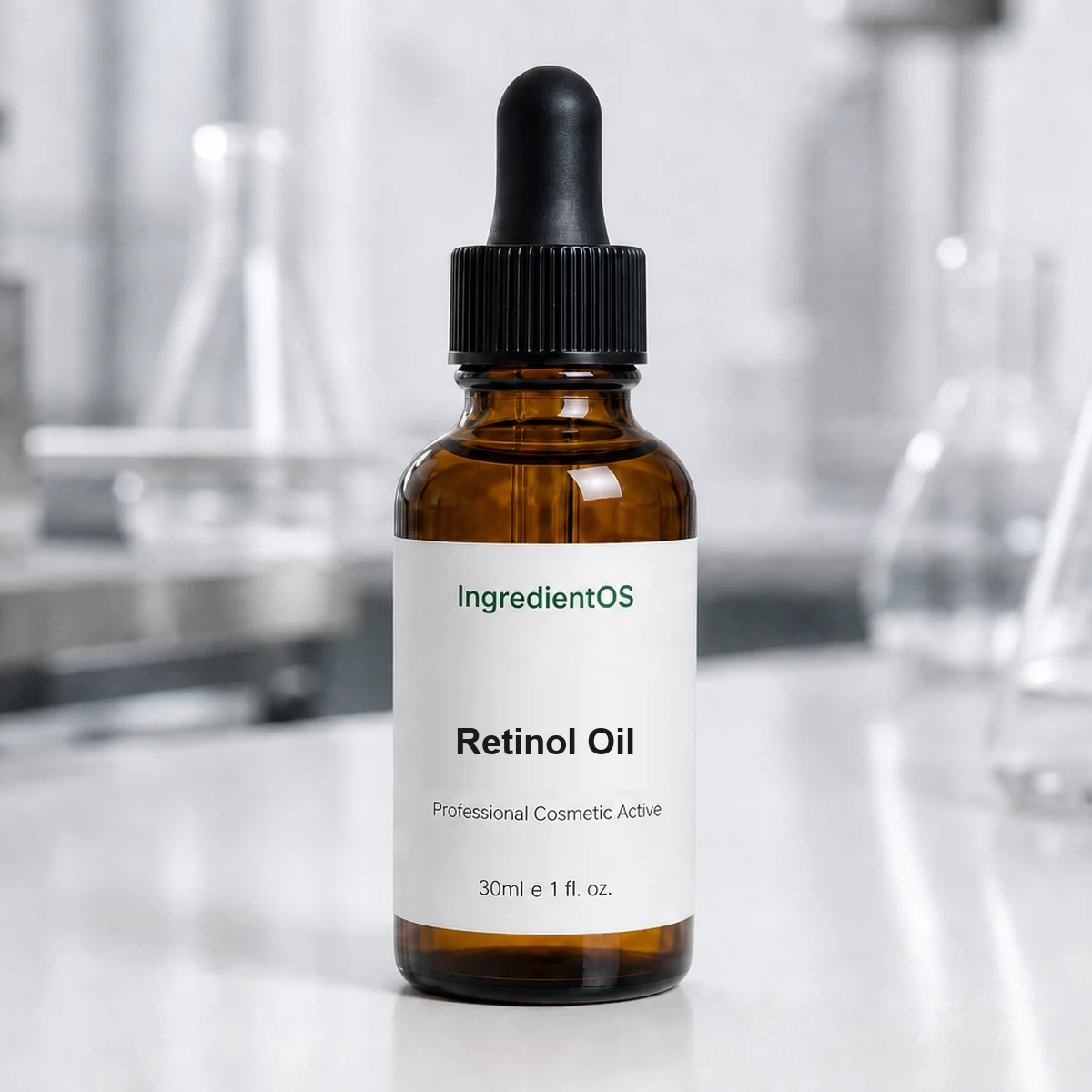
AppearanceLiquid of oily consistency
Description
What Retinol Oil is
Retinol Oil is vitamin A delivered in an oil-soluble liquid form. The retinol is already dissolved in a lipid carrier, so it pours rather than needing to be dissolved from crystals or powder. Our product record states that it dissolves in fats, oils and emulsion systems and is insoluble in water. The exact retinol content and the carrier INCI are printed on the CoA for each lot; these figures are what you use to calculate the level in your product and to write the ingredient list.
Properties
Retinol is among the most studied cosmetic ingredients. In finished products it is valued for the look of smoother texture, finer-looking lines, a more even tone and refined-looking pores with regular evening use. It is also delicate: light, oxygen and heat degrade it, so the way you process and pack the product matters as much as the amount. An oil carrier is convenient because it slips straight into facial oils and the oil phase of creams.
Applications
The record lists appearance-focused cosmetic serums, night creams and oils, products for an even-looking tone, care for aging and fading-looking skin, products for the look of post-blemish marks, and skin renewal and smoothing products. Anhydrous facial oils are the simplest format; creams and serums in airless pumps are the most common. Many brands pair it with Bakuchiol or with barrier lipids like Vegetal Ceramides. Compare other vitamin A forms in our cosmetic actives catalog.
How to use it
In facial oils, blend Retinol Oil into the cooled oil base with an antioxidant such as tocopherol. In emulsions, add it during cool-down, below 40 °C, either into the cooled emulsion or premixed with a small amount of ester. Mix gently and avoid trapping air. Calculate the level from the retinol content on the CoA. The EU limits retinol equivalents to 0.3 percent in face products and 0.05 percent in body products; follow your own market's rules.
Process and packaging
Work under dim or yellow light, add retinol late, keep mixing time short and fill on the same day. Airless pumps, aluminum tubes and dark glass droppers protect best. Run stability tests at room and warm temperatures and track color and odor, or retinol content if you have the equipment.
Compatibility
Retinol Oil works with plant oils, esters, squalane, ceramides, niacinamide and panthenol. Avoid strong acids, benzoyl peroxide and oxidizers in the same product. Keep metal traces low and add a chelator in emulsions. Place copper peptides and high-strength vitamin C in separate products. Facial oils with Retinol Oil should be free of water, so use dry tools and bottles; even small amounts of moisture can encourage cloudiness and microbial growth in an unpreserved oil.
Characteristics
Form: liquid, oil-soluble. Solubility: fats, oils and emulsion systems; insoluble in water. Retinol content and carrier INCI: on the CoA. Addition point: oil base or cool-down. Retinol CAS: 68-26-8.
Original recipe: night facial oil, 100 g
Combine in a clean, dry beaker under dim light: squalane 40.00 g, caprylic/capric triglyceride 30.00 g, jojoba oil 20.00 g, rosehip seed oil 7.30 g, tocopherol 0.50 g. Stir gently. Add Retinol Oil at the level calculated from the CoA, here 2.00 g, and Bakuchiol 0.20 g. Mix without whipping in air. Fill into amber glass dropper bottles, close immediately and store cool. Apply a few drops to clean skin in the evening.
Record the lot number in your batch log so every production run can be traced back to its certificate of analysis. Retain a small sample of each lot for at least the shelf life of the finished product, since it makes later quality questions much easier to answer.
Storage
Keep the bottle tightly closed in a cool, dark place, ideally refrigerated, and limit air contact. Ships from Florida in milliliter packs.
Product Specifications
Usage RateTypical: use the supplied liquid active concentrate at supplier-recommended levels in leave-on formulas, delivering approximately 0.1–0.5% pure active in the finished product (1000–5000 ppm).
SolubilitySoluble in fats, oils and emulsion systems Insoluble in water. Add to the oil phase.
StorageStore tightly closed in a cool, dry place away from light and heat. Respect the shelf life on the CoA.
TDS / CoA available on request. Contact us
Frequently Asked Questions
Is Retinol Oil water-soluble?
No. It dissolves in oils, fats and emulsion systems and is insoluble in water.
Which products is it used in?
Night serums and oils, night creams, products for an even-looking tone, products for the look of post-blemish marks and skin smoothing products.
How do I calculate the level?
Use the retinol content on the CoA and stay within your market's limits for retinol in face and body products.
How should I protect it?
Keep it cool and dark, limit air contact and fill finished products into airless or opaque packaging.