Botanical ExtractsSKU VV24012602
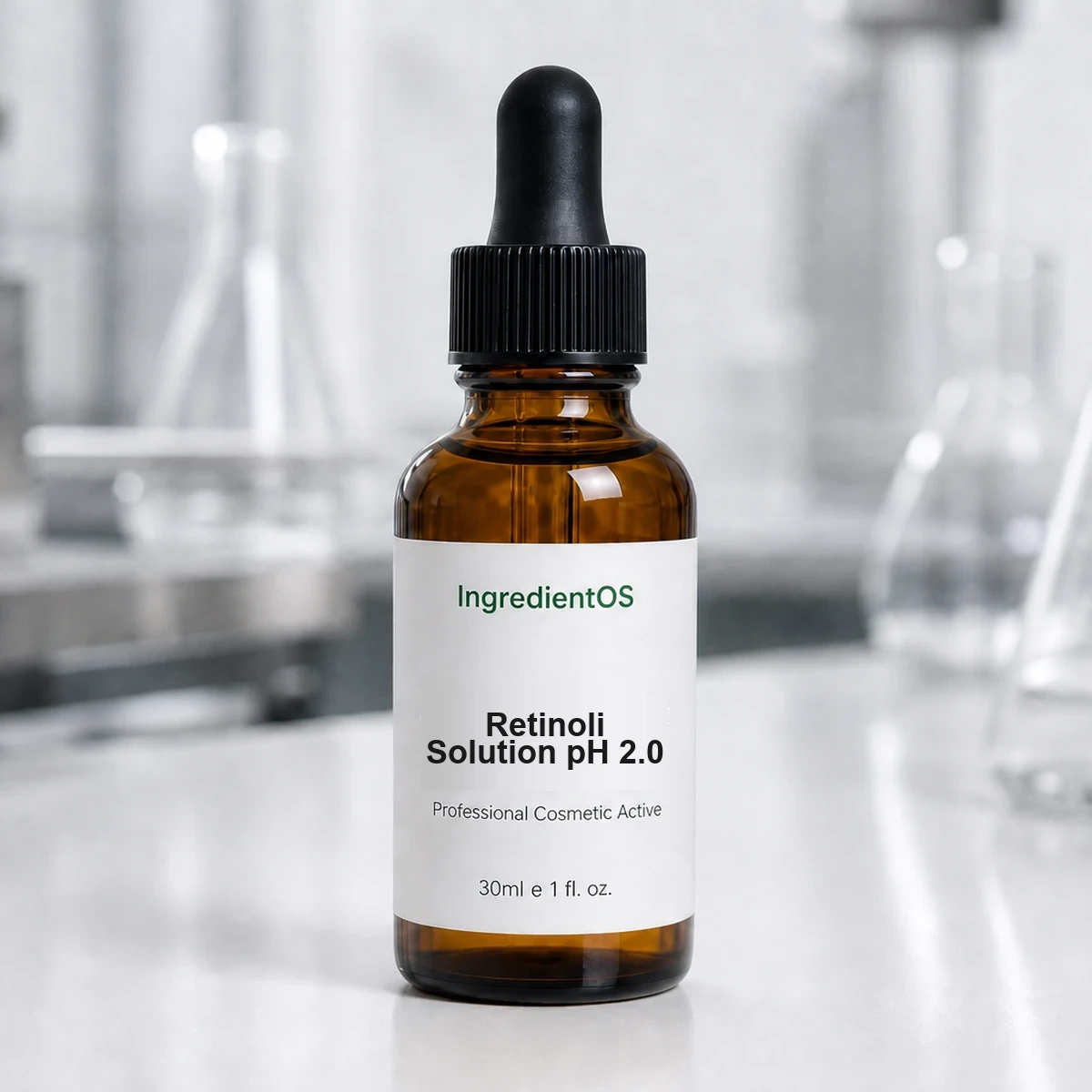
Retinol in Squalane and Jojoba Seed Oil Solution, IO
Retinol has been the reference ingredient in evening skincare for decades. Customers know it, look for it by name and expect smoother-looking skin and a finer-looking texture from steady use.
$15.99In stock
Packaging
Liquid sizes — 0.33 oz (10 mL) sample through bulk (US · metric)
Worldwide Shipping to 200+ Countries
Live international rates at checkout. Free shipping applies to US orders only; duties are paid by the recipient. Shipping details · Over 10 lb? Request a quote- Ships from Florida
- CoA available
- Usually ships in 1–2 business days
- Free US shipping on $35+
Overview
Retinol has been the reference ingredient in evening skincare for decades. Customers know it, look for it by name and expect smoother-looking skin and a finer-looking texture from steady use. Retinol in Squalane and Jojoba Seed Oil Solution presents retinol already dissolved in a lipid carrier together with two botanical extracts and an antioxidant, which spares the formulator the difficult step of handling raw retinol.
Reading the INCI
The supplier specification gives a complete ingredient list: Squalane, Caprylic/Capric Triglyceride, Simmondsia Chinensis (Jojoba) Seed Oil, Retinol, Solanum Lycopersicum (Tomato) Fruit Extract, Rosmarinus Officinalis (Rosemary) Leaf Extract and Hydroxymethoxyphenyl Decanone. Squalane, triglyceride and jojoba form a light, skin-friendly carrier. Retinol is the active. Tomato and rosemary extracts add botanical character, and hydroxymethoxyphenyl decanone is an antioxidant ingredient used to support a stable formula. The retinol content and recommended level are confirmed on the CoA for each lot.
An oil-based blend
The spec table on our page uses a generic water-phase template, but the INCI makes it clear that this is a lipid solution. Handle it as an oil-phase ingredient: blend it directly into an anhydrous serum or add it to the oil phase of an emulsion after cooling. Long heating and exposure to air and light are the main enemies of retinol, so it always goes in at the end.
Night oil serum
An anhydrous oil serum is the simplest and most stable option. Add a little more squalane or a light ester to fine-tune the feel, and package it in a dark glass or airless container.
Night cream
In an emulsion, add the solution to the oil phase or to the cooled cream with good mixing. Choose a cushioned base with humectants and barrier lipids, since retinol products can make some skins feel dry.
Eye and neck products
These delicate areas call for lower levels and a richer base. Test tolerance carefully.
Advice for users
Advise consumers to patch test and to follow local labeling rules for retinol products. Keep claims cosmetic: smoother-looking, more even-looking and refined-looking skin.
Consistency across batches
Check color and odor of each delivery against the previous lot, since retinol solutions can darken slightly with time. Keep the bottle refrigerated after opening if your storage space allows and use it within the period indicated on the CoA.
Specifications
| INCI | Squalane, Caprylic/Capric Triglyceride, Simmondsia Chinensis (Jojoba) Seed Oil, Retinol, Solanum Lycopersicum (Tomato) Fruit Extract, Rosmarinus Officinalis (Rosemary) Leaf Extract, Hydroxymethoxyphenyl Decanone |
|---|---|
| Appearance | Liquid |
| pH | 3.0-7.0 |
| Storage | Store tightly closed in a cool, dry place away from light and heat. Respect the shelf life on the CoA. |
How to use
Formulating rules
Work, minimize air with gentle mixing, and use opaque or airless packaging. Follow the supplier TDS for the processing temperature. Add an antioxidant such as tocopherol to the oil phase for extra protection. The supplier specification gives a working pH from 3.0 to 7.0 for the finished product. Combining retinol with strong exfoliating acids in the same product is generally avoided. For a gentler plant-based option in the same range, consider bakuchiol, and for a different retinol format there is our Retinol Oil. Botanical blends of this kind are listed in our botanical extracts category.
Original recipe: retinol night oil, 100 g
Squalane 45.00 g, caprylic/capric triglyceride 25.00 g, jojoba oil 15.00 g, rosehip seed oil 10.00 g, Retinol in Squalane and Jojoba Seed Oil Solution 4.00 g as an example level to confirm on the CoA, tocopherol 0.80 g, bisabolol 0.20 g. Combine the oils at room temperature under dim light, add tocopherol and bisabolol, then add the retinol solution last with slow stirring. Fill into amber airless bottles straight away.
Precautions
Storage
Store tightly closed in a cool, dry place away from light and heat. Respect the shelf life on the CoA.
Storage
Store tightly closed in a cool, dark place, ideally refrigerated after opening. Minimize air in the container and reseal immediately after use.
- For cosmetic formulation use only. Raw material for topical cosmetic products.
- Cosmetic raw material for professional formulation. Not sold as a finished product.
- Handle with gloves and eye protection, as with any raw material, and follow the SDS.
- Test stability, compatibility and preservation in your finished formula before launch.
- Keep the container closed and out of reach of children.
Documents
A certificate of analysis comes with your order. TDS and SDS are sent by email when you request them.
Request documents
CoA, TDS, SDS, or a specification for this ingredient. We email the files within 1 business day.
Request a CoA, TDS, SDS, or specification.
FAQ
What is in Retinol in Squalane and Jojoba Seed Oil Solution?
Squalane, caprylic/capric triglyceride, jojoba seed oil, retinol, tomato fruit extract, rosemary leaf extract and hydroxymethoxyphenyl decanone, per the supplier specification INCI.
Which phase does it go into?
The carrier is oil-based, so add it to oil serums or the oil phase of an emulsion, following the CoA. Follow the supplier TDS for the processing temperature.
What pH range is listed?
The supplier specification lists 3.0 to 7.0 for the finished product.