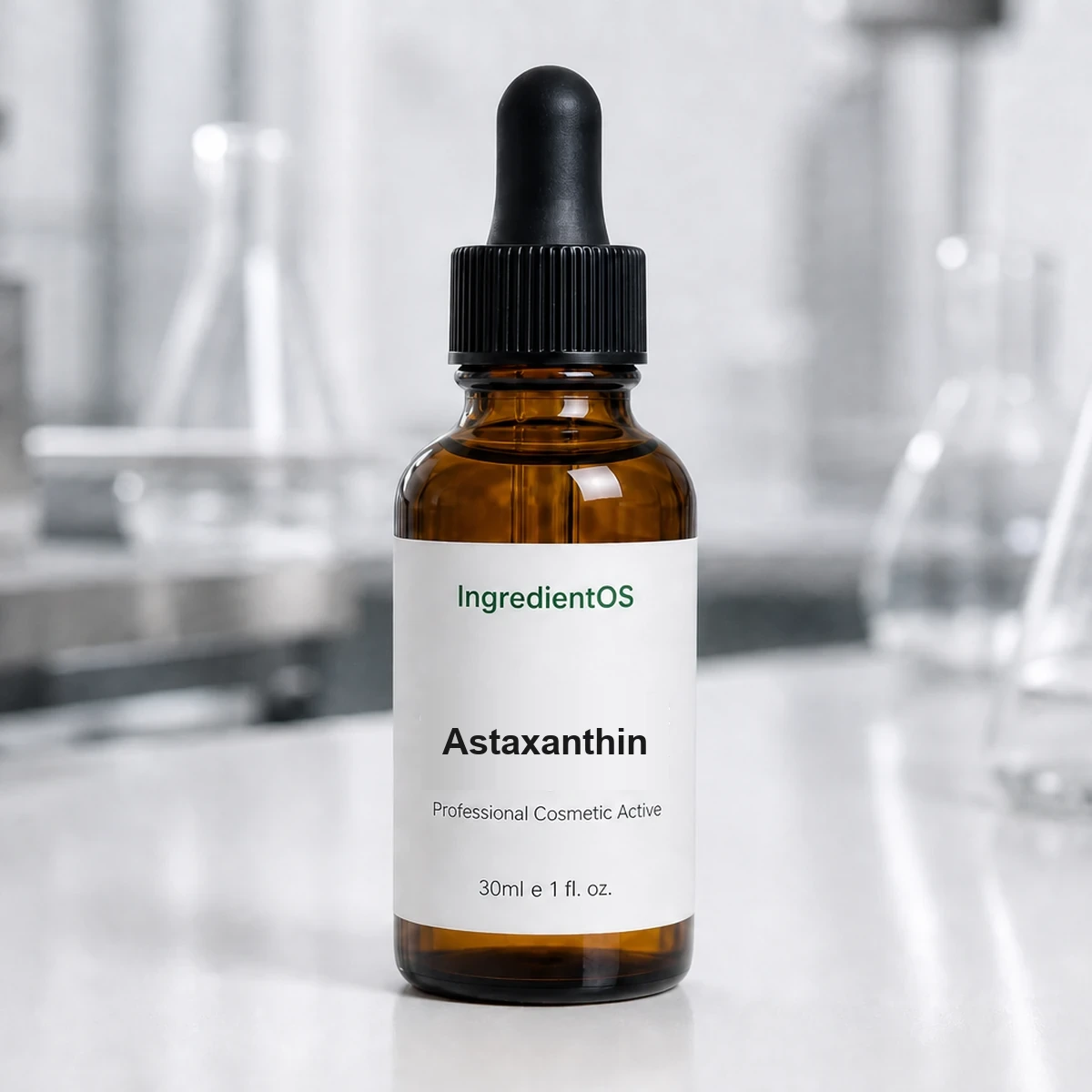
Botanical ExtractsSKU TM19052508
Astaxanthin
This oil-soluble liquid disperses through the oil phase as it joins the batch, tinting the formula peach to orange from Haematococcus pluvialis extract in caprylic/capric triglycerides and tocopherol.
$15.99In stock
Packaging
Liquid sizes — 0.33 oz (10 mL) sample through bulk (US · metric)
Worldwide Shipping to 200+ Countries
Live international rates at checkout. Free shipping applies to US orders only; duties are paid by the recipient. Shipping details · Over 10 lb? Request a quote- Ships from Florida
- CoA available
- Usually ships in 1–2 business days
- Free US shipping on $35+
Overview
This oil-soluble liquid disperses through the oil phase as it joins the batch, tinting the formula peach to orange from Haematococcus pluvialis extract in caprylic/capric triglycerides and tocopherol. Esthetician product lines buy the carotenoid for cosmetics at 1-2%, where antioxidant care and that warm cast share the oil phase. Astaxanthin fits skincare face oils, night creams, eye creams, and lip balms.
Where astaxanthin comes from
Haematococcus pluvialis is a freshwater microalga. When it is exposed to strong light, heat or lack of nutrients, it changes from green to deep red because it fills its cells with astaxanthin. The pigment shields the alga from light stress. The same pigment colors salmon, shrimp and flamingos, which take it up from their food. For cosmetics, the algae are grown in controlled conditions and the pigment is extracted into oil.
Why it is valued
Astaxanthin belongs to the carotenoids, the same family as beta-carotene, but its structure lets it sit across cell membranes and catch free radicals at both the inner and the outer side. This is why it is often described as one of the strongest antioxidants in nature. The supplier lists antioxidant protection, protection against UV related stress, support for the action of vitamins A and E, moisturizing and soothing effects and help with the visible signs of aging, such as fine lines and wrinkles.
Color
Even at 1% the product turns peach to orange. Many brands use this as a visual signature. If you want a white product, astaxanthin is not the right choice.
Partners
Vitamin E is already part of the blend. Further antioxidants support it: ferulic acid in the water phase and a carrier oil such as rosehip seed oil in a face oil. More botanical actives are in the botanical extracts section.
Product ideas
Antioxidant face oils, appearance-focused cosmetic night creams, day creams for city skin, eye creams, after sun care, lip balms and gentle cleansing oils are the main uses.
Astaxanthin in a routine
Because it is oil-soluble and colored, astaxanthin is easiest to use in leave-on products where a warm shade is welcome: face oils, rich night creams, balms and tinted day creams. In the morning it adds a layer of antioxidant defense under. In the evening it suits leave-on cosmetic use care after a day outdoors. Lip balms with astaxanthin get a natural peach tint without added pigments.
Liposomal form
The supplier describes the extract as a liposomal liquid. Liposomes are tiny lipid spheres that hold the active and help spread it evenly on the skin surface. They also help the red pigment disperse more evenly in creams, which reduces streaks of color in the finished product.
Claims
Speak of antioxidant protection, skin that looks smoother, more radiant and more resilient, and fewer visible fine lines over time.
Specifications
| INCI | Haematococcus Pluvialis Extract, Caprylic/Capric Triglycerides, Tocopherol |
|---|---|
| Appearance | Liquid |
| Solubility | Oil-soluble |
| Phase | Oil phase |
| Recommended dosage | 1-2% of the finished formula |
| Storage | Store tightly closed in a cool, dry place away from light and heat. Respect the shelf life on the CoA. |
How to use
- Phase
- Oil phase
- Recommended dosage
- 1-2% of the finished formula
Oil phase
Astaxanthin is oil-soluble. Add it to the oil phase of an emulsion at the end, ideally, or stir it directly into a face oil. Follow the supplier TDS for the processing temperature. Avoid long heating, because carotenoids are sensitive to heat, light and oxygen.
Sample recipe: antioxidant face oil, 100 g
Caprylic/capric triglyceride 40.00 g, squalane 25.00 g, rosehip seed oil 15.00 g, jojoba oil 17.50 g, Astaxanthin 2.00 g, vitamin E 0.50 g. Mix the oils at room temperature, add astaxanthin and vitamin E, stir until even and fill into dark glass bottles.
Precautions
Storage
Store tightly closed in a cool, dry place away from light and heat. Respect the shelf life on the CoA.
Packaging and stability
Light and oxygen fade the red color and reduce activity over time. Use dark or opaque packaging, airless pumps for creams and a small headspace in bottles. A rosemary or tocopherol antioxidant in the oil phase extends shelf life.
Storage
Store in a cool, dark place in a closed container. A certificate of analysis comes with every lot.
- For cosmetic formulation use only. Raw material for topical cosmetic products.
- Cosmetic raw material for professional formulation. Not sold as a finished product.
- Handle with gloves and eye protection, as with any raw material, and follow the SDS.
- Test stability, compatibility and preservation in your finished formula before launch.
- Keep the container closed and out of reach of children.
Documents
A certificate of analysis comes with your order. TDS and SDS are sent by email when you request them.
Request documents
CoA, TDS, SDS, or a specification for this ingredient. We email the files within 1 business day.
Request a CoA, TDS, SDS, or specification.
FAQ
What is the INCI of this Astaxanthin?
Haematococcus Pluvialis Extract, Caprylic/Capric Triglycerides, Tocopherol.
How much should I use?
1 to 2% of the finished product.
Is it oil-soluble?
Yes. Add it to the oil phase or to an oil serum where possible. Follow the supplier TDS for the processing temperature.
Will it color my product?
Yes. Astaxanthin is a deep red pigment and gives a peach to orange shade.