
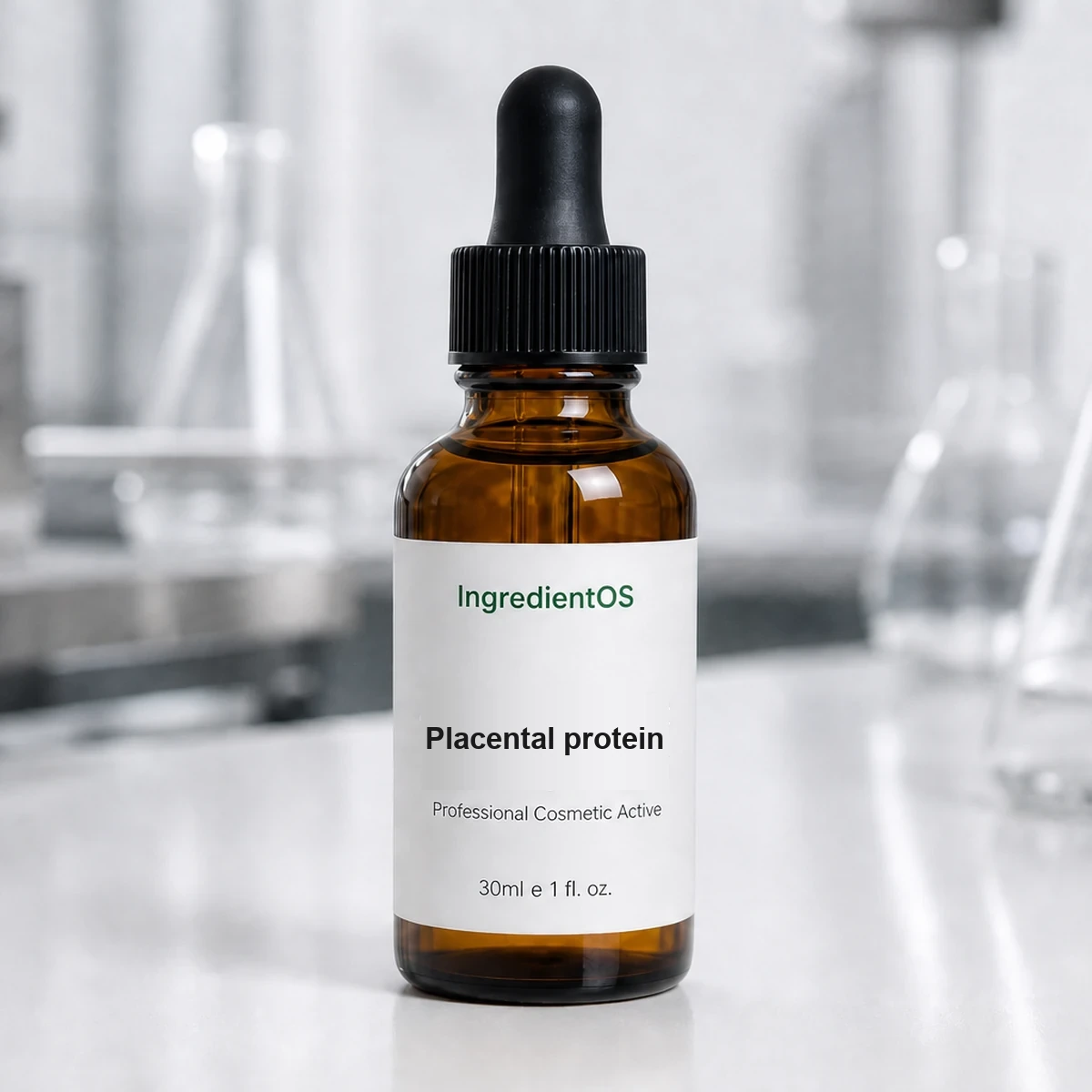
SKU: VG17091326
Placental protein
$15.99In stock
Usage Rate: Typical: use the supplied liquid active concentrate at supplier-recommended levels in leave-on formulas, delivering approximately 0.1–0.5% pure active in the finished product (1000–5000 ppm).
Packaging
Liquid sizes — 0.33 oz (10 mL) sample through bulk (US · metric)
Ships from FloridaSecure checkoutUsually ships in 1–2 business daysFree US shipping on $50+
AppearanceLiquid active concentrate
pH5.6-6.3
Description
Placental protein explained
Placental protein is a yellow liquid that dissolves in water and alcohol. The supplier specification gives a mildly acidic pH for the material. Protein ingredients like this one are used in serums, creams, masks and hair care to help skin feel smoother and hair feel softer. Check the animal source and the full INCI on the CoA of each lot.
Check the rules first
Placenta-derived ingredients need a regulatory check. In the European Union, cells, tissues and products of human origin are banned from cosmetics, so only animal-derived material can be considered there. Other markets have their own requirements, such as documentation on animal species and safety. Some retailers and shoppers avoid animal-derived ingredients entirely. Decide your sales markets and channels before you start.
Product formats
Serums
Light serums with placental protein aim at smoother, softer-feeling skin. Add it at cool-down.
Creams
Night creams for mature skin are a classic use in markets where the ingredient is popular.
Masks
Cream and sheet masks give a quick smooth feel.
Hair care
Conditioners and hair masks use the protein for a softer, smoother feel.
Processing
Add the liquid below 40 °C and stir until uniform. It dissolves in alcohol too, so it suits hydro-alcoholic tonics. Use a strong preservative system, since proteins support microbial growth.
Partners
Panthenol, glycerin and hyaluronic acid suit skin products. Silk Protein adds another protein for hair care. If animal-derived materials do not fit your brand, consider Marine Collagen Hydrolysate or plant proteins instead. Alternatives without animal origin are listed in the actives catalog.
Documentation
Keep the CoA, the animal-source statement and any safety certificates in the product file. Safety assessors and retailers will ask for them.
Testing
Run preservative efficacy tests and stability tests. Watch color and odor, since protein liquids can darken.
Claims
Use appearance and feel wording: smoother, softer-feeling skin; softer hair. Be clear and honest about the source on the label.
Market fit
Placental ingredients have a strong following in some Asian markets and a smaller one elsewhere. Research your target market and choose the wording accordingly.
Labeling
Use the INCI name from the CoA, which normally names the animal source. Some markets require the species to be visible.
Characteristics
Form: yellow liquid. Solubility: water, alcohol. pH of material: mildly acidic. Typical products: serums, creams, masks, hair care. Source and INCI: supplier CoA. Regulatory: human-origin materials are banned in EU cosmetics.
Original recipe: smoothing night serum, 100 g
Distilled water 84.40 g, glycerin 4.00 g, sodium hyaluronate 0.30 g, xanthan gum 0.20 g, placental protein 4.00 g, panthenol 1.50 g, betaine 2.00 g, preservative 1.20 g, fragrance 0.20 g, citric acid solution to target pH 2.20 g. Hydrate the gums in water with glycerin, then add the rest below 40 °C.
Choosing alternatives
Some brands want the smooth-feel benefits of a protein without an animal-derived source. Hydrolyzed plant proteins from wheat, rice or soy, and marine collagen hydrolysates, can take a similar role in serums and hair products. Compare texture, color and cost in small test batches before deciding. Write down the results for each option, as retailers and customers may ask why a particular source was chosen.
Record the lot number in your batch log so every production run can be traced back to its certificate of analysis. Retain a small sample of each lot for at least the shelf life of the finished product, since it makes later quality questions much easier to answer.
Storage of opened stock
Once opened, use protein liquids within the period the supplier recommends and keep them cool.
Storage
Store closed in a cool place away from light. Close the container after use.
Product Specifications
Usage RateTypical: use the supplied liquid active concentrate at supplier-recommended levels in leave-on formulas, delivering approximately 0.1–0.5% pure active in the finished product (1000–5000 ppm).
SolubilityWater-soluble liquid active concentrate. Add directly to the water phase during cool-down.
StorageStore tightly closed in a cool, dry place away from light and heat. Respect the shelf life on the CoA.
TDS / CoA available on request. Contact us
Frequently Asked Questions
What is placental protein soluble in?
Water and alcohol.
What should I check first?
The animal source on the CoA and the rules of each market you sell in.
When do I add it?
To the water phase during cool-down.


