
SKU: VV22041304
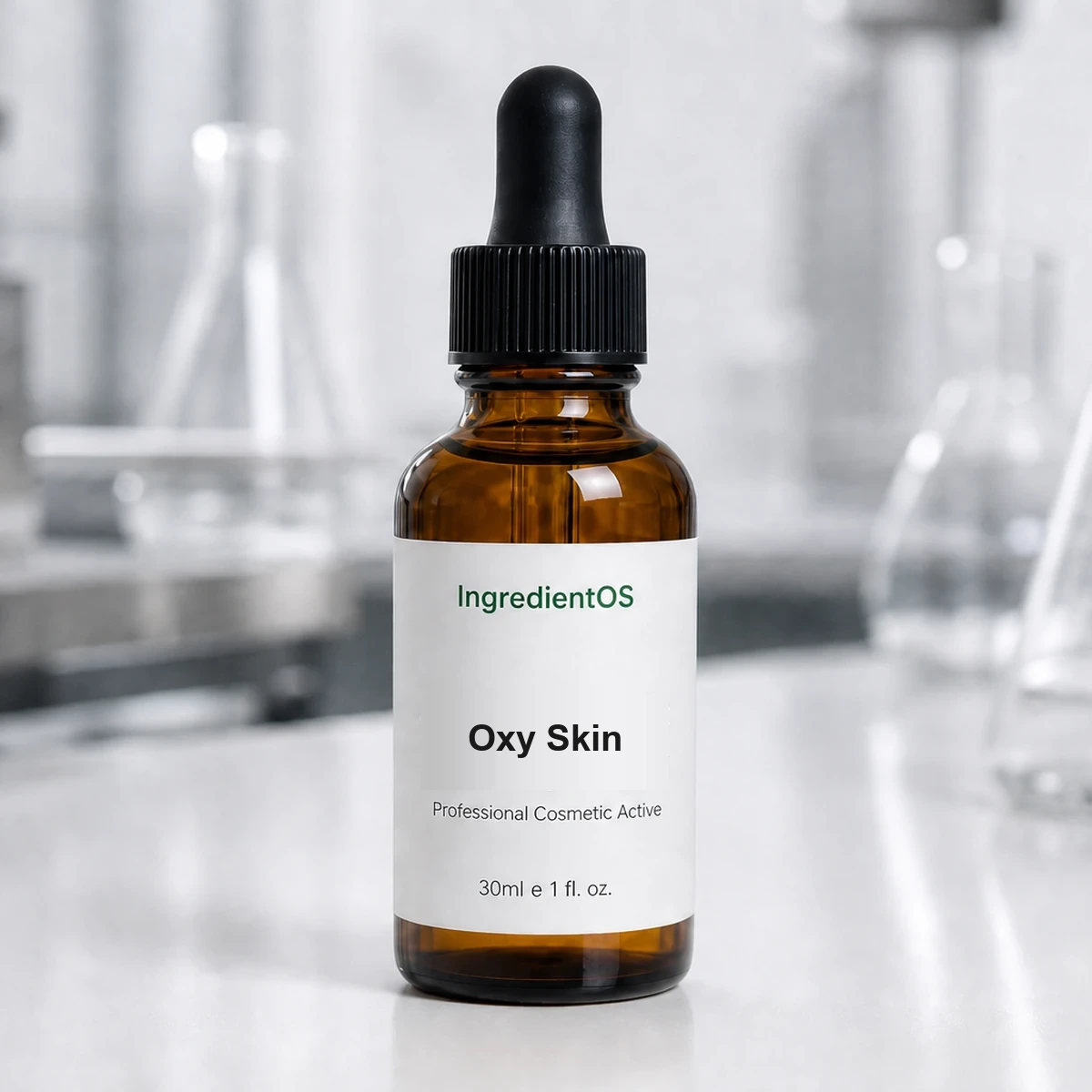
Oxy Skin
$15.99In stock
INCI: Saccharomyces Lysate, Valine, Threonine, Glutamic Acid, Glycine, Disodium Succinate
Usage Rate: 1-5%; supplier testing was done at 3%; add below 40 °C
Packaging
Liquid sizes — 0.33 oz (10 mL) sample through bulk (US · metric)
Ships from FloridaSecure checkoutUsually ships in 1–2 business daysFree US shipping on $50+
ApplicationProducts with an emphasis on fresh and radiant skin Deep recovery products Postbiotic care products
AppearanceLiquid active concentrate
Description
Oxy Skin at a glance
Oxy Skin is a postbiotic active from Switzerland, also known as OXY 229 PF. Its INCI is Saccharomyces Lysate, Valine, Threonine, Glutamic Acid, Glycine, Disodium Succinate. It is a yellowish liquid used at 1 to 5% of the finished product. The supplier's own testing was done at 3%. It is added below 40 °C, dissolved in water or in the active phase.
The postbiotic idea
The skin is home to a community of microorganisms, its microflora. A balanced microflora is part of healthy looking, comfortable skin. Cosmetic care for the microflora started with prebiotics, which feed good microbes, and probiotics, which are live or inactivated microbes. Postbiotics are the newest step. They are made from microorganisms, often as lysates, the content of broken cells, and they bring the useful compounds of the microbes without any live bacteria. This makes them easy to formulate and preserve. Oxy Skin belongs to this new wave.
What is inside
The base is a lysate of Saccharomyces, the yeast family used in baking and brewing. It is combined with four amino acids: valine, threonine, glutamic acid and glycine, which are building blocks of skin proteins and part of the natural moisturizing factor. Disodium succinate, a salt of succinic acid, completes the blend. Succinic acid is a natural part of the energy cycle of cells, which fits the oxygen and vitality story in the name.
What the supplier reports
In its testing at 3%, the supplier reports less dull looking skin, less visible redness and better cell respiration and vitality. In cosmetic terms, products with Oxy Skin help dull, tired skin look alive again, make the skin feel smoother and give a radiant look that appears healthier and younger.
How to formulate
Dissolve Oxy Skin in water or in the active phase and add it to the formula below 40 °C. Keep the finished product at a skin friendly pH of about 5 to 6. It suits serums, essences, creams and masks. For a radiance serum, combine it with niacinamide and with a prebiotic such as inulin for a complete biotic story. More actives are listed in the cosmetic actives section.
Product ideas
The supplier lists products with a focus on fresh, glowing skin, deep leave-on cosmetic formulas and postbiotic care. Typical concepts are glow serums, morning essences, oxygen style day creams, overnight leave-on cosmetic use masks and microflora friendly moisturizers.
Sample recipe: postbiotic glow serum, 100 g
Distilled water 84.50 g, Oxy Skin 3.00 g, niacinamide 3.00 g, glycerin 3.00 g, propanediol 3.00 g, inulin 1.00 g, hydroxyethylcellulose 0.70 g, panthenol 0.50 g, preservative 1.00 g, citric acid solution 0.30 g. Dissolve niacinamide and inulin in the water, disperse the cellulose, add glycerin, propanediol and panthenol, cool below 40 °C, add Oxy Skin and the preservative, and adjust to about pH 5.5.
Biotic layering
Brands often build a full biotic line: a cleanser with prebiotics, a serum with a postbiotic and a moisturizer with both. This gives a clear story on the pack and lets each product do one job well.
Preservation
Postbiotics contain no live microbes, so they do not need special handling, but like all natural lysates they need a reliable preservative system.
Testing claims
Radiance and dullness claims are best supported with standard photos and gloss or color readings before and after four weeks, together with a consumer questionnaire on freshness and smoothness.
Claims
Speak of fresh, radiant, smoother looking skin, less dull and tired looking skin and support for a balanced skin microflora.
Storage
Store in a dry, dark place in a closed container. A certificate of analysis comes with every lot.
Product Specifications
INCISaccharomyces Lysate, Valine, Threonine, Glutamic Acid, Glycine, Disodium Succinate
Usage Rate1-5%; supplier testing was done at 3%; add below 40 °C
SolubilityDissolve in water or the active phase
StorageStore tightly closed in a cool, dry place away from light and heat. Refrigerate opened material where practical; respect supplier shelf life.
TDS / CoA available on request. Contact us
Frequently Asked Questions
What is the INCI of Oxy Skin?
Saccharomyces Lysate, Valine, Threonine, Glutamic Acid, Glycine, Disodium Succinate.
How much should I use?
1 to 5%. The supplier's own testing was done at 3%.
What is a postbiotic?
An ingredient made from microorganisms, here a yeast lysate, that supports the skin's microflora without adding live bacteria.
When do I add it?
Dissolve it in water or the active phase and add it below 40 °C.


