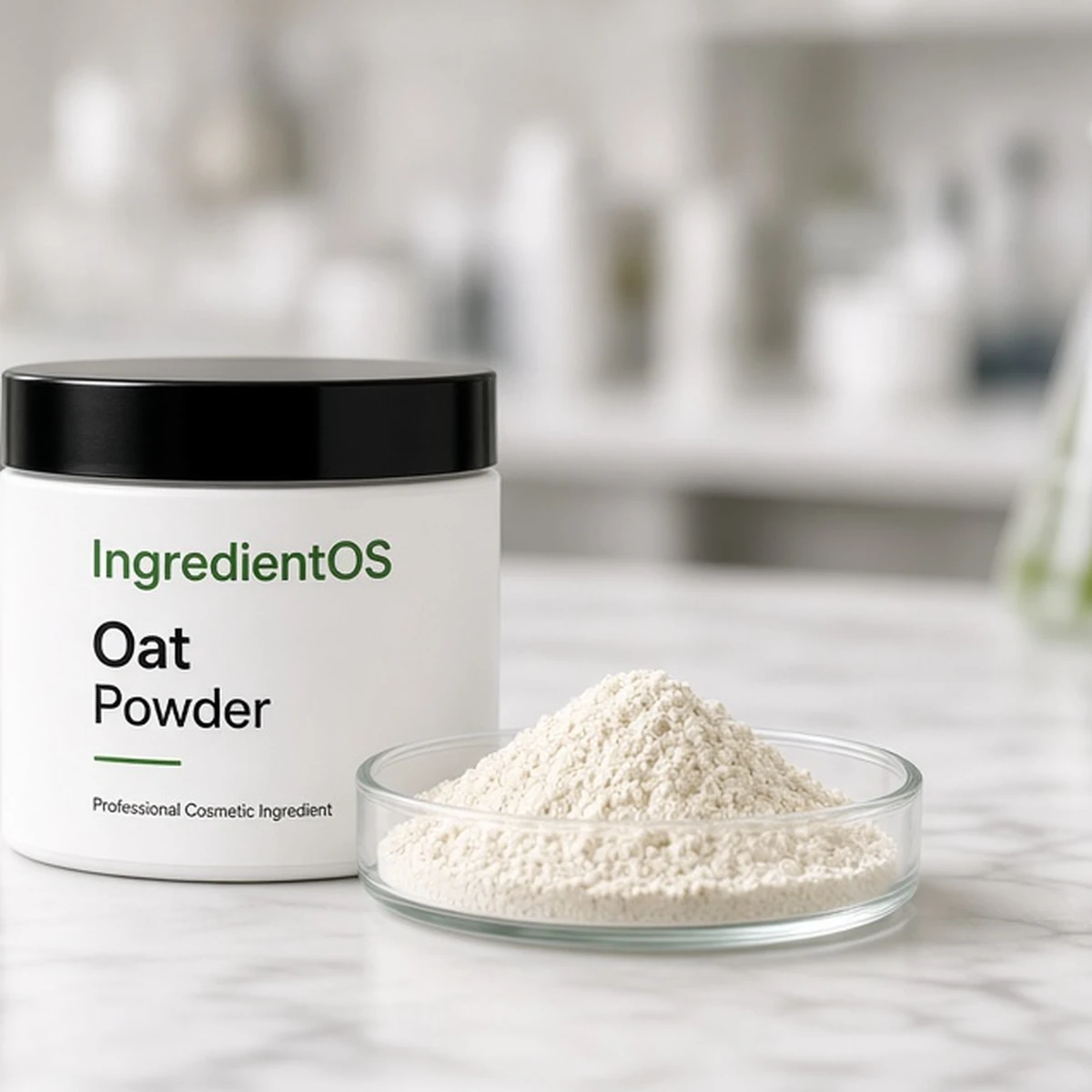
Hydrolyzed ProteinsSKU T60070
Oat Peptide
Oats have a long tradition in skin care, from oatmeal baths to modern colloidal oat creams.
For cosmetic formulation use only.
Raw material for topical cosmetic products.
$51.97In stock
Packaging
Powder sizes (metric · US)
Worldwide Shipping to 200+ Countries
Live international rates at checkout. Free shipping applies to US orders only; duties are paid by the recipient. Shipping details · Over 10 lb? Request a quote- Ships from Florida
- CoA available
- Usually ships in 1–2 business days
- Free US shipping on $35+
Overview
Oats have a long tradition in skin care, from oatmeal baths to modern colloidal oat creams. Oat Peptide brings the protein part of the grain into a form that dissolves easily in water: a hydrolysate of smaller peptides and amino acids that leaves a light, smoothing film on skin and hair.
What a protein hydrolysate is
Plant proteins are large molecules that do not dissolve well. Controlled hydrolysis cuts them into shorter peptides and free amino acids. The result dissolves in water, spreads easily and forms a thin, flexible film as it dries. Such hydrolysates are used for a smooth skin feel, a soft finish in creams and better combability and shine in hair. Oat is a popular source because consumers associate it with gentle, comforting care.
Form and specification
We supply Oat Peptide as a dry material sold by weight. The spec table on our page uses a generic peptide template in some fields; in practice the material is dissolved in water before or during formulation. The exact INCI, protein content and recommended level are confirmed on the CoA for each lot. A common INCI name for this type of material is Hydrolyzed Oat Protein, but always follow the document for your lot.
Applications from the supplier specification
Creams, masks for face and body, tonics, handmade cosmetics, professional cosmetics and hair cosmetics.
Comfort creams
Creams for dry and sensitive-feeling skin are the natural home. Combine oat peptide with oat-derived lipids for a whole-oat concept.
Masks
Cream and clay masks gain a soft after-feel. In body masks it helps the skin feel smooth after removal.
Tonics and hair care
Tonics benefit from its light film. In conditioners and leave-in sprays plant proteins support softness, shine and easier combing.
Marketing angle
Oat is instantly understood by shoppers. Explain that the peptides come from oat protein, that they leave a soft film and that the product is designed for comfort. Keep claims sensory: softer, smoother, more comfortable skin; smoother, shinier hair.
Handmade and small-batch makers
Handmade cosmetics are named in the supplier specification. For small makers, oat peptide is a forgiving ingredient: it dissolves easily, works at room temperature and adds a premium-sounding name to a simple formula. Encourage small makers to weigh accurately, preserve water-based products and keep batch records.
Specifications
| Appearance | powder |
|---|---|
| Solubility | Poorly soluble in water. Weigh the powder and dissolve or disperse it as the supplier CoA directs. |
| Storage | Store tightly closed in a cool, dry place away from light and heat. Respect the shelf life on the CoA. |
How to use
- Solubility
- Poorly soluble in water. Weigh the powder and dissolve or disperse it as the supplier CoA directs.
Formulating tips
Dissolve the material in the water phase. Follow the supplier TDS for the processing temperature. Protein hydrolysates can carry a mild cereal odor and a light beige color into a formula, so test the effect on fragrance and appearance. Keep the finished pH in a skin-friendly range and preserve water-based products well, because proteins can support microbial growth. A natural partner is Oat CO2 Extract for the lipid side of the grain. Other protein hydrolysates are collected in our hydrolyzed proteins category, and rice protein hydrolyzate offers a second plant source for comparison.
Original recipe: oat comfort cream, 100 g
Phase A: water 72.00 g, glycerin 4.00 g, xanthan gum 0.20 g. Phase B: cetearyl olivate and sorbitan olivate 4.00 g, sunflower seed oil 6.00 g, oat seed oil 3.00 g, shea butter 3.00 g, cetyl alcohol 1.00 g. Heat A and B to 75 °C, emulsify and cool. Phase C: Oat Peptide 2.00 g, panthenol 1.50 g, allantoin 0.20 g, bisabolol 0.30 g, tocopherol 0.50 g, preservative 1.00 g, citric acid solution 1.30 g. Adjust pH to about 5.5.
Record the lot number in your batch log so every production run can be traced back to its certificate of analysis. Retain a small sample of each lot for at least the shelf life of the finished product, since it makes later quality questions much easier to answer.
Precautions
Storage
Store tightly closed in a cool, dry place away from light and heat. Respect the shelf life on the CoA.
Storage
Keep sealed in a cool, dry place. Close the pack after weighing to keep humidity out.
- For cosmetic formulation use only. Raw material for topical cosmetic products.
- Cosmetic raw material for professional formulation. Not sold as a finished product.
- Handle with gloves and eye protection, as with any raw material, and follow the SDS.
- Test stability, compatibility and preservation in your finished formula before launch.
- Keep the container closed and out of reach of children.
Documents
A certificate of analysis comes with your order. TDS and SDS are sent by email when you request them.
Request documents
CoA, TDS, SDS, or a specification for this ingredient. We email the files within 1 business day.
Request a CoA, TDS, SDS, or specification.
FAQ
What is oat peptide?
A hydrolysate of oat proteins: smaller peptides and amino acids that dissolve in water and leave a light, smoothing film.
Which cosmetic products is it used in?
Creams, face and body masks, tonics, handmade and professional cosmetics and hair care, according to the supplier specification.
How do I use it in a formula?
Dissolve it in the water phase. Follow the supplier TDS for the processing temperature.
Is the cosmetic grade for food use?
Use this listing only as specified on its CoA and do not repurpose it without a food-grade specification.