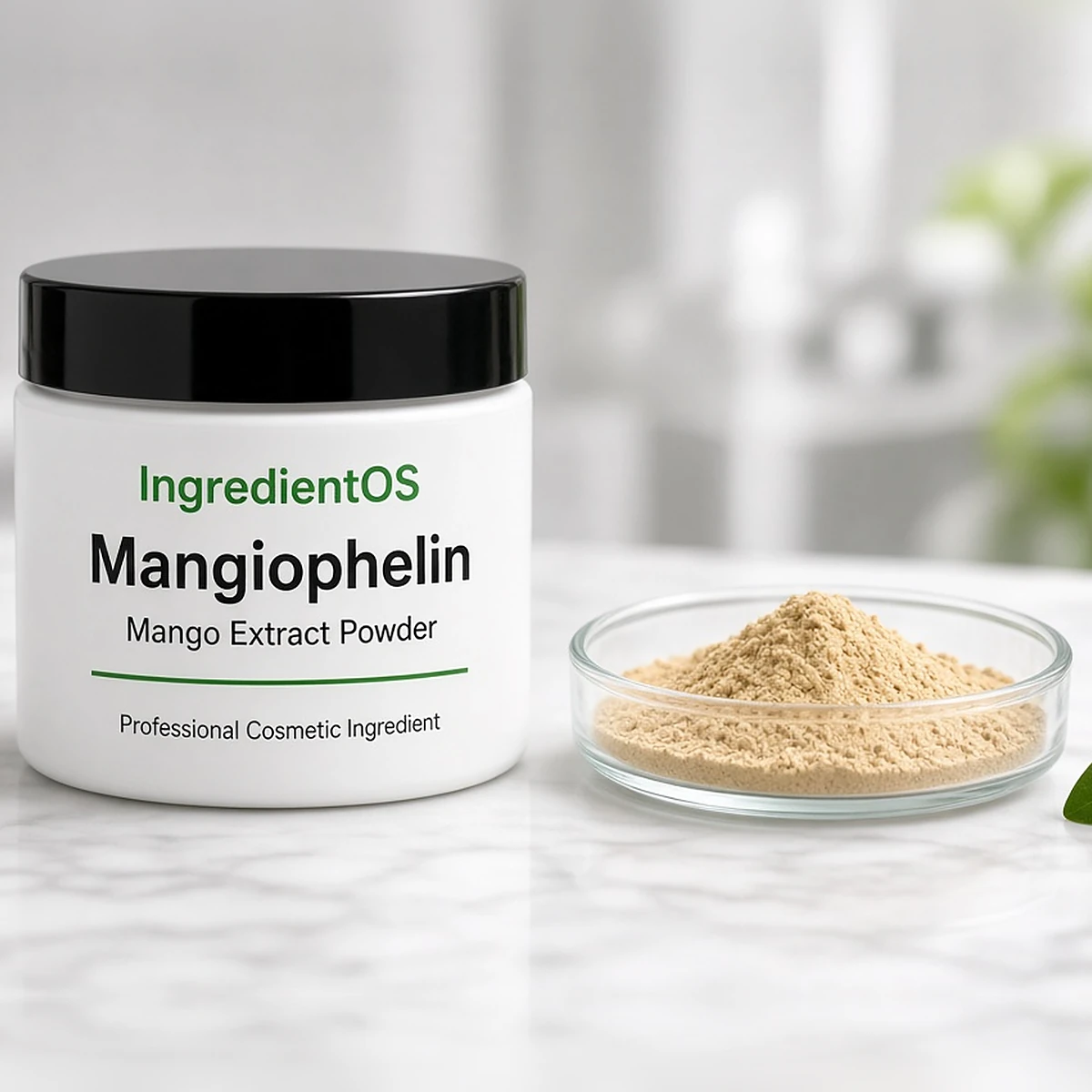
SKU: TM26101710
Mangiophelin Mango Fruit Extract Powder
- Patented Sabinsa mango extract
- At least 10% polyphenols and 1% mangiferin
- Targets nine visible signs of aging
- Premix with glycol 1:3 at 40 to 50 °C
INCI: Mangifera Indica (Mango) Fruit Extract. CAS 90063-86-8.
Usage Rate: 0.2 to 1.0% in the finished formula. Premix with glycol at 1:3 and warm to 40 to 50 °C.
Packaging
Powder sizes (metric · US)
Description
What Mangiophelin is
Mangiophelin is a patented appearance-focused cosmetic active developed by Sabinsa from immature, dried mangoes. Young fruit is rich in polyphenols, and the extract is standardized to contain at least 10% polyphenols and at least 1% mangiferin, the signature antioxidant of the mango. Standardization is what sets it apart from a generic fruit powder: each lot carries a defined amount of the compounds that do the work, so results at the bench are repeatable.
It sits with the standardized plant actives in our cosmetic actives section. For another standardized plant antioxidant, compare it with curcumin phytosome.
Composition and label INCI
The INCI is Mangifera Indica (Mango) Fruit Extract and the CAS number is 90063-86-8. It is a pale brown to brown powder. In finished products at the recommended level it adds only a faint warm tint, which most creams and opaque serums hide easily.
What it does in skin care
The producer positions Mangiophelin as a comprehensive appearance-focused cosmetic active that targets nine visible signs of aging: wrinkles, age spots, loss of elasticity, roughness, sagging, uneven tone, dullness, visible pores and skin tags. It works through four mechanisms the producer describes as antioxidant protection, anti-glycation defense, regulation of melanin and preservation of the extracellular matrix. It is described as compatible with sensitive skin, which suits all-in-one products.
Why unripe fruit
Mangoes harvested young contain far more polyphenols than ripe fruit, and much of that content is mangiferin, a xanthone glucoside studied for its antioxidant activity. Drying and extracting the immature fruit concentrates these compounds, which is how the extract reaches its standardized levels. That background gives brands a clear, simple ingredient story to share with customers.
How to use it
Mangiophelin has low solubility in water, so premix it with a glycol such as propylene glycol or propanediol at 1 part extract to 3 parts glycol, and warm the premix gently to 40 to 50 °C while stirring. Add the premix to the water phase or at cool-down. It also dissolves in alcohols such as ethanol, which suits toners with an alcohol share.
Practical tips
Prepare the glycol premix fresh for each batch. A tiny amount of a chelating agent helps keep the shade of polyphenol extracts steady over time. Pair it with niacinamide, peptides or hyaluronic acid in multi-benefit serums.
Bench example: all-in-one day cream
This 100 g bench batch shows one way to use the material. For the premix, warm 1.5 g propanediol to 45 °C and stir in 0.5 g Mangiophelin until evenly dispersed. For phase A, weigh 71.6 g distilled water, 3 g glycerin, 0.3 g xanthan gum and 0.1 g disodium EDTA. For phase B, weigh 10 g caprylic/capric triglyceride, 4 g cetearyl olivate and sorbitan olivate and 2 g cetyl alcohol. Heat both phases to 75 °C, combine and homogenize. Below 40 °C, add the premix, 3 g niacinamide predissolved in 3 g water and 1 g broad-spectrum preservative used at its supplier rate. Adjust to pH 5.0 to 5.5.
Where it fits in a product line
Mangiophelin suits day creams, serums, eye creams and body lotions with an all-in-one appearance-focused cosmetic story. It is a strong choice for brands that want a recognizable fruit ingredient backed by standardization and a patent.
Storage
Keep the powder in a tightly closed container in a cool, dry place away from light. Close the pack quickly after each use to keep moisture out. For cosmetic formulation use only.
Key Benefits
- Patented Sabinsa mango extract
- At least 10% polyphenols and 1% mangiferin
- Targets nine visible signs of aging
- Premix with glycol 1:3 at 40 to 50 °C
Product Specifications
Frequently Asked Questions
Who makes Mangiophelin?
Sabinsa, from immature, dried mangoes.
What is it standardized to?
At least 10% polyphenols and at least 1% mangiferin.
How do I add it to a water-based formula?
Premix 1 part powder with 3 parts glycol, warm to 40 to 50 °C while stirring, then add it to the batch.
Will it color my cream?
It is a brown powder, so at 0.2 to 1.0% it can add a faint warm tint. Start low in white creams.