
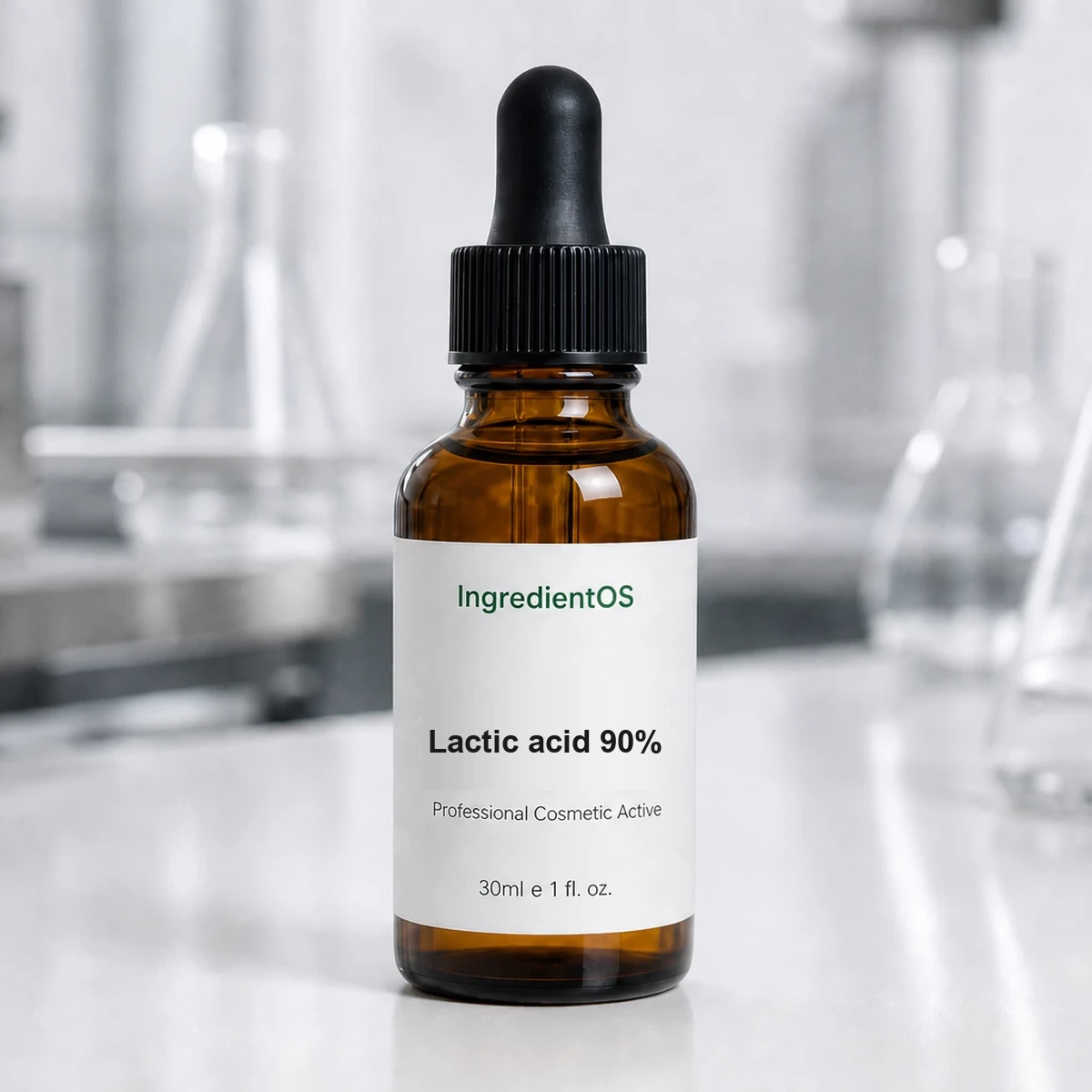
SKU: N90002
Lactic acid 90%
$15.99In stock
Usage Rate: Typical: use the supplied liquid active concentrate at supplier-recommended levels in leave-on formulas, delivering approximately 0.1–0.5% pure active in the finished product (1000–5000 ppm).
Packaging
Liquid sizes — 0.33 oz (10 mL) sample through bulk (US · metric)
Ships from FloridaSecure checkoutUsually ships in 1–2 business daysFree US shipping on $50+
AppearanceLiquid active concentrate
pHBelow 2 (neat liquid, strongly acidic). Adjust the finished product pH.
Description
Lactic acid 90% in short
Lactic acid 90% is a liquid alpha hydroxy acid that dissolves in water, alcohol and glycerin. It is the stronger of the two lactic acid grades in our range. Because it is more concentrated, you need less of it to reach the same acid content as the 80% grade. The supplier CoA confirms the concentration of each lot. Note that a concentrated acid is strongly acidic; always measure the pH of your diluted premix and of the finished product yourself.
Why choose the stronger grade
Professional peel-style products and salon formulas often need a high acid content in a small volume. Starting from a 90% solution leaves more room in the formula for water, humectants and soothing ingredients. It also reduces the water you add with the acid, which matters in low-water products.
Product formats
Exfoliating serums
Leave-on serums aim at smoother, brighter-looking skin over several weeks. Choose the acid level and pH carefully, and test comfort with a panel.
Peel-style masks
Rinse-off masks used for a few minutes can carry more acid than leave-on products. Clear timing instructions on the pack are essential, and salon versions need trained staff.
Body care
Smoothing body lotions for rough skin on arms, legs and heels are a popular use.
Acid adjusting
A few drops of a diluted premix lower the pH of creams, gels and cleansers.
Handling and dilution
Wear gloves and eye protection. Add the acid slowly to water, never water to acid. Making a 10% premix in water first makes small adjustments easier and safer.
Formulating tips
Glycerin dissolves lactic acid well, and a glycerin premix can make serums feel more comfortable. Partial neutralization with sodium lactate or sodium hydroxide gives a buffered, gentler product. Choose thickeners that work at low pH, such as some cellulose gums or acid-tolerant polymers.
Partners
Lactic Acid 80% is the milder grade for everyday products. Glycolic Peel G25 25% can add another AHA in salon peels. Soothing ingredients like panthenol and allantoin add comfort. See more in our actives catalog.
Safety and labeling
Add clear directions and a patch-test suggestion.
Testing
Measure pH at each step and after stability tests. Check that packaging, including pumps and caps, resists acids. A sensory panel can rate tingling and comfort.
Claims
Use appearance wording: smoother, brighter-looking, more even-toned skin; soft, smooth skin on the body after regular use.
Characteristics
Form: liquid. Concentration: 90%, confirmed on the CoA. Solubility: water, alcohol, glycerin. Type: alpha hydroxy acid. Uses: exfoliating serums, peel-style masks, body care, acid adjusting.
Original recipe: overnight smoothing serum, 100 g
Distilled water 80.20 g, glycerin 6.00 g, lactic acid 90% 5.00 g, sodium lactate 60% 3.00 g, hydroxyethylcellulose 1.00 g, panthenol 1.50 g, allantoin 0.30 g, sodium PCA 50% 2.00 g, preservative 1.00 g. Hydrate the cellulose in water, add glycerin, then premixed acid and sodium lactate slowly, then the rest; check the pH.
Planning salon products
Salon peels need instructions for staff, a neutralizing or rinsing step and aftercare products. Prepare a short protocol sheet with each product and train staff before launch.
Documentation
Keep records of the acid level, final pH and test results for each product. Retailers and salons often ask for this data before listing.
Record the lot number in your batch log so every production run can be traced back to its certificate of analysis. Retain a small sample of each lot for at least the shelf life of the finished product, since it makes later quality questions much easier to answer.
Storage
Store tightly closed at room temperature in an acid-resistant container.
Product Specifications
Usage RateTypical: use the supplied liquid active concentrate at supplier-recommended levels in leave-on formulas, delivering approximately 0.1–0.5% pure active in the finished product (1000–5000 ppm).
SolubilityWater-soluble liquid active concentrate. Add directly to the water phase during cool-down.
StorageStore tightly closed in a cool, dry place away from light and heat. Respect the shelf life on the CoA.
TDS / CoA available on request. Contact us
Frequently Asked Questions
How is it different from lactic acid 80%?
It is more concentrated, so less is needed for the same acid content.
What does it dissolve in?
Water, alcohol and glycerin.
How should I handle it?
Wear gloves and eye protection, and dilute it before adding it to a batch.


