SKU: TM26101706
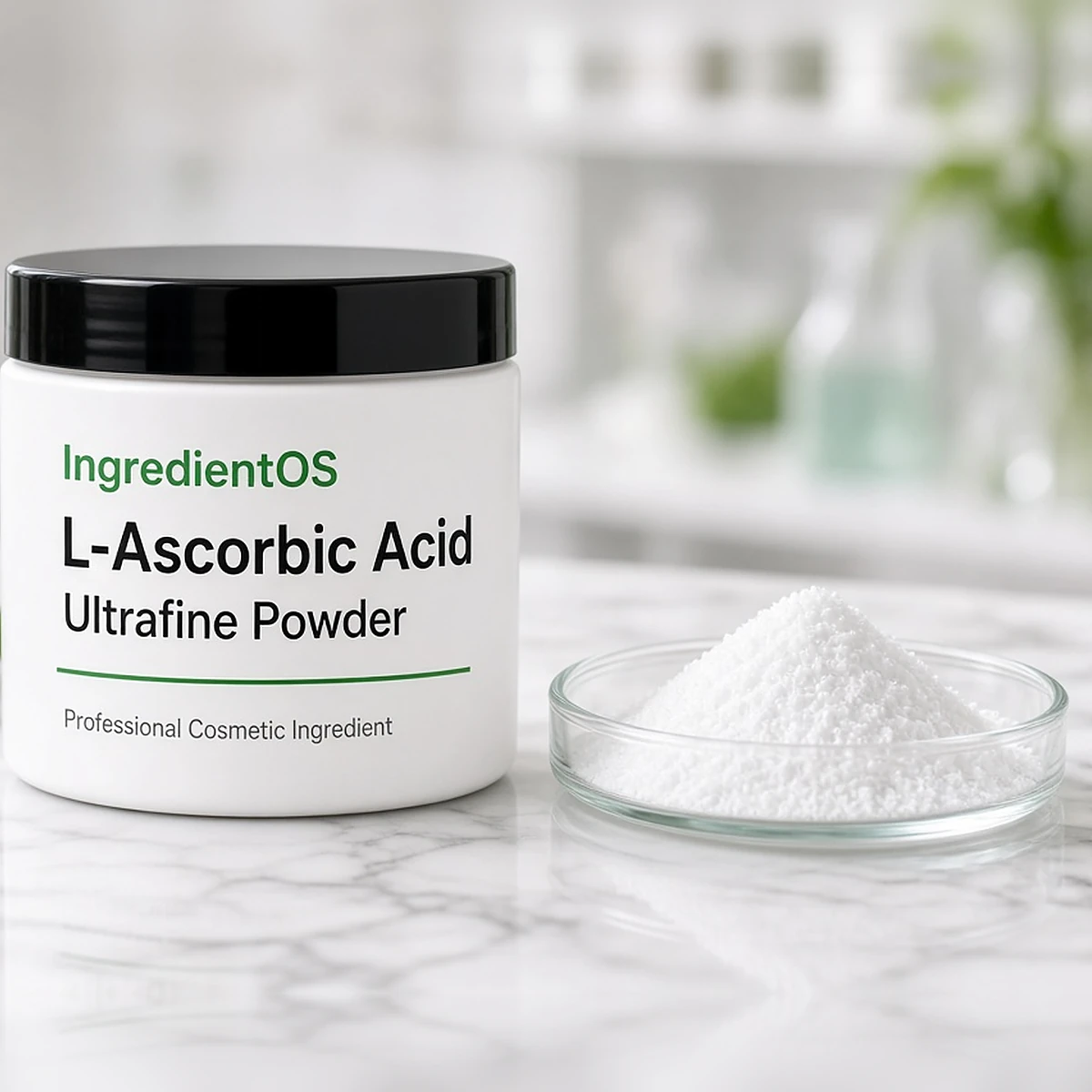
L-Ascorbic Acid Ultrafine Powder
- Pure L-ascorbic acid, FCC grade
- Ultrafine powder for fast dissolving
- Reference antioxidant for collagen support
- For fresh water serums and anhydrous serums
- Use-by date two years from manufacture, unopened
INCI: Ascorbic Acid. CAS 50-81-7.
Usage Rate: Commonly 5 to 15% in serums. Add last, at room temperature, finished pH about 3.0 to 3.5 in water systems.
Packaging
Powder sizes (metric · US)
Description
What L-ascorbic acid is
L-ascorbic acid is pure vitamin C, the form the skin uses directly. It is a potent antioxidant found in every layer of the skin, more concentrated in the epidermis than in the dermis. It is a cofactor for the enzymes that build collagen, which is why it is the reference ingredient for products aimed at fine lines, firmness and a brighter tone. This grade is FCC quality and milled ultrafine, so it dissolves quickly and disperses evenly in anhydrous bases.
It sits with the vitamin C materials in our cosmetic actives section. If you need a vitamin C that stays stable in water, look instead at magnesium ascorbyl phosphate or at an oil-soluble ester such as ascorbyl palmitate.
Composition and label INCI
The INCI is Ascorbic Acid and the CAS number is 50-81-7. It is a white, ultrafine crystalline powder. The material is supplied as a cosmetic raw material for external use in finished products only.
The stability challenge
Ascorbic acid starts to oxidize as soon as it is dissolved in water, converting to dehydroascorbic acid and shifting from colorless to yellow, orange and brown. Moisture, air, light, heat and traces of metals such as iron or copper speed this up. A yellow tint in solution is the first sign. For that reason, many formulators work in one of three ways: an anhydrous serum in which the powder is suspended or dissolved in glycols, a small water serum made fresh in batches meant to be used within a few weeks, or a dry powder mixed into a serum by the user just before application.
How to use it
In water-based serums, a low pH is needed for the acid to stay in its active form; keep the finished product around pH 3.0 to 3.5. Dissolve the powder in the water or glycol phase at room temperature, never in a hot phase, and add it as the last step. Use airless or opaque packaging, keep the headspace small, and use stainless steel or glass tools, because contact with iron or copper speeds browning. Ferulic acid and tocopherol are classic partners that support stability.
Handling the pack
The powder absorbs moisture from the air, and in the presence of oxygen it begins to oxidize. Close the pack quickly after each use, expelling as much air as possible. Choose a pack size you will use within three to four months; for daily small batches, a smaller pack opened less often keeps the powder fresher than a large pack opened every day.
Bench example: fresh vitamin C serum
This 30 g bench batch is meant to be made in small amounts and used within a few weeks. Weigh 20.4 g distilled water and 6 g propanediol, then dissolve 3 g L-ascorbic acid at room temperature. Add 0.3 g ferulic acid predissolved in the propanediol and 0.3 g preservative used at its supplier rate. Check that the pH is near 3.0 to 3.5 and fill into an opaque airless bottle. Keep it in the fridge between uses.
Where it fits in a product line
L-ascorbic acid is the choice for brands that want pure vitamin C on the label and are ready to manage its short life in water. It suits concentrated serums made in small runs, anhydrous silicone or glycol serums, two-part kits in which the user mixes powder and liquid, and powder boosters added to a moisturizer at the moment of use. For products that must sit on a shelf for many months in water, a stable derivative is the better route, and the actives section offers several.
Storage
Store the sealed pack in a cool, dry place away from heat, light and air. The manufacturer states a use-by date of two years from manufacture for unopened packs. For cosmetic formulation use only.
Key Benefits
- Pure L-ascorbic acid, FCC grade
- Ultrafine powder for fast dissolving
- Reference antioxidant for collagen support
- For fresh water serums and anhydrous serums
- Use-by date two years from manufacture, unopened
Product Specifications
Frequently Asked Questions
Why does my vitamin C serum turn yellow?
Ascorbic acid oxidizes in water. Yellowing is the first sign, so make small batches and keep them cool and dark.
What pH should a water serum have?
About 3.0 to 3.5 keeps L-ascorbic acid in its active form.
Can I heat it?
No. Add it at room temperature as the last step.
Which pack size should I choose?
One you will use within three to four months, because the powder slowly takes up moisture after opening.