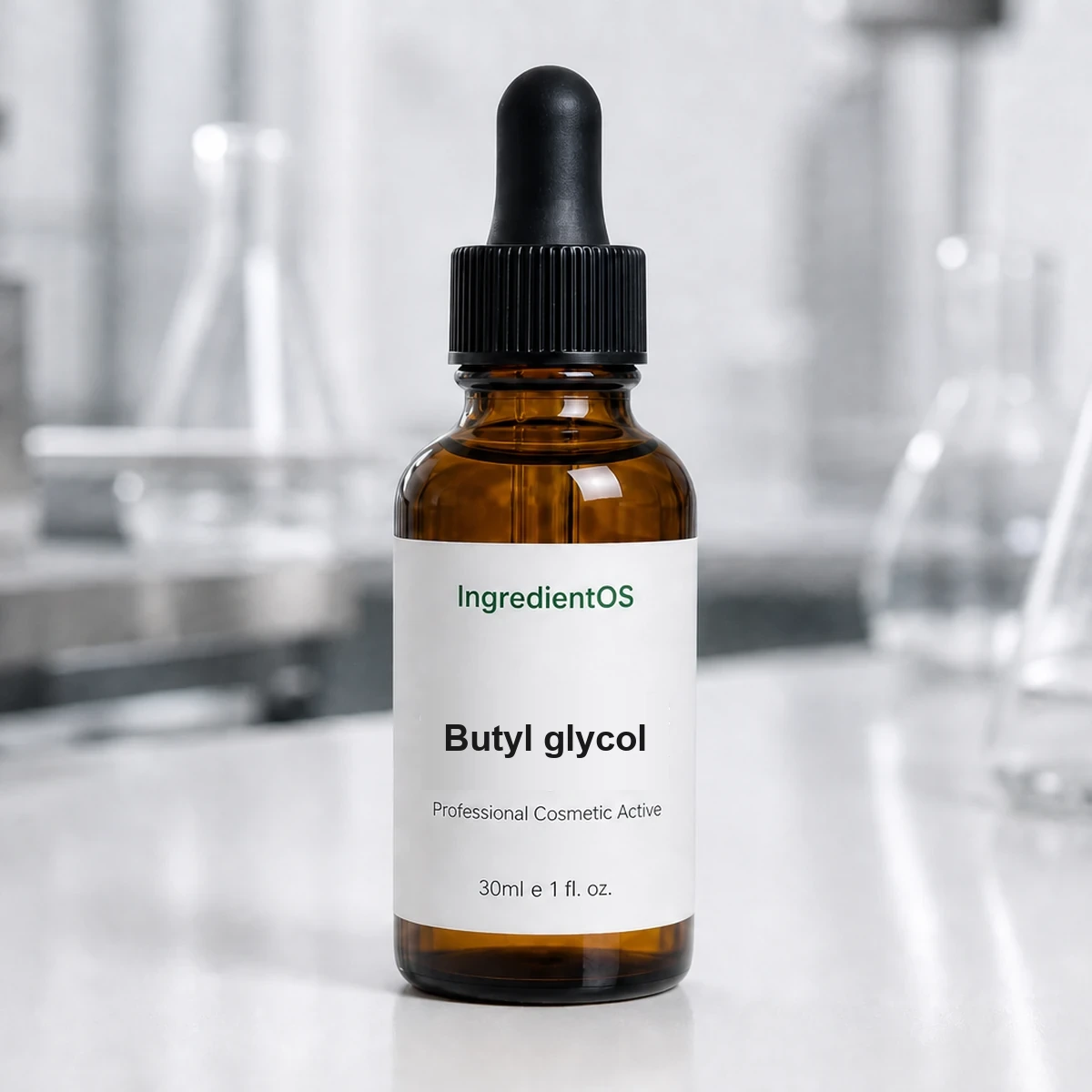
SKU: VV25101001
Butyl glycol
- Deep, multi-layer hydration and plumping appearance
- Pairs with niacinamide, panthenol, and barrier actives
- Ready-to-use liquid concentrate for professional US formulation
- Typical use: 0.1–0.5% pure active in finished formula (1000–5000 ppm)
- Leave-on serums, creams, and cosmetic products
INCI: Butyl glycol (confirm full INCI and active % on supplier CoA).
Usage Rate: Typical: use the supplied liquid active concentrate at supplier-recommended levels in leave-on formulas, delivering approximately 0.1–0.5% pure active in the finished product (1000–5000 ppm).
Packaging
Liquid sizes — 10 mL sample through bulk (US · metric)
Description
Butyl glycol is a hydration-focused active concentrate for US formulators building hyaluronic-acid serums, barrier creams, and "glass skin" treatments. Multi-weight hyaluronic systems and professional moisture concentrates remain top Google queries in the indie skincare space. Humectant and hydration actives draw and hold water in the stratum corneum, supporting plump, smooth, well-conditioned skin. Pair with occlusives and barrier lipids for complete US-market hydration systems. Cosmetic Uses Butyl glycol is used as a solvent, stabilizer, and moisturizer. It improves the penetration of active ingredients into the skin, increases the transparency of emulsions, and stabilizes formulations. It is used to dissolve extracts, fragrances, and pigments, and as an auxiliary component in antiseptics. Household Chemical Uses It is used as a solvent for greases and stains in cleaning products, polishes, glass cleaners, and all-purpose sprays. It ensures high cleaning efficiency while being gentle on surfaces. Paint and Varnish Industry Uses It serves as a coalescent and evaporation retarder, improves paint flow and homogeneity, increases adhesion, and resistance to cracking. cosmetic Uses It is used as a solvent and carrier for active ingredients in topical preparations, antiseptics, and gels. It ensures uniform distribution and formula stability. Food Industry Uses It can be used for technological purposes as a flavoring solvent and stabilizer in the production of food essences (in minimum permitted doses, where permitted). For US formulators, Butyl glycol is supplied as a ready-to-use liquid active concentrate. Add directly to the water phase during cool-down — no powder dissolution step required. Typical finished-formula use delivers approximately 0.1–0.5% pure active in leave-on products (1000–5000 ppm) when the supplied concentrate is used at supplier-recommended levels. Begin at the lower end of the range, then adjust for feel, clarity, and claim targets. Butyl glycol performs best at a mild, skin-friendly pH and should be protected from strong oxidizers and high electrolyte loads. Its clean solubility suits transparent serums, essences, and lightweight emulsions — the textures US consumers expect from professional-grade skincare. Robust preservation is essential for any water-based active system. Commercially, Butyl glycol supports clear on-page SEO: trade name, INCI, usage rate, and cosmetic function are visible to Google and to formulators evaluating ingredients for launch. Whether you are building a single-ingredient booster or a multi-active complex, this concentrate integrates into modern US appearance-focused cosmetic, cosmetic product, and specialty skincare lines. Butyl glycol works in multi-weight HA systems, barrier creams, and "glass skin" essences popular with US indie formulators. Combine with glycerin, panthenol, beta-glucan, and ceramides for complete hydration-and-barrier positioning that ranks well for long-tail Google queries. Humectant actives perform best when paired with occlusives or emollients in finished formulas, especially in dry US climates. Butyl glycol supports premium hydration claims without the instability risks of raw powder handling. Standard handling: water-phase addition during cool-down, mild pH, preservation, and leave-on formats. Butyl glycol is a practical hero for hydration-focused launches on the US market. IngredientOS lists Butyl glycol with full English product copy structured for US Google search in 2026 — including SEO title, meta description, usage rate, solubility, FAQ, and schema markup — so formulators and ingredient buyers can evaluate, compare, and purchase with confidence.
Product Specifications
Frequently Asked Questions
What is Butyl glycol?
A professional cosmetic liquid active concentrate for US formulators and ingredient buyers.
Is this a powder or a liquid?
It is supplied as a ready-to-use liquid active concentrate — add directly to the water phase during cool-down.
What usage rate should I target?
Typical finished formulas use supplier-recommended concentrate levels to deliver ~0.1–0.5% pure active (1000–5000 ppm).
What product types suit this ingredient?
Leave-on serums, essences, creams, and cosmetic emulsions sold in the US market.
How should I store it?
Store tightly closed, cool and dry, away from light and heat; refrigerate opened material where practical.