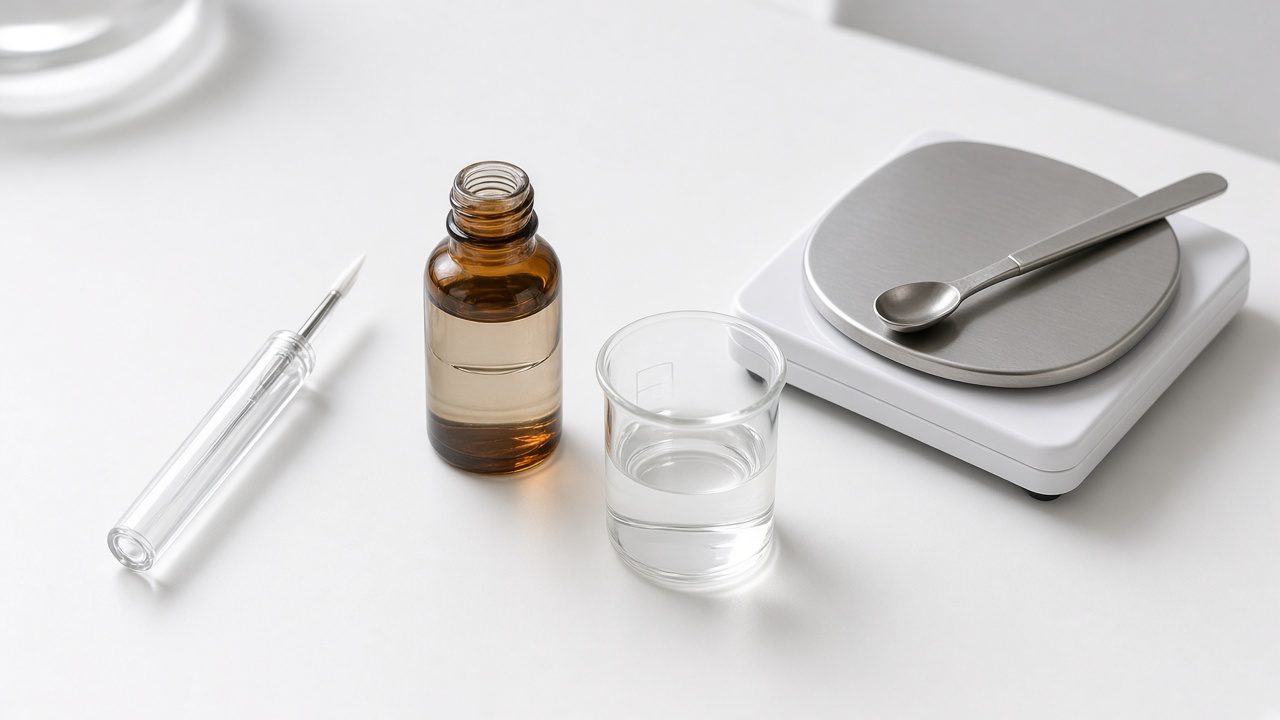
A Myristoyl Pentapeptide-17 lash serum is a light, water-based gel brushed along the lash line once a day, built around a lipopeptide solution that usually holds 1,000 ppm of peptide. Supplier literature for the original grade recommends 2 to 10% of that solution in the finished serum, which works out to 20 to 100 ppm of actual peptide, and 5% when it is combined with Myristoyl Hexapeptide-16.
The ingredient is easy to dose and hard to formulate badly, yet many lash serums still underperform because of the base around it or the claims printed on the box. This guide covers what the peptide is, how to read the concentration on your certificate, the kind of gel it prefers, how to combine it with its hexapeptide partner, and the wording that keeps a lash product a cosmetic in the US.
What Myristoyl Pentapeptide-17 Is
A Lipopeptide Built for the Lash Line
Myristoyl Pentapeptide-17 is a short chain of five amino acids with myristic acid, a 14-carbon fatty acid, attached to one end. The fatty tail makes the peptide more compatible with the oily surface of skin and lash follicles than a bare peptide would be, which is why suppliers group it with other lipo-oligopeptides. Its CAS number is 959610-30-1, the same number listed on our Myristoyl Pentapeptide-17 solution card. It was introduced to the market by Symrise as SymPeptide 226EL, later replaced by a preserved grade called SymPeptide XLash, and generic versions are now sold under names such as lash peptide or eye lash penta peptide.
What the Supplier Data Shows
The supplier technical documents describe in vitro work on keratin gene expression and small consumer panels in which a conditioner or eyeliner serum with 5 or 10% of the solution was applied once daily at the lash root, with lashes measured over two to six weeks. Those panels were small, from 2 to 15 people, so treat them as the basis for a cosmetic claim about the look of lashes, not as proof of a biological effect. The same documents note a visible result after two to four weeks of daily use, which is a useful timeframe for your own panel test.
Reading the Concentration Before You Dose
Solution Versus Neat Peptide
Nearly every lash peptide on the market is sold as a dilute solution, and the INCI list printed on it shows that: Water, Glycerin, Myristoyl Pentapeptide-17. The original grade contains 1,000 ppm, or 0.1%, of peptide, and it is this solution that the 2 to 10% recommendation refers to. Our XLash Peptide and Eye Lash Penta Peptide cards list exactly that water and glycerin vehicle. If your certificate states a different peptide content, scale the dose so the finished serum lands in the same 20 to 100 ppm window rather than copying the percentage blindly.
Working From a Powder
A Myristoyl Pentapeptide-17 powder changes the arithmetic, not the target. Fifty ppm of peptide in a 100 g batch is 5 mg, a quantity most hobby and small-brand scales cannot weigh accurately. The practical route is to dissolve the powder fully, following the method on its technical sheet, into a stock solution of known strength, then dose that stock by the gram. Correct the figure for the purity printed on the CoA, and add the stock in the cool-down phase. Our cosmetic peptide powders guide walks through the stock-solution maths in detail.
Building the Base
Keep the Gel Simple and Nonionic
Symrise lists three handling notes for this peptide: it is soluble in water, ethanol and glycols, it is stable from pH 4 to 8 and up to 100 °C, and formulators should reduce anionic ingredients, because simpler formulas help release the peptide on the skin. In practice that points to a clear gel thickened with a nonionic polymer such as hydroxyethylcellulose rather than a carbomer, which is anionic once neutralized. Sodium hyaluronate is also anionic, so if you want it for slip, keep it low and compare a batch without it. Heat stability is generous, but adding the peptide below about 40 °C costs nothing and protects any other actives in the formula.
A 100 g Starting Formula
A workable lab batch looks like this. Purified water makes up the balance to 100 g. Glycerin at 3 g adds slip and a little moisture to the lash line. Hydroxyethylcellulose at 0.6 to 0.8 g, dispersed into the glycerin first and then hydrated in the water, gives a gel thick enough to stay on a brush. Panthenol at 1 g is a familiar lash and brow conditioning ingredient. Myristoyl Pentapeptide-17 solution at 5 to 10 g goes in at cool-down, followed by a preservative system your supplier has documented for eye-area products, at the level that supplier gives. Check the pH and adjust it into the 5 to 6.5 range that is comfortable for the eye area and well inside the peptide stability window.
Texture and Packaging
The classic format is a tube with a fine eyeliner brush, because the supplier panels applied the serum at the lash root, not along the lash tips like a mascara. A gel that strings off the brush or beads on the lid will be used inconsistently, so judge viscosity with the brush you will actually ship. Brow serums can use the same base in a spoolie tube, and a tinted brow gel can carry the peptide too, provided the pigments and film formers do not bring in a large anionic load.
Pairing With Other Lash and Brow Actives
Myristoyl Hexapeptide-16
The most common partner is Eye Lash Hexa Peptide, INCI Myristoyl Hexapeptide-16, CAS 959610-54-9, sold as the same style of 1,000 ppm glycerin and water solution. The supplier guidance for combining the two drops the pentapeptide to 5%, and many commercial lash serums list both peptides together. The hexapeptide is a separate ingredient with its own INCI name, so it gets its own line on the label.
Biotinoyl Tripeptide-1 and Others
Biotinoyl Tripeptide-1 is another peptide often added to lash and brow products, and our Biotinoyl Tripeptide-1 card carries it as a solution. Acetyl Hexapeptide-1 appears in brow and lash serums for a different reason, a deeper-looking color, and our acetyl hexapeptide-1 serum guide explains where it fits. Each addition is another variable in your panel test, so a first launch is usually easier to evaluate with one or two peptides than with five. For a scalp product built on similar thinking, see our DIY scalp serum actives article.
What to Leave Out
Prostaglandin analogs such as bimatoprost are drug ingredients in the US, and the FDA has acted against eyelash products that contained related compounds or made growth claims. A peptide lash serum should stay clearly on the cosmetic side, which means no prostaglandin analogs in the formula and no hormone-like actives borrowed from scalp products. Strong fragrance and essential oils are also a poor fit for a product used at the eye margin.
Claims and Testing
Wording That Stays Cosmetic
In the US a product intended to make hair grow is regulated as a drug, so a cosmetic lash serum talks about appearance. Phrases such as lashes look longer, fuller and healthier, a more defined lash line, and conditioned, stronger-looking lashes are in line with cosmetic use. Words like grow, regrow, follicle stimulation, or treating thinning lashes move the product into drug territory regardless of what the ingredient list says. Keep the same discipline on social media, in product names and in customer reviews you quote, because all of them count as labeling or advertising.
A Panel Test That Supports the Claim
A small in-house panel can mirror the supplier design: a fixed number of volunteers apply the serum once a day at the lash root, and you photograph the lashes under identical lighting and angle at day 0 and after four and six weeks. Run the eye-area safety assessment and any ophthalmologist-tested or tolerance study your market expects before the panel, not after. Record the peptide lot, the batch pH and the dose for every sample so results can be traced back.
Choosing a Grade
For most brands the ready 1,000 ppm solution is the simplest path, because the 2 to 10% dose can be weighed on an ordinary scale and the vehicle is already eye-product friendly. The powder suits formulators who want to control the vehicle or make several products from one stock. Every grade is listed in our peptide solutions section, alongside the rest of the cosmetic peptides range, and the card for each lot shows the INCI and CAS you will need for your label.
Sources
Symrise technical literature for SymPeptide 226EL and SymPeptide XLash, including use level, solubility, pH and temperature stability and eyelash panel data. Supplier specification sheets for Eye Lash Penta Peptide, INCI Water, Glycerin, Myristoyl Pentapeptide-17, CAS 959610-30-1. European Commission CosIng database entries for Myristoyl Pentapeptide-17 and Myristoyl Hexapeptide-16. US Federal Food, Drug, and Cosmetic Act, section 201, definitions of drug and cosmetic, and FDA guidance on intended use.
Frequently asked questions
How much Myristoyl Pentapeptide-17 goes into a lash serum?
The original 1,000 ppm solution is recommended at 2 to 10% of the finished serum, which equals 20 to 100 ppm of peptide, and at 5% when combined with Myristoyl Hexapeptide-16. Always check the peptide content on your lot's CoA.
Can I use carbomer in a lash peptide serum?
The supplier advises reducing anionic ingredients, and neutralized carbomer is anionic, so a nonionic thickener such as hydroxyethylcellulose is the safer choice for a simple lash gel.
Is Myristoyl Pentapeptide-17 the same as Myristoyl Hexapeptide-16?
No. They are separate lipopeptides with different CAS numbers, 959610-30-1 and 959610-54-9, often used together in the same serum and listed separately on the label.
Can a peptide lash serum claim lash growth in the US?
No. Growth claims make a product a drug. A cosmetic lash serum can say lashes look longer, fuller or stronger-looking.
Try it with a 1 g sample pack
Neat peptide powders in 1 g packs, INCI on every page, shipped from Florida.
Shop peptide powders