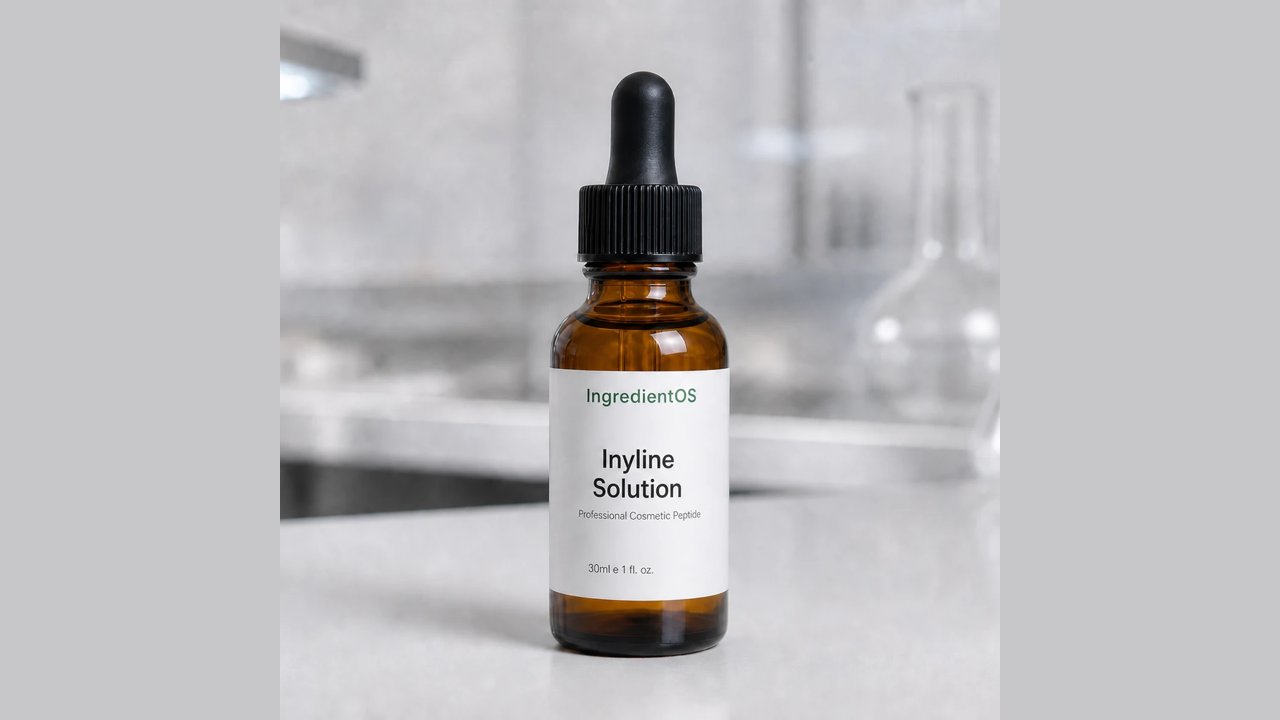
An acetyl hexapeptide-30 serum is a water-based leave-on product that carries the ready peptide solution, usually at the supplier recommended 5%, added during cool-down below 40 °C and held in a finished pH between 5.5 and 8.0. The rest of the work is choosing a clear, light base, keeping the peptide away from heat and harsh actives, and writing claims about the look of expression lines rather than about muscles.
This guide is written for indie brands and formulators who already know the basics of a gel serum and want to place acetyl hexapeptide-30 correctly. It covers what the INCI actually contains, what the supplier and independent sources say, how to build the base, which peptides pair well, and how to test the result before launch.
What acetyl hexapeptide-30 is
Acetyl hexapeptide-30 is a synthetic six-amino-acid peptide with an acetyl group on one end. It was developed by Lipotec, now part of Lubrizol, and is sold under a trade name as a ready solution. The full INCI of that solution, and of our Acetyl Hexapeptide-30 Solution, is Water (Aqua), Acetyl Hexapeptide-30, Arginine, Caprylyl Glycol. Arginine is an amino acid that buffers the solution, and caprylyl glycol preserves the raw material. Resellers describe the supplied liquid as off-white to amber with a pH as supplied of roughly 7.0 to 8.5.
One detail matters for honest marketing: the exact amino acid sequence has not been published. Independent peptide databases that searched PubMed, ClinicalTrials.gov and regulatory lists in October 2026 found no peer-reviewed study under either the INCI or the trade name. What exists is supplier literature, which describes the peptide as interfering with the agrin and MuSK signal that gathers acetylcholine receptors on the muscle side of the nerve junction, a post-synaptic step. That story is the reason brands pair it with acetyl hexapeptide-8, which suppliers describe as working on the pre-synaptic side.
How it differs from the better known expression-line peptides
Acetyl hexapeptide-8 and acetyl octapeptide-3 are both described as SNARE-complex mimics, and we compare them in detail in acetyl octapeptide-3 vs acetyl hexapeptide-8. Pentapeptide-18 is positioned on the enkephalin pathway, covered in pentapeptide-18 vs acetyl hexapeptide-8. Acetyl hexapeptide-30 adds a third, post-synaptic story. For a formulator the practical difference is small: all of them are water-soluble, heat-sensitive and happiest in a mild pH. The difference is in the label narrative and in how you justify combining them.
Use level and pH
Lubrizol lists a recommended use level of 5% for the solution, and resellers repeat the same figure. Because the peptide content of the solution is not public, there is no reliable way to express this as a percentage of pure peptide, so use 5% of the solution as the reference and follow the CoA for each lot. Our product page shows the same guidance: take the level from the supplier documentation. Going above it raises cost without any published benefit, and going far below it weakens the link between your formula and the supplier test data you may want to cite.
The supplier formulation guide asks for a final pH between 5.5 and 8.0. In practice most brands land between 5.5 and 6.5, which also suits niacinamide, panthenol and other peptides. Measure pH on the finished batch, not on the water phase, because thickeners, preservatives and the slightly alkaline peptide solution itself all shift it.
Building the base
Why a clear gel is the best first vehicle
A transparent gel lets you see haze, separation or color drift early, which is why it is the standard first vehicle for a new peptide. A common architecture is water, a humectant such as glycerin or propanediol, a low level of a clear-gel thickener such as xanthan gum or a carbomer neutralized to your target pH, a broad-spectrum preservative suited to water-based products, and then the peptide in cool-down. Adding a hydrating partner such as low molecular hyaluronic acid gives a plumper feel and makes the serum easier to spread over the eye contour.
Carbomer gels are sensitive to electrolytes, and the arginine in the peptide solution adds a small ionic load. Our product page notes that when you pair the solution with high-electrolyte ingredients you should check gel viscosity after 24 hours. If the gel thins, switch to a more salt-tolerant polymer or lower other electrolyte sources.
Process order
Hydrate the thickener in the water and humectant, dissolve any water-soluble supporting actives, neutralize if you use a carbomer, and let the batch cool below 40 °C. Add the preservative at the level its supplier recommends, then add the acetyl hexapeptide-30 solution with gentle stirring. Avoid holding the batch warm afterwards and avoid high-shear mixing once the peptide is in, since there is no benefit and it can trap air. Adjust pH last.
Pairing with other actives
Suppliers and resellers commonly show acetyl hexapeptide-30 combined with acetyl hexapeptide-8, acetyl octapeptide-3 and dipeptide diaminobutyroyl benzylamide diacetate. If you build a multi-peptide serum, add each material separately into the cooled base and stir between additions. Keep each within its own recommended range instead of stacking the maximum of every peptide, because cost rises faster than any benefit and every extra solution brings more vehicle into the formula.
Our product page lists the solution as compatible with water, glycerin, propanediol, butylene glycol, hyaluronic acid, panthenol, allantoin and other peptides. Keep it away from strong acids, strong bases, oxidizers and long heating. In practice that means a low-pH exfoliating acid serum or a pure L-ascorbic acid serum is a poor home; put those actives in a separate product. If you want a vitamin C story in the same routine, a stable derivative in a separate serum is the cleaner route.
Product formats that suit it
The application notes on our product page mention face creams, serums and gels, eye-area products and products aimed at the look of expression lines. Typical finished goods are a crow's feet roll-on, a forehead serum, a light eye gel and a night gel. In an emulsion, add the solution after the emulsion has formed and cooled; the supplier also allows it in the water phase of cold-process emulsions. Roll-on and airless packaging keep air exposure low and suit the small volumes used around the eyes.
Testing before launch
Run stability on the finished product at room temperature, at 40 °C and in a fridge for several weeks, and record color, odor, clarity, viscosity and pH at each check. Test in the final pack, since droppers, pumps and roll-ons expose the product to air differently. A preservative challenge test on the finished product is the normal step before selling, and a patch test on a small area of skin is the minimum for personal use. Resellers note that the supplied solution stays stable for at least 18 months when stored cool and dark, but your finished serum has its own shelf life that only your own testing can establish.
Claims that stay cosmetic
Describe appearance: skin that looks smoother, expression lines that look softer, a more rested-looking eye area with regular use. Avoid any wording about relaxing or blocking muscles, comparisons with injectable procedures, or language that sounds like a medical outcome. Supplier efficacy figures belong to the supplier's own test product; if you want numbers on your label, run a consumer perception or instrumental study on your finished formula.
Where to start
Order the 10 mL sample of Acetyl Hexapeptide-30 Solution, build a 100 g gel at the supplier level, and compare it side by side with the same gel carrying acetyl hexapeptide-8. Once the base is stable, decide whether the multi-peptide story is worth the extra cost. More liquid peptides are gathered in our peptide solutions section, and every listing shows the INCI and ships from Florida.
Frequently asked questions
What concentration of acetyl hexapeptide-30 solution goes into a serum?
The original supplier recommends the ready solution (Water, Acetyl Hexapeptide-30, Arginine, Caprylyl Glycol) at 5% of the finished product. That figure refers to the solution, not to pure peptide, so always confirm it against the CoA for your lot.
What pH does an acetyl hexapeptide-30 serum need?
Supplier guidance places the finished formula between pH 5.5 and 8.0. A target around 5.5 to 6.5 keeps it in that window and close to the comfortable range of most other cosmetic peptides.
Can acetyl hexapeptide-30 be combined with acetyl hexapeptide-8?
Yes. Brands often pair it with acetyl hexapeptide-8 because suppliers describe the two as acting on different steps of the same signalling chain. Add each solution separately in cool-down and keep each within its own recommended level.
Is there published research on acetyl hexapeptide-30?
Most data come from the supplier. Independent reviewers note that the amino acid sequence is not disclosed and that PubMed lists no peer-reviewed study under the INCI name, so claims should stay modest and be backed by tests on your finished product.
Try it with a 1 g sample pack
Neat peptide powders in 1 g packs, INCI on every page, shipped from Florida.
Shop peptide powders