
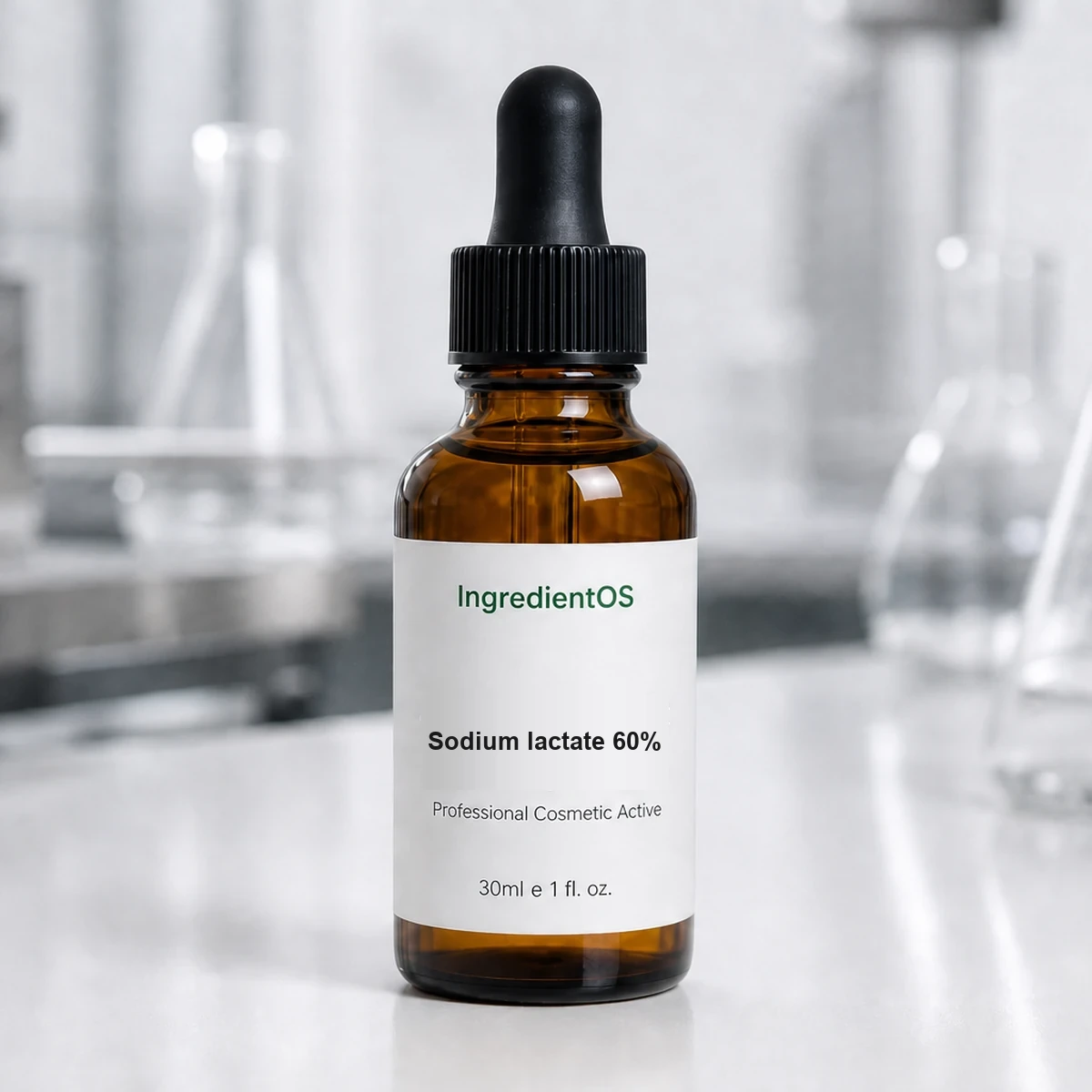
SKU: J90304
Sodium lactate 60%
$15.99In stock
Usage Rate: Typical: use the supplied liquid active concentrate at supplier-recommended levels in leave-on formulas, delivering approximately 0.1–0.5% pure active in the finished product (1000–5000 ppm).
Packaging
Liquid sizes — 0.33 oz (10 mL) sample through bulk (US · metric)
Ships from FloridaSecure checkoutUsually ships in 1–2 business daysFree US shipping on $50+
AppearanceLiquid active concentrate
Description
Sodium lactate 60% in brief
Sodium lactate 60% is a liquid that dissolves in water. Sodium lactate is the sodium salt of lactic acid, and it is part of the skin's own natural moisturizing factor. In formulas it does two main jobs: it acts as a humectant, helping skin feel moisturized, and it buffers lactic acid products so they feel gentler. The supplier CoA confirms the concentration of each lot.
A versatile helper
Few ingredients are as easy to use. Sodium lactate fits almost any water-based product, has a mild taste and smell, and costs little. It can lift the moisture feel of a cream, soften the sting of an acid toner and improve the texture of solid bar products.
Uses in skin care
Creams and lotions
Add sodium lactate to the water phase to support moisture. It works well with glycerin, urea and sodium PCA.
Acid products
Combined with lactic acid, it forms a buffer that keeps the pH stable and the product gentler. Many exfoliating toners and body lotions use this pair.
Cleansers and shampoos
Small amounts help cleansers leave skin feeling less tight.
Bar products
In solid cleansing bars and other hard bars, sodium lactate helps the bar firm up and release from the mold.
Processing
Add it to the water phase at any stage; it tolerates heat. When buffering lactic acid, add both slowly and measure pH as you go.
Partners
Lactic Acid 80% is the natural partner for buffered acid products. Natural Moisturizing Factor, glycerin and urea build a moisture system. More ingredients are in our actives catalog.
Formulating tips
High levels of humectants can feel sticky. Balance sodium lactate with emollients and a light film former. In acid products, start with the target pH and adjust the ratio of acid to salt to reach it.
Testing
Measure pH after stability tests, since it can drift in buffered products. A panel can rate stickiness and moisture feel.
Claims
Use moisture and comfort wording: skin that feels soft, smooth and moisturized; a gentle, comfortable acid toner.
Cost and supply
Sodium lactate is affordable and widely available, which makes it a smart choice for everyday products. Buying it as a ready solution saves time and gives consistent results.
Labeling
Use the INCI name from the CoA, usually sodium lactate. Note that the solution contains water, which counts toward the total water in the formula.
Characteristics
Form: liquid solution. Concentration: 60%, confirmed on the CoA. Solubility: water. Roles: humectant, buffer for lactic acid, bar hardener. Typical products: creams, lotions, toners, cleansers, shampoos, bars.
Original recipe: buffered smoothing toner, 100 g
Distilled water 86.00 g, glycerin 3.00 g, lactic acid 80% 4.00 g, sodium lactate 60% 4.00 g, panthenol 1.00 g, polysorbate 20 0.50 g, preservative 1.00 g, fragrance 0.50 g. Dissolve everything in water, adding the acid and sodium lactate slowly, then check the pH.
Sodium lactate in bars
Makers of solid cleansing bars and shampoo bars often add a little sodium lactate to the liquid part of the recipe. The bars become harder sooner, release from silicone molds more easily and keep their shape better in the shower. Add it to the cooled liquid before mixing with the other parts. Keep notes on the amount, since too much can make bars brittle or crumbly, and test the hardness of trial bars after one and two weeks of curing so the final level is based on real results.
Quality checks
Check the clarity and color of each lot. A good solution is clear and nearly colorless, with only a faint smell.
Record the lot number in your batch log so every production run can be traced back to its certificate of analysis. Retain a small sample of each lot for at least the shelf life of the finished product, since it makes later quality questions much easier to answer.
Storage
Store tightly closed at room temperature. Close the container after use.
Product Specifications
Usage RateTypical: use the supplied liquid active concentrate at supplier-recommended levels in leave-on formulas, delivering approximately 0.1–0.5% pure active in the finished product (1000–5000 ppm).
SolubilityWater-soluble liquid active concentrate. Add directly to the water phase during cool-down.
StorageStore tightly closed in a cool, dry place away from light and heat. Respect the shelf life on the CoA.
TDS / CoA available on request. Contact us
Frequently Asked Questions
What is sodium lactate?
The sodium salt of lactic acid, used as a humectant and buffer.
How is it used with lactic acid?
It buffers lactic acid, giving gentler acid products with a more stable pH.
Is it water-soluble?
Yes. Add it to the water phase.


