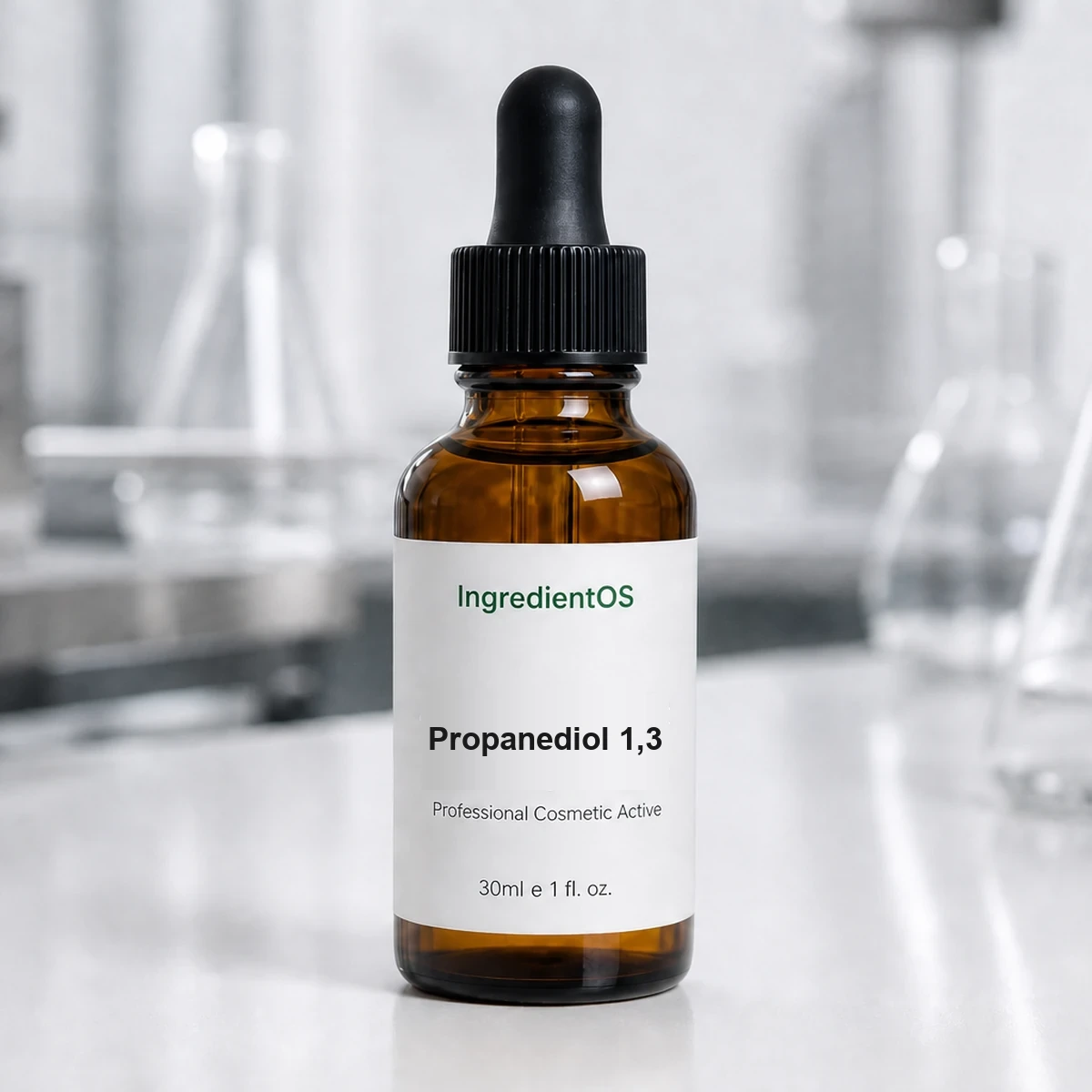
SKU: VV23101607
Propanediol 1.3
$15.99In stock
Usage Rate: Typical: use the supplied liquid active concentrate at supplier-recommended levels in leave-on formulas, delivering approximately 0.1–0.5% pure active in the finished product (1000–5000 ppm).
Packaging
Liquid sizes — 0.33 oz (10 mL) sample through bulk (US · metric)
Ships from FloridaSecure checkoutUsually ships in 1–2 business daysFree US shipping on $35+
Applicationshampoos, conditioners, hair care compositions, masks
AppearanceLiquid active concentrate
Description
Propanediol 1,3 is one of the most useful helpers on a formulator's bench. It dissolves extracts, carries preservatives, attracts moisture and lightens the feel of water-based products. Many grades are made from plant sugars by fermentation, which has made it a favorite in natural ranges as an alternative to propylene glycol.
Product data
Liquid. Mixes with water, propylene glycol and glycerin. Typical applications: shampoos, conditioners, hair care compositions and masks. Source and grade are confirmed on the supplier CoA for each lot.
Three jobs
Solvent
It dissolves many plant extracts, some preservatives and fragrances, making clear products easier to achieve.
Humectant
It attracts water and helps skin and hair feel moisturized.
Texture modifier
It reduces the tack of glycerin and gives a lighter, smoother feel.
Product formats
Shampoos and conditioners, hair masks, toners, serums, creams and sheet mask liquids all use it. It is also a common carrier for botanical extracts.
Formulating guidance
Add it to the water phase at any stage, or use it to pre-dissolve preservatives and extracts before adding them to the batch. Pair it with D-Panthenol and hydrolyzed keratin in hair care, and with niacinamide in serums. More ingredients are listed under actives.
Replacing propylene glycol
Brands moving away from propylene glycol often switch to 1,3-propanediol. Its solvent power is similar for many ingredients, but test clarity and preservative efficacy after the switch.
Preservative boosting
Glycols can support preservative systems in water-based products. Confirm efficacy with a challenge test.
Claims
Use factual wording: plant-derived, if the CoA confirms it, and a light, non-sticky feel.
Who the products are for
Natural and clean brands, hair care developers and anyone looking to lighten textures.
Testing
Check clarity, viscosity and odor at room temperature and 40 °C.
Packaging
Standard plastic and glass packaging is suitable.
Batch quality
Keep the CoA for each lot and store retained samples.
Hair care detail
In conditioners and masks, it helps distribute actives evenly and adds moisture without heaviness.
Original recipe: light hair mask, 100 g
Phase A: water 77.20 g, Propanediol 1,3 5.00 g, glycerin 2.00 g, hydroxyethylcellulose 0.30 g. Phase B: cetearyl alcohol 6.00 g, behentrimonium chloride 2.50 g, argan oil 2.00 g. Heat A and B to 75 °C, combine and cool. Phase C below 40 °C: hydrolyzed keratin 2.00 g, panthenol 1.00 g, preservative 1.00 g, fragrance 0.50 g, lactic acid solution 0.50 g. Adjust pH to about 4.5.
Skin care detail
In toners and serums, propanediol gives a light, slightly cushiony feel and helps the product spread. Replacing part of the glycerin with it reduces tack. In creams, it supports the water phase and helps disperse thickeners such as xanthan gum and hyaluronic acid without lumps, since the powders wet more evenly in a glycol premix.
Extract carrier
Many botanical extracts are supplied in propanediol. When you buy the glycol separately, you can make your own extract dilutions and premixes for consistent dosing.
Sheet masks
Sheet mask liquids are mostly water, glycols and humectants. Propanediol keeps the liquid pleasant during a twenty-minute wear and helps preservatives work.
Range planning
One glycol across shampoos, conditioners, toners and serums simplifies purchasing and supports a consistent natural message.
Gentle feel
Propanediol is generally well tolerated, which suits sensitive-skin ranges.
Record the lot number in your batch log so every production run can be traced back to its certificate of analysis. Retain a small sample of each lot for at least the shelf life of the finished product, since it makes later quality questions much easier to answer.
Storage
Store the container closed in a cool, dry place.
Product Specifications
Usage RateTypical: use the supplied liquid active concentrate at supplier-recommended levels in leave-on formulas, delivering approximately 0.1–0.5% pure active in the finished product (1000–5000 ppm).
SolubilityWater-soluble liquid active concentrate. Add directly to the water phase during cool-down.
StorageStore tightly closed in a cool, dry place away from light and heat. Respect the shelf life on the CoA.
TDS / CoA available on request. Contact us
Frequently Asked Questions
What is propanediol 1.3 used for?
As a solvent, humectant and texture modifier in hair and skin care.
What does it mix with?
Water, propylene glycol and glycerin.
Is it plant-derived?
It is often made from plant sugars by fermentation. Confirm the source on the CoA.
When is it added?
To the water phase at any stage.