
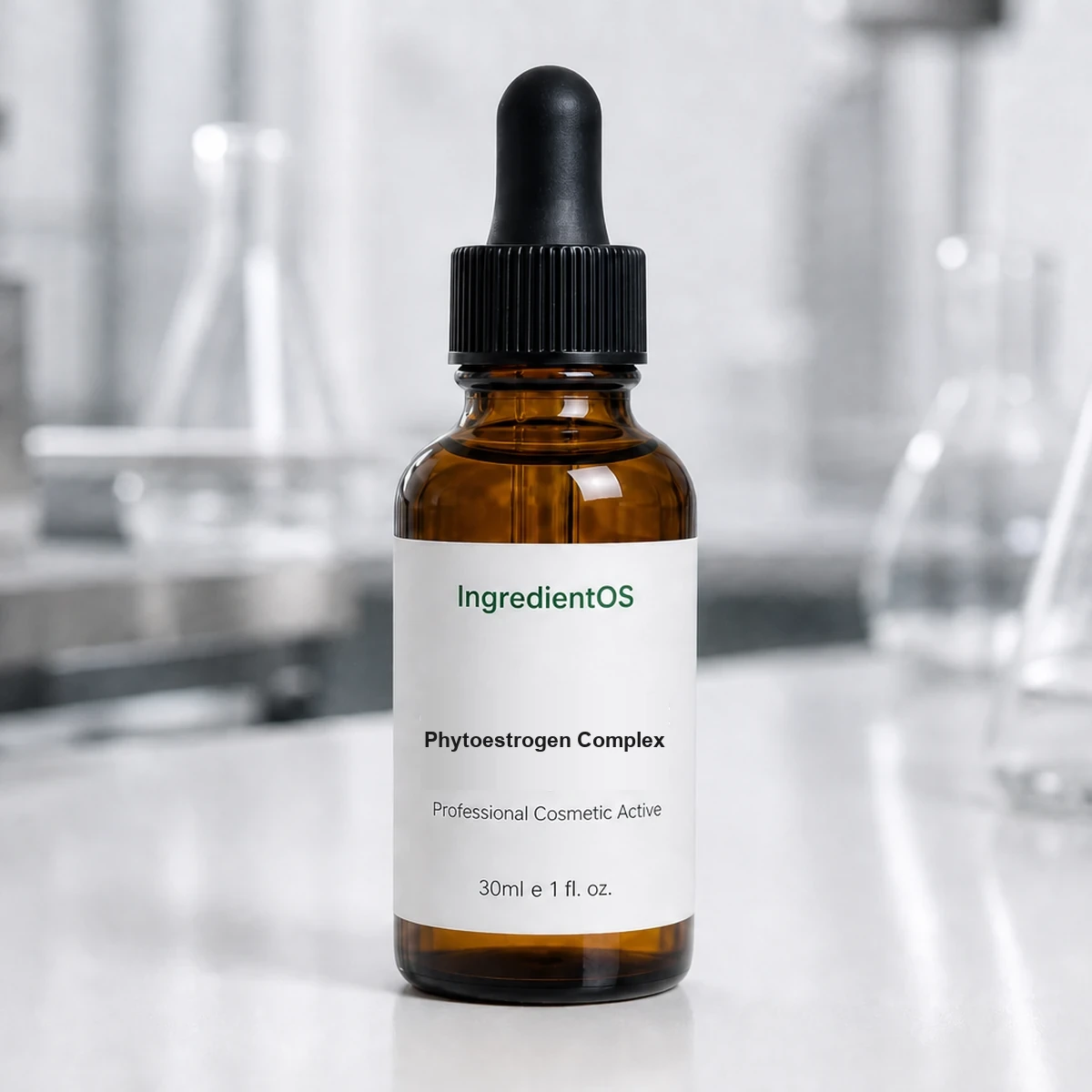
SKU: TM20111910
Phytoestrogen Complex
$15.99In stock
Usage Rate: Typical: use the supplied liquid active concentrate at supplier-recommended levels in leave-on formulas, delivering approximately 0.1–0.5% pure active in the finished product (1000–5000 ppm).
Packaging
Liquid sizes — 0.33 oz (10 mL) sample through bulk (US · metric)
Ships from FloridaSecure checkoutUsually ships in 1–2 business daysFree US shipping on $50+
Applicationadded to creams, lotions, serums, balms, beldi
AppearanceLiquid active concentrate
Description
Skin changes noticeably with age, especially after midlife: it often feels drier and thinner and loses some firmness. Brands for mature skin have long looked to plant compounds called phytoestrogens. Phytoestrogen Complex is a water-soluble plant-based liquid for creams, lotions, serums and balms in this category.
Product data
Liquid, water-soluble. For Phytoestrogen Complex, typical applications: creams, lotions, serums and balms. For Phytoestrogen Complex, the supplier CoA of each lot confirms the exact INCI, composition and recommended level.
What phytoestrogens are
Phytoestrogens are plant compounds, including isoflavones from soy and red clover and lignans from flax. They are used in cosmetics for mature skin care. Brands must keep claims strictly cosmetic: talk about how skin looks and feels, not about hormones or health.
Product formats
Mature skin cream
A rich day or night cream.
Serum
A light serum for daily use.
Body lotion
A nourishing lotion for dry, thin-feeling skin.
Balm
A rich balm for very dry areas.
Formulating guidance
Add the complex during cool-down into the water phase and check the finished pH. Pair it with palmitoyl tripeptide-1 and palmitoyl tetrapeptide-7 for firmness, ceramide NP for a barrier story and high molecular weight hyaluronic acid for hydration. More mature skin ingredients are listed under actives.
Claims
Use cosmetic wording such as firmer-looking, smoother, more supple and comfortable skin. Support numbers with tests on the finished product. Avoid any reference to hormones, menopause symptoms or health effects.
Who the products are for
Customers in their fifties and older whose skin feels drier and less firm than before.
Texture for mature skin
Mature skin often prefers richer textures. Use a balanced oil phase with shea butter and squalane, and test absorption so the cream does not feel greasy.
Plant story
If the CoA confirms plant sources, name them only as the INCI allows. Soy and red clover are familiar to customers and support a natural message.
Testing
Run stability at room temperature, 40 °C and under light, checking pH, color, odor and viscosity.
Packaging
Airless jars and pumps protect the formula.
Batch quality
Keep the CoA for each lot and store retained samples.
Range planning
A day cream, a night cream and a body lotion form a mature skin line.
Labeling
Use the INCI from the CoA on the label and keep marketing copy cosmetic.
Original recipe: rich cream for mature skin, 100 g
Phase A: water 63.80 g, glycerin 4.00 g, Phytoestrogen Complex 3.00 g as an example level per CoA, xanthan gum 0.20 g. For Phytoestrogen Complex, phase B: cetearyl olivate and sorbitan olivate 5.00 g, cetyl alcohol 2.00 g, shea butter 5.00 g, squalane 6.00 g, sweet almond oil 5.00 g, ceramide NP 0.20 g. Heat An and B to 75 °C, emulsify and cool. Phase C below 40 °C: palmitoyl tripeptide-1 and palmitoyl tetrapeptide-7 2.00 g, panthenol 1.50 g, preservative 1.00 g, tocopherol 0.50 g, lactic acid solution 0.80 g. Adjust pH to about 5.5.
Why mature skin feels different
With age, skin produces fewer lipids and less of its structural proteins, and the outer layer holds less water. The result is dryness, a thinner feel and less bounce. Mature skin products combine humectants, barrier lipids and actives aimed at firmness, and rich but comfortable textures. Explaining this in plain language on the product page builds trust with customers in this group.
Routine guidance
A body lotion after the shower completes the routine.
Storage
Store the container closed in a cool place away from light.
Product Specifications
Usage RateTypical: use the supplied liquid active concentrate at supplier-recommended levels in leave-on formulas, delivering approximately 0.1–0.5% pure active in the finished product (1000–5000 ppm).
SolubilityWater-soluble liquid active concentrate. Add directly to the water phase during cool-down.
StorageStore tightly closed in a cool, dry place away from light and heat. Respect the shelf life on the CoA.
TDS / CoA available on request. Contact us
Frequently Asked Questions
What are phytoestrogens?
Plant compounds such as isoflavones, found in soy, red clover and other plants.
What is the complex used in?
Creams, lotions, serums and balms, according to the supplier specification.
Which claims are appropriate?
Strictly cosmetic claims about how skin looks and feels, with no hormonal or health claims.
Where is the INCI listed?
On the supplier CoA for each lot.


