
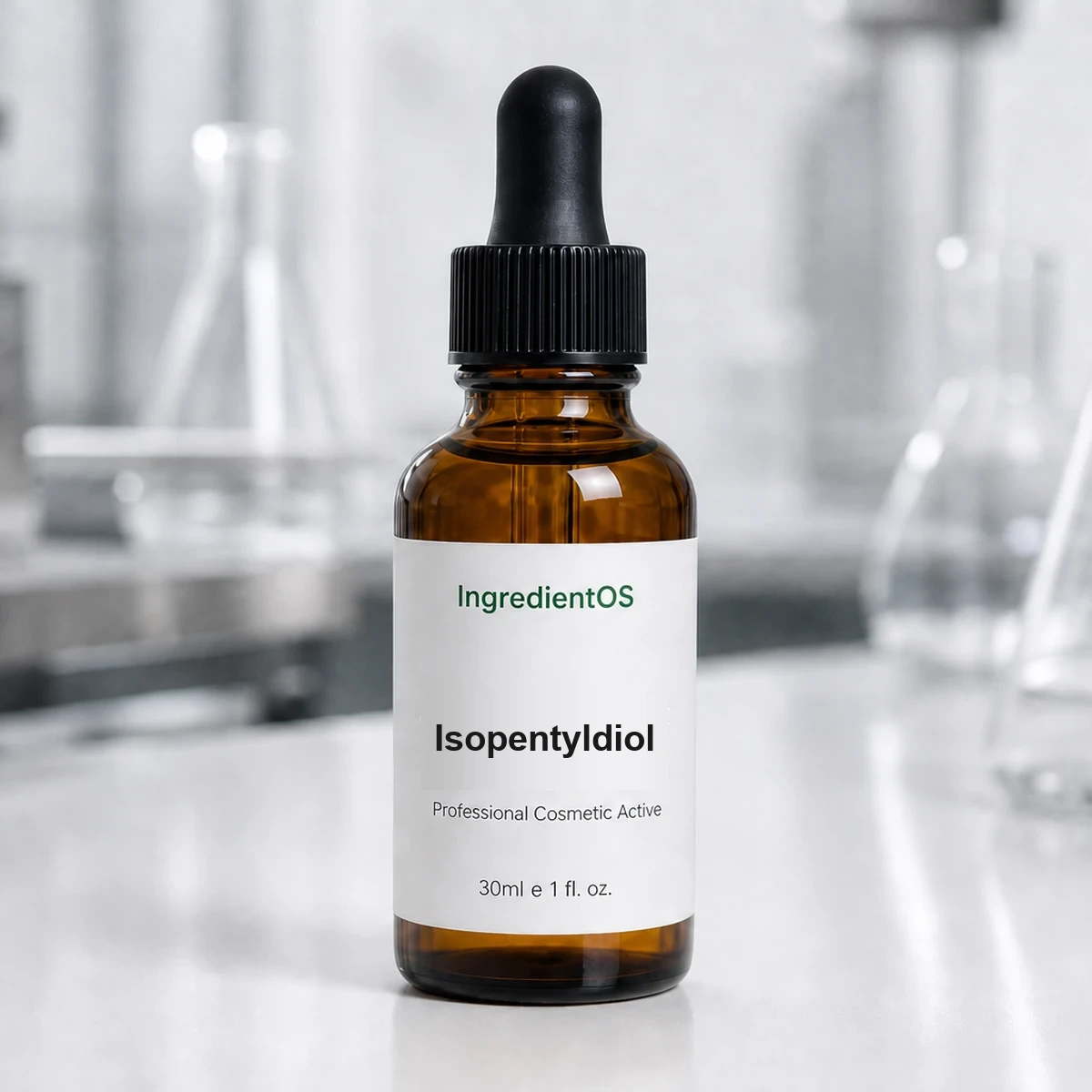
SKU: VG17052206
Isopentyldiol
$15.99In stock
Usage Rate: Typical: use the supplied liquid active concentrate at supplier-recommended levels in leave-on formulas, delivering approximately 0.1–0.5% pure active in the finished product (1000–5000 ppm).
Packaging
Liquid sizes — 0.33 oz (10 mL) sample through bulk (US · metric)
Ships from FloridaSecure checkoutUsually ships in 1–2 business daysFree US shipping on $50+
ApplicationISOPENTYLDIOL is classified as a solvent, humectant, liquid ingredient. ISOPENTYLDIOL is regarded as a quasi-ingredient due to its chemical safety • Solvent • Thickener and stabilizer • Moisturizer • Skin protector
AppearanceLiquid active concentrate
Description
Glycerin is the classic humectant, but it is not the only one, and not always the most pleasant. Isopentyldiol is a small diol with a lighter feel that works as both a solvent and a humectant. It is especially common in essences, toners and sheet masks, where the texture has to be watery and comfortable at the same time.
Product data
Liquid, completely soluble in water. The supplier specification classifies it as a solvent, humectant and liquid ingredient. Specification and recommended level are confirmed on the supplier CoA for each lot.
Two jobs in one
As a humectant, the diol attracts water and helps the outer skin layer feel supple. As a solvent, it helps dissolve ingredients that are difficult to get into water, such as some plant extracts, fragrances and actives. That double role lets a formulator shorten the ingredient list and fine-tune the texture at the same time.
Product formats
Toner and essence
Watery products where a light humectant gives cushion without tack.
Sheet mask serum
A soaking liquid that must stay pleasant on the skin for twenty minutes.
Cream
An oil-in-water cream where part of the glycerin is replaced to reduce stickiness.
Hair mist
A light leave-in spray for moisture and shine.
Formulating guidance
Add it to the water phase, or use it to pre-dissolve an active or fragrance before adding it to the batch. Combine it with hyaluronic acid liquid for layered hydration and with niacinamide in brightening essences. In sheet mask serums, D-Panthenol adds comfort. More ingredients are listed under actives.
Replacing part of the glycerin
High glycerin levels give a heavy, tacky after-feel. Replacing part of it with isopentyldiol often produces a lighter finish with similar hydration. Run side-by-side panels to find the right balance.
Preservative support
Some diols are known to support preservative systems in water-based formulas. Count this only as a bonus and always confirm with a challenge test on the finished product.
Who the products are for
Light, multi-layer routines in the Korean and Japanese style, oily-skin customers and anyone who dislikes sticky textures.
Testing
Check clarity, viscosity and odor at room temperature and 40 °C.
Packaging
Standard plastic and glass packaging is suitable. Keep caps tight during storage.
Original recipe: hydrating essence, 100 g
Purified water 85.10 g, isopentyldiol 5.00 g, glycerin 2.00 g, butylene glycol 3.00 g, niacinamide 2.00 g, panthenol 1.00 g, sodium hyaluronate 0.20 g, allantoin 0.10 g, xanthan gum 0.10 g, preservative 1.00 g, sodium citrate solution 0.50 g. Disperse xanthan and hyaluronate in the glycols, add water, stir until smooth and add the remaining ingredients. Adjust pH to about 5.8.
Pre-dissolving actives
Many plant extracts and some vitamins are hard to get into water without haze. Stir them into isopentyldiol first, warm gently if the supplier allows, then add the premix to the water phase with good mixing. The same method works for small amounts of fragrance in clear toners, where it can reduce the need for a separate solubilizer.
Sensory design
Run a three-way panel: glycerin only, isopentyldiol only and a blend. Ask panelists to rate tack, softness and absorption after one and five minutes. The blend often wins, and the data guides the final formula.
Batch quality
Check clarity and odor of each lot on arrival and keep the CoA with the batch record.
Hair care
In leave-in mists and light hair milks, the diol adds moisture without weighing fine hair down. It also helps dissolve fragrance in clear sprays.
Record the lot number in your batch log so every production run can be traced back to its certificate of analysis. Retain a small sample of each lot for at least the shelf life of the finished product, since it makes later quality questions much easier to answer.
Storage
Keep the container tightly closed in a cool, dry place.
Product Specifications
Usage RateTypical: use the supplied liquid active concentrate at supplier-recommended levels in leave-on formulas, delivering approximately 0.1–0.5% pure active in the finished product (1000–5000 ppm).
SolubilityWater-soluble liquid active concentrate. Add directly to the water phase during cool-down.
StorageStore tightly closed in a cool, dry place away from light and heat. Respect the shelf life on the CoA.
TDS / CoA available on request. Contact us
Frequently Asked Questions
What is isopentyldiol used for?
As a solvent and humectant in water-based cosmetics, according to the supplier specification.
Is it water-soluble?
Yes, completely soluble in water.
Which products does it suit?
Toners, essences, serums, creams, hair care and sheet masks.
When is it added?
To the water phase at any stage, or as a pre-solvent for other ingredients.


