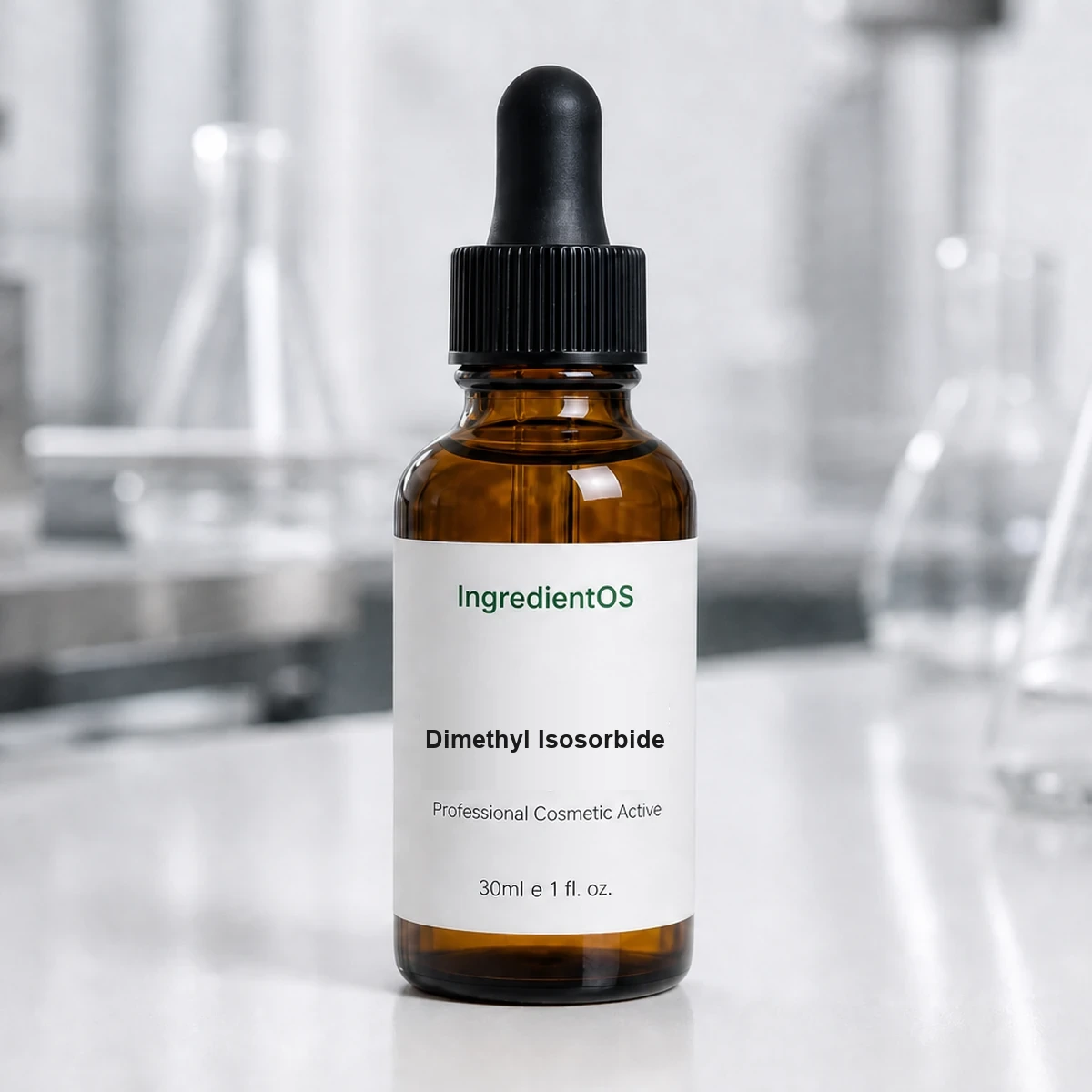
SKU: TM20040607
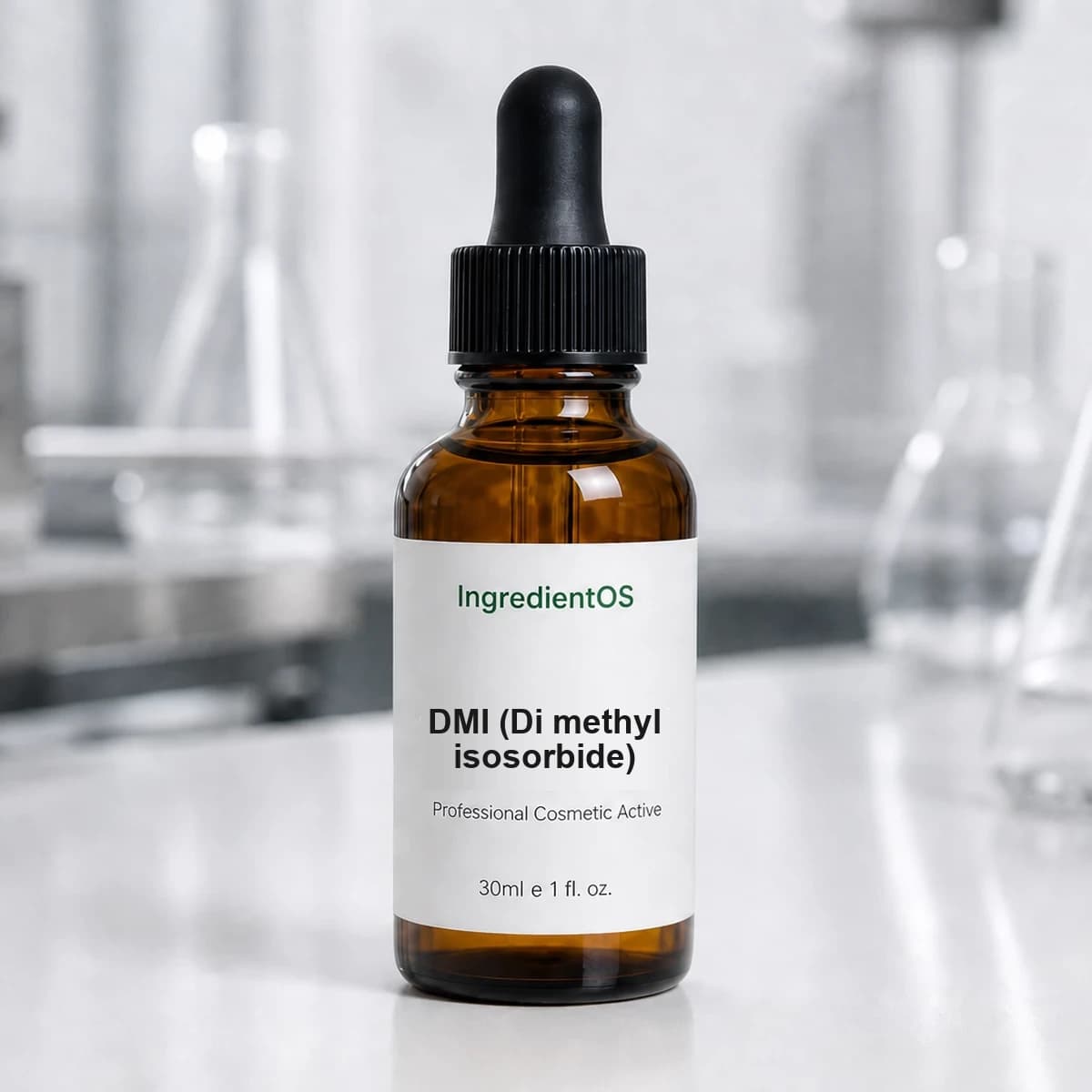
Dimethyl Isosorbide
$15.99In stock
Usage Rate: Typical: use the supplied liquid active concentrate at supplier-recommended levels in leave-on formulas, delivering approximately 0.1–0.5% pure active in the finished product (1000–5000 ppm).
Packaging
Liquid sizes — 0.33 oz (10 mL) sample through bulk (US · metric)
Ships from FloridaSecure checkoutUsually ships in 1–2 business daysFree US shipping on $35+
AppearanceLiquid active concentrate
pH4.5-6.7
Description
Many effective cosmetic actives are difficult to dissolve. Some crystallize in water, some need an oil phase, and some form a cloudy suspension. Dimethyl Isosorbide, often abbreviated as DMI, is a solvent and carrier that formulators use to bring such actives into clear, light products. It is derived from isosorbide, which in turn is made from sorbitol.
What it does in a formula
DMI dissolves many actives that are poorly soluble in water alone. Once dissolved, these actives can be added to a water-based serum or emulsion without crystallizing. DMI is also associated with a light, non-greasy feel and with helping actives distribute evenly on the skin surface. The supplier specification lists water solubility and a pH range of 4.5 to 6.7. Confirm specification and level on the CoA for each lot.
Typical uses
Serums with crystalline actives
Some acids and vitamins tend to recrystallize in water-based serums. Predissolving them in DMI can help keep the serum clear and smooth.
Brightening products
Ingredients used in tone-evening products often benefit from a carrier.
Self-tanning products
DMI is commonly used in self-tan formulas to support an even application.
Hair products
Scalp serums and hair tonics can use DMI to carry actives.
Formulating guidance
Premix the active with DMI until fully dissolved, then add the solution to the water phase or the cooled emulsion with stirring. Check clarity and look for crystals after several days and after cold storage. Keep the finished pH within the range in the supplier specification. Common partners include kojic acid and azelaic acid in liposomes, depending on the concept. More actives are under actives.
Safety and comfort
DMI is a solvent, so test the finished product for tolerance, especially when combined with acids. Keep levels within those recommended on the CoA.
Claims
DMI is a helper, not a hero. Describe the finished product's benefits, such as a clear, light texture and even application, rather than claims about the solvent itself.
Who uses it
Formulators of advanced serums, brightening products and self-tanners. Small brands value it for making difficult actives workable without complex equipment.
Testing
Run stability at room temperature, 40 °C and in the fridge, since cold storage is when crystals tend to appear. Check clarity, pH and odor.
Packaging
DMI-based serums are usually light and clear; dropper bottles or airless pumps work well.
Choosing the right level
The amount of DMI depends on how much active must be dissolved. Start by finding the minimum amount that keeps the active clear at room temperature and in the fridge, then add a small safety margin. Higher amounts do not always improve results and can change the feel of the product. Record solubility tests for each active you plan to use, since DMI behaves differently with each one. In emulsions, add the DMI solution to the cooled product and stir well; in gels, add it before final thickening. A short note on the batch sheet about the order of addition prevents mistakes when the product moves to larger production.
Original recipe: clear tone-evening serum, 100 g
Purified water 82.50 g, dimethyl isosorbide 5.00 g, kojic acid 1.00 g, glycerin 3.00 g, propanediol 3.00 g, niacinamide 3.00 g, hydroxyethylcellulose 0.50 g, panthenol 1.00 g, preservative 1.00 g. Dissolve kojic acid in dimethyl isosorbide with gentle warming if needed. Premix the cellulose into the glycols to avoid lumps, then add the water and stir until smooth. Add niacinamide and panthenol, then the kojic acid solution below 40 °C, then the preservative. Check pH and adjust to about 5.0.
Storage
Keep it sealed in a cool, dry place and close the cap tightly after use.
Product Specifications
Usage RateTypical: use the supplied liquid active concentrate at supplier-recommended levels in leave-on formulas, delivering approximately 0.1–0.5% pure active in the finished product (1000–5000 ppm).
SolubilityWater-soluble liquid active concentrate. Add directly to the water phase during cool-down.
StorageStore tightly closed in a cool, dry place away from light and heat. Respect the shelf life on the CoA.
TDS / CoA available on request. Contact us
Frequently Asked Questions
What is dimethyl isosorbide?
A solvent and carrier derived from isosorbide, used to dissolve actives and help distribute them evenly in cosmetics.
Is it water-soluble?
Yes, according to the supplier specification.
What pH range is listed?
4.5 to 6.7.
How is it used?
Premix it with the actives it should dissolve, then add the solution to the formula.