SKU: TM20090606
Bamboo Silica
$9.99In stock
INCI: Bambusa Arundinacea Stem Extract
Usage Rate: 0.5-5% of the finished formula
Packaging
Powder sizes (metric · US)
Ships from FloridaSecure checkoutUsually ships in 1–2 business daysFree US shipping on $50+
Applicationmineral cosmetics, lotions, creams, serums
Appearancefinely dispersed white powder
Description
Bamboo Silica at a glance
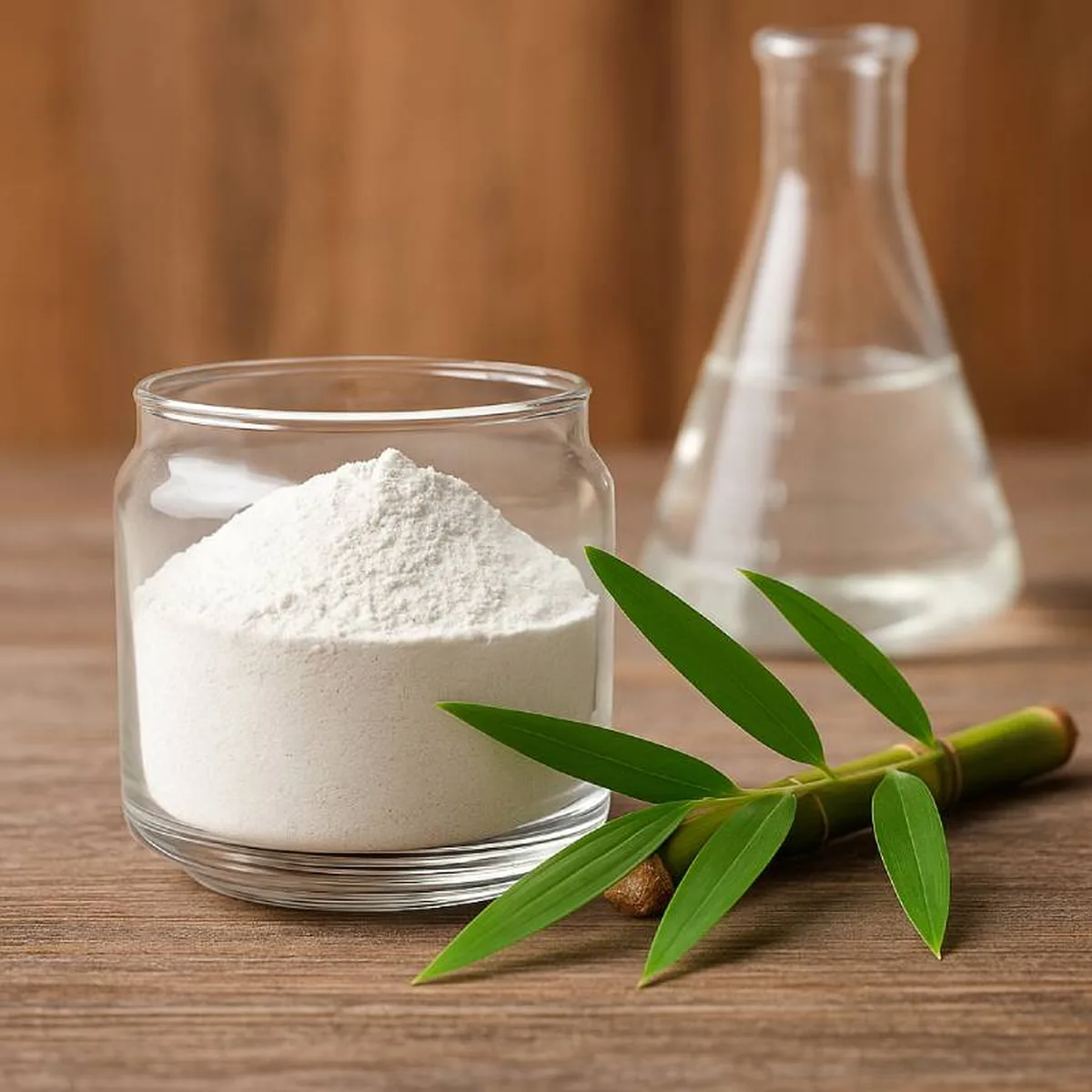
Bamboo Silica is a natural silica powder from Germany. Its INCI is Bambusa Arundinacea Stem Extract. It is a fine, white powder that mixes with oils, water, any emulsion, glycerin and propylene glycol. It is used at 0.5 to 5% of the finished product. The supplier describes four benefits: it absorbs sebum, supports the look of firmer skin, helps pores look smaller and improves the look of the complexion.
Silica from bamboo
Bamboo is one of the fastest growing plants in the world, and its stems are unusually rich in silica, the natural mineral form of silicon dioxide. In some bamboo species, a white, silica rich substance collects inside the stem joints. This natural silica is collected, purified and milled into a fine powder. For brands, bamboo silica gives a plant based alternative to synthetic silica with a strong natural story.
What silica does in a formula
Oil absorption
Silica particles are porous and absorb oil and sebum. On the skin this means less shine and a matte finish that lasts longer.
Oleogels
Because silica can take up a large amount of oil, it can turn liquid oils into soft gels. These oleogels give oil based products a richer, cushioned texture without waxes.
Slip and spreading
Fine silica makes creams and powders glide smoothly and spread evenly. Products feel silky and less greasy.
Soft focus
The particles scatter light, which helps pores and fine lines look less visible and gives the skin a smoother, more even look.
How to formulate
Bamboo Silica can be added at almost any stage. In emulsions, add it after emulsification and mix well, or disperse it in the oil phase. In powders, blend it with the other dry ingredients. In gels, disperse it in glycerin first. Mix well to avoid lumps. A mattifying cream can combine it with niacinamide, and a mineral powder can add zinc oxide for coverage. More functional ingredients are listed in the cosmetic actives section.
Dosing
Light lotions and serums use 0.5 to 1%. Mattifying creams, primers and fluids use 1 to 3%. Mineral powders and oleogels use up to 5%.
Product ideas
Mineral makeup and loose powders, mattifying primers, oil control day creams, pore refining fluids, silky serums, oil gels for dry skin and lightweight body lotions with a dry touch are the main uses.
Sample recipe: mattifying primer, 100 g
Distilled water 74.50 g, glycerin 3.00 g, glyceryl stearate citrate 3.00 g, cetearyl alcohol 1.50 g, caprylic/capric triglyceride 6.00 g, dimethicone 4.00 g, Bamboo Silica 3.00 g, niacinamide 2.00 g, xanthan gum 0.30 g, preservative 1.00 g, panthenol 1.00 g, citric acid solution 0.70 g. Heat water and oil phases to 75 °C, emulsify and cool, disperse bamboo silica into the emulsion with stirring, add niacinamide dissolved in a little water, panthenol and the preservative below 40 °C, and adjust to about pH 5.5.
Oleogel concept
An oleogel is a simple and modern format. Stir 5% bamboo silica into a blend of light plant oils until the mix thickens into a soft gel. It gives a face or body oil with a cushioned feel that does not run off the skin.
Handling
Fine powders can dust. Weigh them carefully, add them slowly with good mixing and keep the pack closed to prevent moisture uptake.
Mineral makeup
Mineral makeup is one of the main uses the supplier lists. In loose powders and pressed foundations, bamboo silica improves the feel, absorbs shine through the day and helps the powder spread evenly without looking cakey. Use 3 to 5% together with mica, zinc oxide and iron oxides, and blend all powders well before pressing.
Storage
Store in a dry, cool place in a closed container. A certificate of analysis comes with every lot.
Product Specifications
INCIBambusa Arundinacea Stem Extract
Usage Rate0.5-5% of the finished formula
SolubilityMiscible with oils, water, any emulsions, glycerin and propylene glycol. Weigh the powder and dissolve or disperse it as the supplier CoA directs.
StorageStore tightly closed in a cool, dry place away from light and heat. Refrigerate opened material where practical; respect supplier shelf life.
TDS / CoA available on request. Contact us
Frequently Asked Questions
What is the INCI of Bamboo Silica?
Bambusa Arundinacea Stem Extract.
How much should I use?
0.5 to 5% of the finished product.
What does it mix with?
Oils, water, any emulsion, glycerin and propylene glycol.
What does it do in a cream?
It absorbs excess oil, gives a matte finish and a silky, smooth slip.