SKU: TM20041710
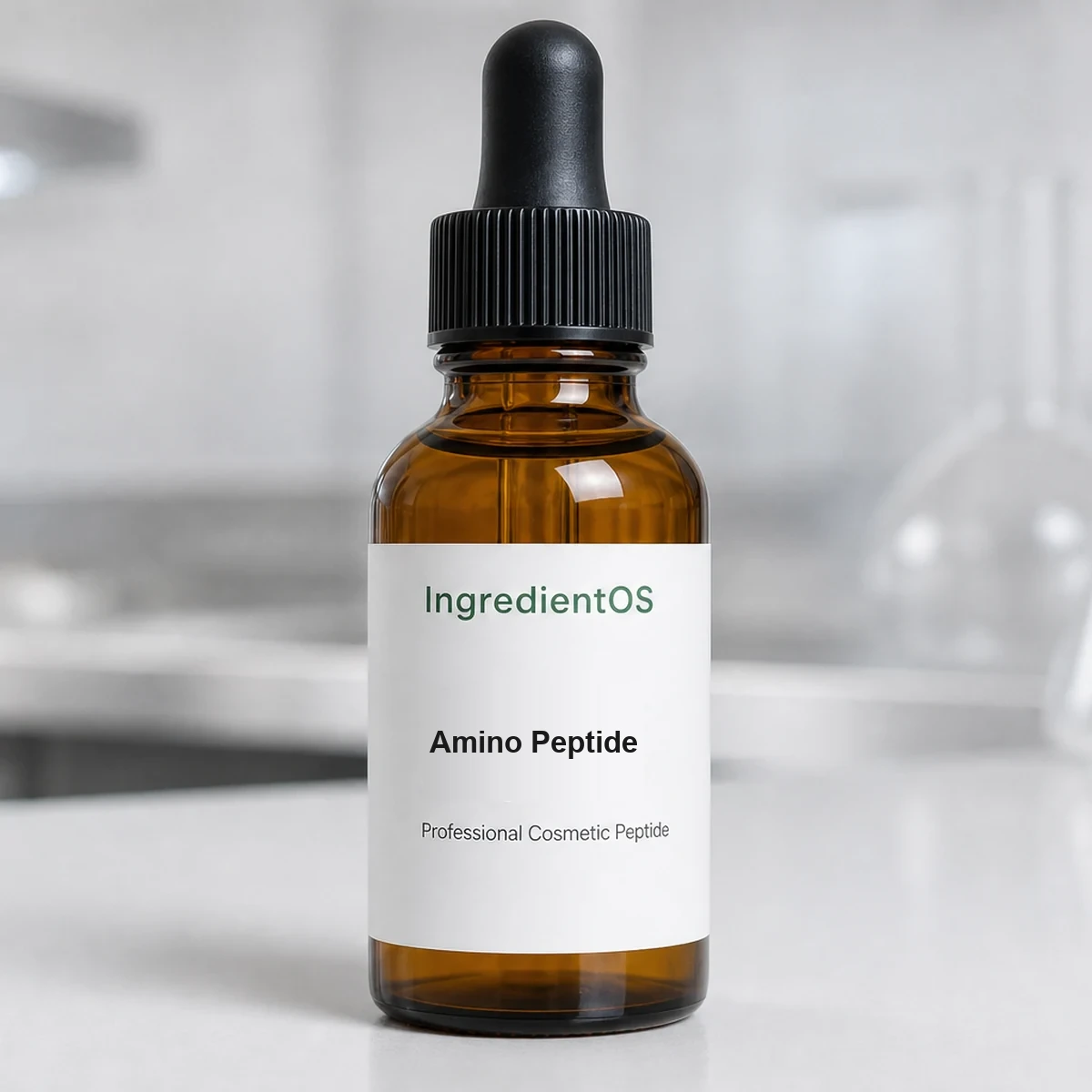
Amino Peptide
For cosmetic formulation use only.
Raw material for topical cosmetic products.
$24.99In stock
INCI: Confirm on CoA. CAS: N/A (Not assigned/verified).
Usage Rate: Follow the supplier CoA.
Packaging
Liquid sizes — 0.33 oz (10 mL) sample through bulk (US · metric)
Ships from FloridaSecure checkoutUsually ships in 1–2 business daysFree US shipping on $50+
Applicationgels, tonics, makeup remover, skin care, shampoo, masks, serums for skin tightening, hair fillers, anti-age cosmetics, hardware procedures
Appearanceliquid
pH5.0-7.0
Description
An elastin-derived peptide fraction
Amino Peptide is a commercial peptide solution that supplier notes describe as an elastin-derived peptide fraction. Elastin is one of the structural proteins of skin, and hydrolyzed elastin fractions have a long history in skin care as conditioning, film-forming ingredients. This listing is a water-compatible liquid for leave-on products.
What the documents confirm
The exact INCI and CAS for this SKU were not verified in open registries during our catalog review. Ask for the CoA before finalizing your label; elastin fractions may be declared under different INCI names depending on source and processing.
How it differs from synthetic peptides
Amino Peptide is a mixture of peptide fragments, not a defined synthetic sequence. It is not Acetyl Hexapeptide-8 and not Palmitoyl Tripeptide-5. Defined synthetic peptides carry a single INCI and CAS; protein-derived fractions behave more like a conditioning protein. If you need a defined firming peptide, look at Palmitoyl Pentapeptide-4 instead.
Formulating with Amino Peptide
Process
Add in the water phase during cool-down, below 40 °C, and mix gently. Protein-derived fractions can foam slightly under strong shear, so mix at low speed.
Bases
Creams, lotions, serums and conditioning gels all work. Protein fractions can add a smooth, slightly film-forming feel. Record pH and viscosity before and after addition.
Use level
Take the use level from the supplier documentation for your lot. Follow the supplier documentation.
Pairing with protein conditioners
For broader protein conditioning, our hydrolyzed proteins section carries collagen, wheat, soy and oat hydrolysates. Elastin fractions pair naturally with hydrolyzed collagen in firming-positioned creams.
Claims and labeling
Keep claims cosmetic: smoother, conditioned-feeling, supple-looking skin. If the source is animal-derived, the product does not fit vegan claims; confirm origin on the supplier documents.
Storage
Keep tightly closed, cool and away from light, and refrigerate opened material where practical.
Using elastin fractions in formulas
Protein-derived fractions like this one bring a smooth, slightly film-forming feel that many people describe as conditioning. In creams they can make the after-feel softer; in serums they add a light, supple finish. They also work in hair and body products where a conditioning protein is wanted, as long as the base is water-compatible.
Compatibility
Protein fractions are generally compatible with nonionic and mild anionic systems. In clear gels, check clarity after addition. Strong acids or very high temperatures can degrade proteins, so keep the finished pH near skin-neutral and add the fraction after cooling.
Documents
Ask for the CoA, the full INCI and origin information. Keep these with your product file so your label and claims match the documents.
Ordering
It ships from Florida, usually within 1 to 2 business days, in the pack sizes shown above, and US shipping is free on orders of $50 or more. Compare all peptide solutions.
Product Specifications
INCIConfirm on CoA. CAS: N/A (Not assigned/verified).
Usage RateFollow the supplier CoA.
SolubilityWater-compatible commercial solution. Add during cool-down. Avoid prolonged high heat.
StorageStore tightly closed, cool, and dry, away from light and heat. Respect the supplier shelf life.
TDS / CoA available on request. Contact us
Frequently Asked Questions
What is Amino Peptide?
A commercial elastin-derived peptide solution for conditioning leave-on skin care.
Is this Acetyl Hexapeptide-8?
No. It is a protein-derived peptide fraction, not a defined synthetic hexapeptide.
Why is CAS N/A?
The exact INCI and CAS were not verified in open registries. Confirm on the CoA.
How should I mix it?
Add during cool-down below 40 °C and mix at low speed to limit foaming.
More Peptide Solutions
Related specialty peptide solutions: Adifyline, Pepti-slim, Canadian Sturgeon Caviar Peptide 30%, Natural Pea Peptide.
Browse all peptide solutions · peptide powders · cosmetic peptides