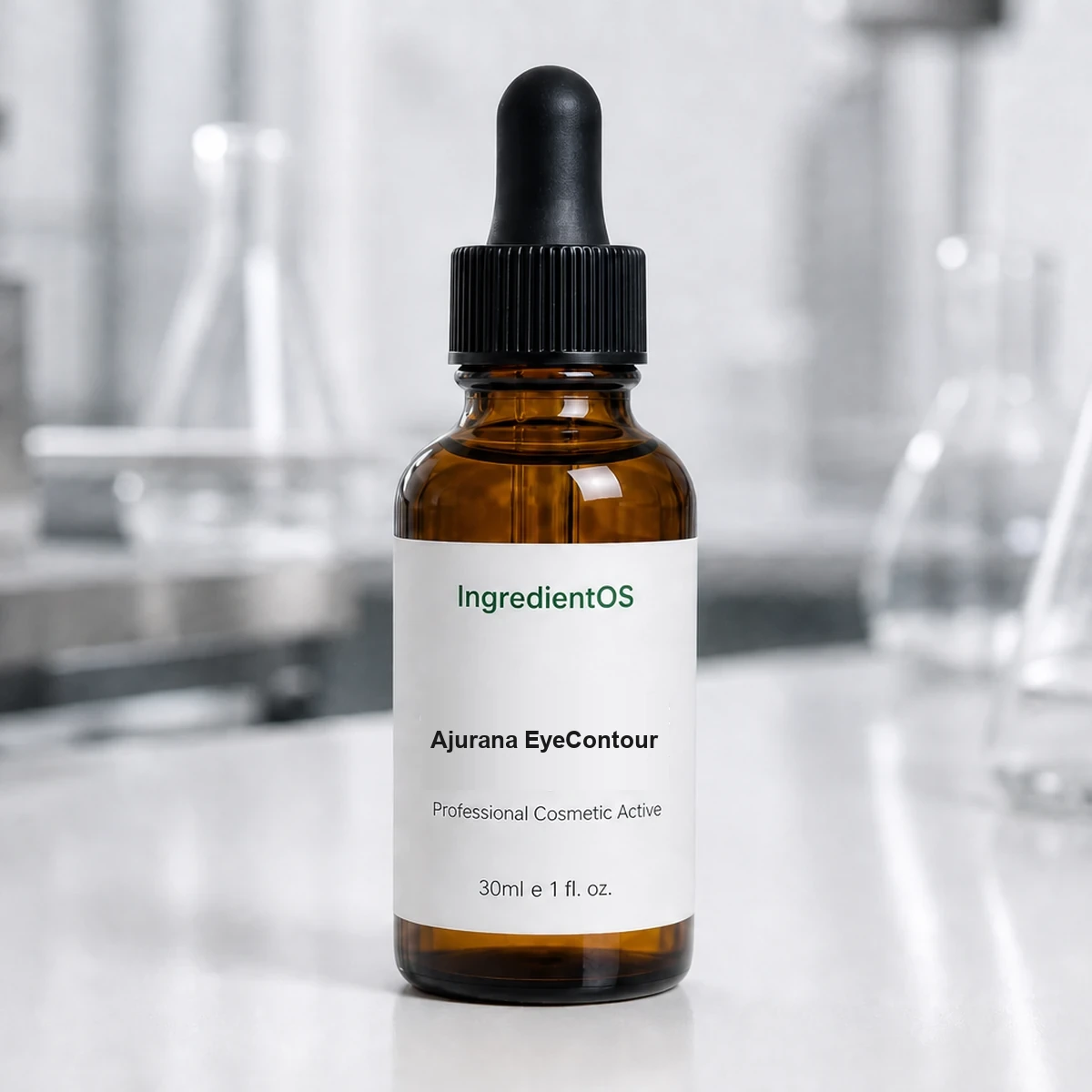
SKU: VV25061611
Ajurana EyeContour
$15.99In stock
Usage Rate: Typical: use the ingredient at supplier-recommended levels in leave-on formulas, delivering approximately 0.1–0.5% pure active in the finished product (1000–5000 ppm).
Packaging
Liquid sizes — 0.33 oz (10 mL) sample through bulk (US · metric)
Ships from FloridaSecure checkoutUsually ships in 1–2 business daysFree US shipping on $50+
ApplicationSerums and creams for the area around the eyes, fluids and rollers for the eyelids, gels and serums that help reduce the look of puffiness, products for the look of visible redness, anti-aging cosmetics, eye patches, men's cosmetics for the area around the eyes
AppearanceLiquid. Confirm color and odor on CoA.
Description
Ajurana EyeContour at a glance
Ajurana EyeContour is a liquid active for the eye area that dissolves in oils. It goes into the oil phase of emulsions or into anhydrous eye products. The supplier specification lists serums and creams for the area around the eyes, fluids and rollers for the eyelids, and gels and serums for a more rested-looking eye area. The name points to Ayurvedic tradition and a botanical composition. Confirm the full INCI, color and odor on the certificate of analysis for your lot.
Why an oil-soluble eye active
Most eye actives are water-soluble, so eye gels dominate the market. An oil-soluble active opens other formats: roll-on oils, eye balms and rich eye creams. These formats feel nourishing and comfortable on the thin, dry skin around the eyes, especially at night. They also appeal to consumers who like botanical, oil-based rituals.
Formats
Roll-on eye oils
A light oil in a roller bottle gives a cooling massage and leaves a soft finish. The active can be dissolved directly in the oil base.
Eye creams
In emulsions, add the active to the oil phase. A light cream with a short ingredient list suits sensitive eye areas.
Eyelid fluids
The supplier specification lists eyelid fluids. These need very gentle bases and should be tested carefully.
Eye balms
Solid balms in a stick or small tin are easy to carry and apply.
How to use it
Add the active to the oil phase. In hot-process creams, add it after emulsification if the composition is heat-sensitive, or follow the supplier advice. In anhydrous products, mix it into the oils at room temperature. Include an antioxidant such as tocopherol. Avoid fragrance and essential oils in eye products.
Partners
Eye contour ranges often combine oil and water actives. Caffeine works in the water phase of an eye cream, and camellia oil makes a light, silky base for roll-ons. Further eye and face actives are listed in the actives catalog.
Characteristics
Form: liquid. Solubility: oils. Phase: oil. Listed uses: eye serums and creams, eyelid fluids and rollers, eye gels and serums. Color and odor: stated on the CoA supplied with each lot. Full INCI: stated on the CoA supplied with each lot.
Roll-on eye oil recipe, 100 g
Caprylic and capric triglyceride 50.00 g, camellia oil 25.00 g, squalane 15.00 g, Ajurana EyeContour 5.00 g, cosmetic jojoba oil 4.50 g, tocopherol 0.50 g. Mix all oils at room temperature, add the active and tocopherol, stir until uniform and fill into roll-on bottles with a metal ball.
Consumer use
Apply a thin line around the orbital bone, from the inner corner outwards, and massage gently with the roller or a fingertip. Avoid contact with the eyes. Use in the evening, or in the morning under a light cream.
Testing
As with all eye products, run an ophthalmological in-use test before launch. For appearance claims, standardized photos and a consumer panel on the rested look of the eye area are suitable. Check that the oil does not migrate into the eyes during the night.
Why botanical eye oils are popular
Oil-based eye care has grown with the interest in facial massage and simple, plant-based routines. A roller or a fingertip massage with an oil makes the evening routine feel like a small ritual. Consumers also like the comfort an oil gives to dry skin around the eyes in winter or in air-conditioned rooms. An oil-soluble active lets a brand offer that ritual with a clear functional story, not only a pleasant oil.
Dose guidance
Follow the level recommended in the technical sheet. In a pure oil product the active is evenly distributed and fully available on the skin, so there is no need to exceed the recommended range. In an emulsion, keep the same level relative to the whole product, not only to the oil phase.
Storage
Store tightly closed, protected from light, heat and air.
Product Specifications
Usage RateTypical: use the ingredient at supplier-recommended levels in leave-on formulas, delivering approximately 0.1–0.5% pure active in the finished product (1000–5000 ppm).
SolubilityFat soluble Compatible with oils, emulsions, cream and gel bases Not soluble in water Requires emulsification or pre-solubilization for aqueous formulas. Add to the oil phase.
StorageStore tightly closed in a cool, dry place away from light and heat. Refrigerate opened material where practical; respect supplier shelf life.
TDS / CoA available on request. Contact us
Frequently Asked Questions
Can it go into a water-based eye gel?
Only with an emulsifier or solubilizer. It is oil-soluble.
What does the name refer to?
Ayurveda, the traditional Indian care system. Confirm the botanical composition on the CoA.
Which formats are listed?
Eye serums and creams, eyelid fluids and rollers, and eye gels and serums.