SKU: TM20111803
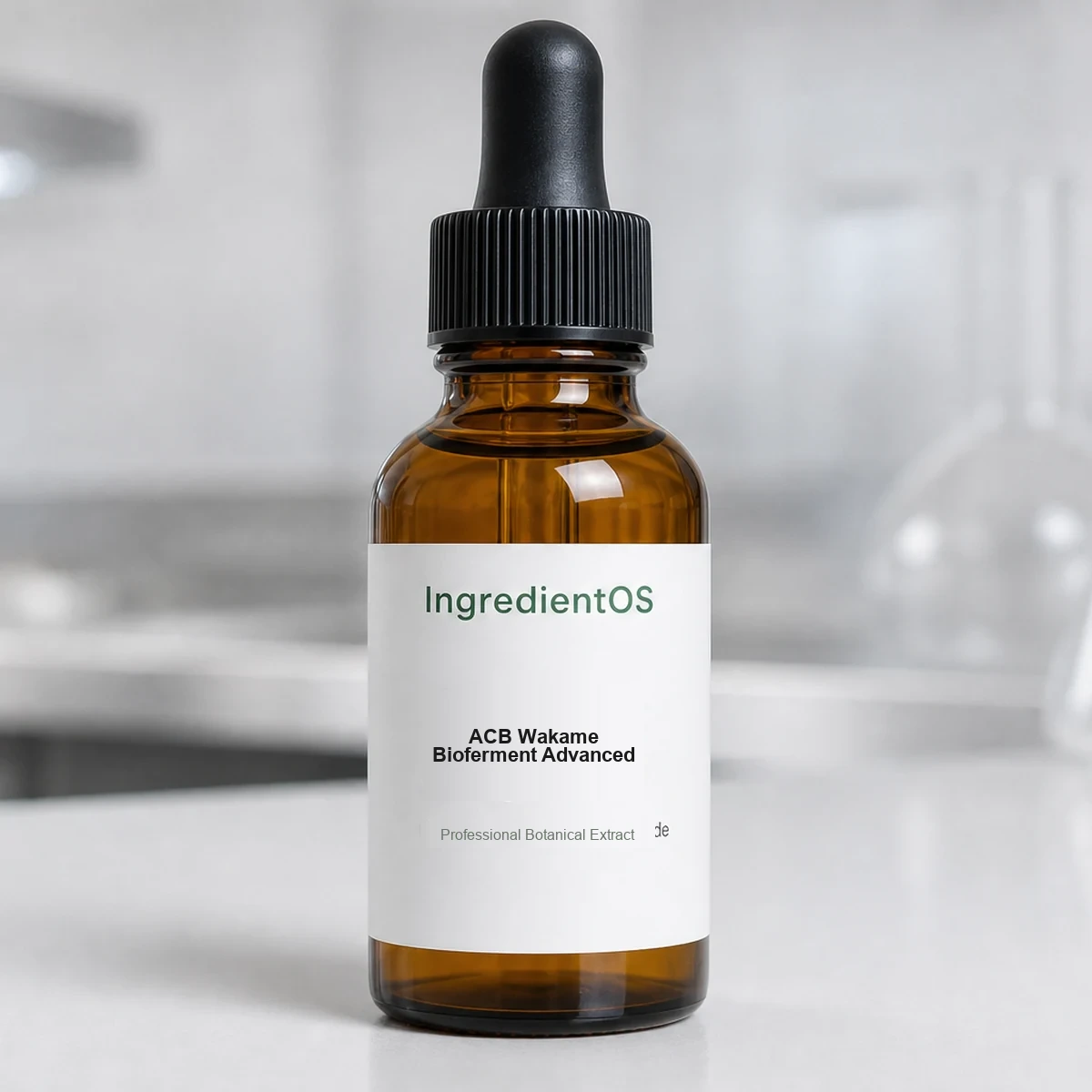
IO Wakame Bioferment Liquid
$15.99In stock
Usage Rate: Typical: use the supplied liquid active concentrate at supplier-recommended levels in leave-on formulas, delivering approximately 0.1–0.5% pure active in the finished product (1000–5000 ppm).
Packaging
Liquid sizes — 10 mL sample through bulk (US · metric)
Ships from FloridaSecure checkoutUsually ships in 1–2 business daysFree US shipping on $50+
Applicationcreams, lotions, serums, balms, beldi
AppearanceLiquid active concentrate
pH5.0-7.0
Description
Seaweed and fermentation are two of the strongest themes in contemporary skincare. IO Wakame Bioferment Liquid brings them together in one liquid ingredient: a ferment based on wakame, the brown seaweed Undaria pinnatifida, produced with selected microorganisms to give a water-soluble material for skin conditioning.
About wakame
Wakame grows along cool, rocky coastlines and has been eaten in Japan and Korea for centuries. Like other brown algae it contains polysaccharides, minerals and pigments. In skincare it is associated with hydration, a fresh skin feel and a marine identity that many customers find appealing.
About bioferments
Fermentation changes a natural material. Microorganisms break down larger molecules and produce new compounds, and the resulting filtrate or lysate is then standardized and preserved. Brands use ferments to tell a biotech story and to offer ingredients with a light, water-like texture. The exact organism, INCI and active content of this product are confirmed on the supplier CoA for each lot.
Specifications from the card
Liquid, water-soluble, pH 5.0 to 7.0. The card lists creams, lotions, serums and balms. Add it to the water phase, ideally in the cool-down stage, to protect delicate components.
Product concepts
Marine hydration serum
A clear serum combining the ferment with a hyaluronic acid and a seaweed extract creates a coherent ocean story.
Daily lotion
A light lotion for face and body with a fresh feel. Marine ingredients suit summer and active lifestyles.
Balms
The card lists balms as well. In a water-containing balm or a cream-balm hybrid, the ferment adds a conditioning component to a rich base.
Combining with other ingredients
Ferments combine well with humectants, hyaluronic acid and other marine ingredients. For a second marine element, consider Fucus Extract, or for another ferment with a different source, Sea Kelp Bioferment. Our full list of conditioning and biotech concentrates is under actives.
Formulating notes
Ferments may have a characteristic odor and a light color, so test fragrance coverage. Keep the finished pH within 5.0 to 7.0. Preserve water-based products robustly. If you see haze in a clear serum, check compatibility with the thickener and add the ferment last.
Telling the story
Explain wakame in a sentence, describe fermentation simply and focus on the skin feel: hydrated, refreshed, smooth. Avoid claims about microbes on the skin unless your finished product has been tested for them. Photography with seaweed and clean water imagery supports the message.
Sustainability and sourcing questions
Customers increasingly ask where marine ingredients come from. When you describe a seaweed ingredient, rely on the information the supplier provides on the CoA and in accompanying documents, such as origin and cultivation or harvesting method, and avoid general environmental claims that cannot be verified. Simple, accurate statements build more trust than broad promises. If sourcing information is not available for a lot, leave it out of marketing rather than guessing.
Original recipe: marine gel-cream, 100 g
Phase A: water 76.30 g, glycerin 4.00 g, sodium acrylates copolymer 1.20 g. Phase B: squalane 4.00 g, caprylic/capric triglyceride 4.00 g. Phase C: IO Wakame Bioferment Liquid 5.00 g as an example level per CoA, sodium hyaluronate 0.20 g, panthenol 1.00 g, allantoin 0.20 g, preservative 1.00 g, fragrance 0.10 g, citric acid solution 3.00 g. Disperse the polymer in water and glycerin, add the oils under stirring to form a gel-cream, then add phase C one by one. Adjust pH to 5.5 to 6.0 with the citric acid solution as needed.
Storage
Keep closed in a cool, dark place. Use clean tools and reseal after each use.
Product Specifications
Usage RateTypical: use the supplied liquid active concentrate at supplier-recommended levels in leave-on formulas, delivering approximately 0.1–0.5% pure active in the finished product (1000–5000 ppm).
SolubilityWater-soluble liquid active concentrate. Add directly to the water phase during cool-down.
StorageStore tightly closed in a cool, dry place away from light and heat. Respect the shelf life on the CoA.
TDS / CoA available on request. Contact us
Frequently Asked Questions
What is wakame?
The edible brown seaweed Undaria pinnatifida, widely used in Asian cuisine and in marine-inspired skincare.
What does bioferment mean?
The ingredient is produced by fermenting a natural material with selected microorganisms. The exact organism and INCI are listed on the CoA.
Which products is it used in?
Creams, lotions, serums and balms, according to the product card.
What pH range is listed?
5.0 to 7.0.