
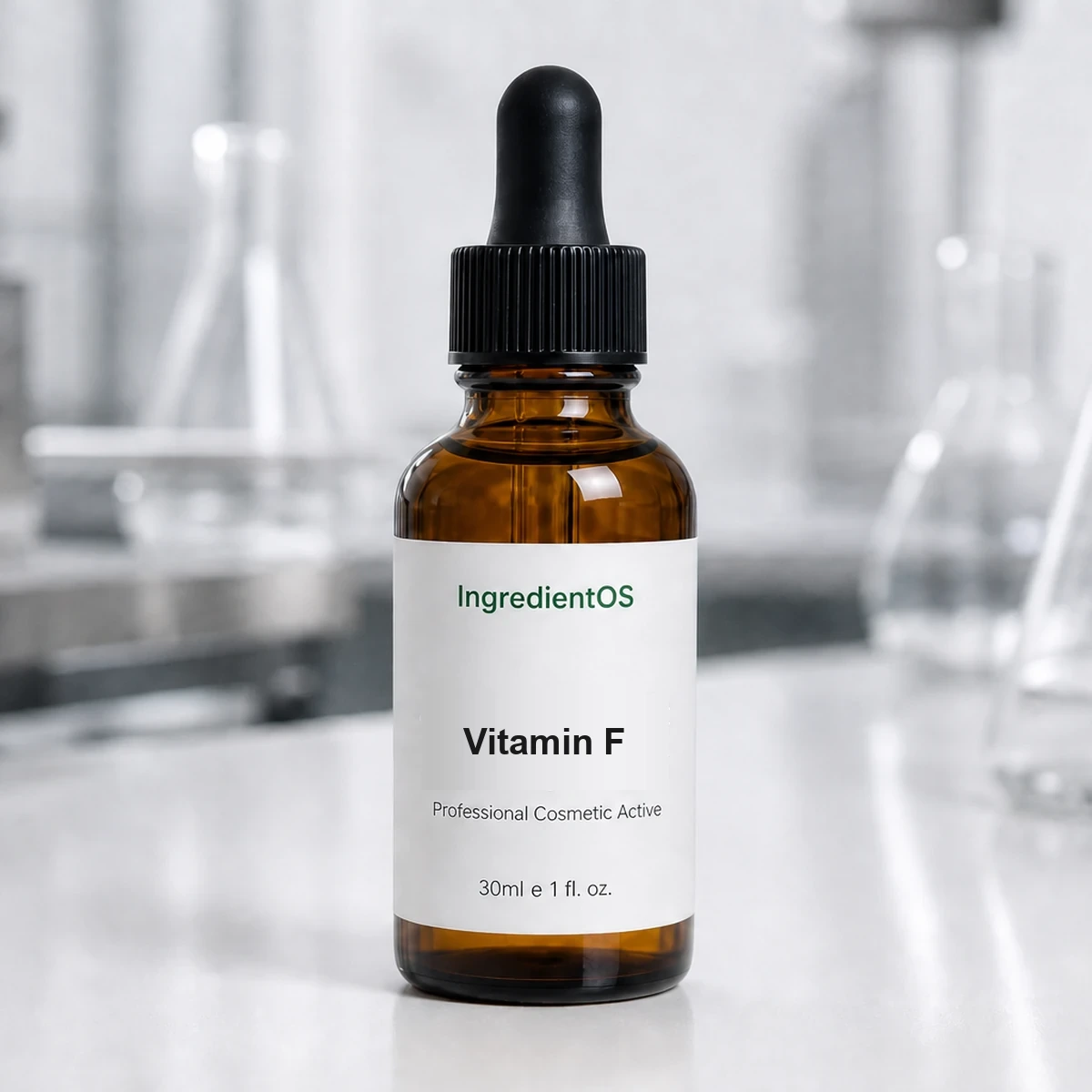
SKU: J20005
Vitamin F
$15.99In stock
INCI: Linoleic Acid, Linolenic Acid
Usage Rate: 0.5-3% of the finished formula
Packaging
Liquid sizes — 0.33 oz (10 mL) sample through bulk (US · metric)
Ships from FloridaSecure checkoutUsually ships in 1–2 business daysFree US shipping on $50+
AppearanceOily liquid
Description
Vitamin F at a glance
Vitamin F is a blend of essential fatty acids from Germany. Its INCI is Linoleic Acid, Linolenic Acid. It is a yellow liquid with a faint, typical odor, used at 0.5 to 3% of the finished product. It works across a broad pH range of 3.0 to 10.0. The supplier lists a wide range of uses, from face and eye creams to hand and nail care, winter and after-sun care, hair care and makeup.
Why vitamin F
In the 1920s researchers found that certain fatty acids were essential for health, and they called them vitamin F. Later it became clear that these are not vitamins in the strict sense but essential fatty acids: linoleic acid, an omega 6 fatty acid, and alpha-linolenic acid, an omega 3 fatty acid. The name vitamin F stayed in cosmetics, because it is easy to remember and tells a clear story.
The skin barrier
The outer layer of the skin is built like a brick wall. The cells are the bricks, and a mix of lipids is the mortar. Linoleic acid is a key building block of some of the most important ceramides. When the skin lacks it, the barrier becomes weaker, the skin loses more water and feels dry, rough and tight. Supplying linoleic and linolenic acid from the outside supports the barrier and helps the skin look and feel smoother and more supple.
What it does
Products with Vitamin F support the skin barrier, help dry and rough skin feel softer, reduce the feeling of tightness and help the skin cope with cold and wind. On the hands and nails, it helps dry cuticles and brittle looking nails look cared for. In hair care, it adds softness and shine.
How to formulate
Add Vitamin F to the oil phase. Polyunsaturated fatty acids are sensitive to oxygen and light, so add an antioxidant such as vitamin E and avoid long heating. In emulsions, add it to the oil phase shortly before emulsifying or at the end of the process. For barrier creams, combine it with ceramide NP and a phospholipid. More barrier actives are listed in the cosmetic actives section.
Dosing
Light face creams and eye creams use 0.5 to 1%. Hand and nail creams, winter creams and protective care use 1 to 3%. Hair care uses about 0.5 to 1%.
Product ideas
The supplier lists face creams, eye care, hand and nail creams, protective skin care, winter care, after-sun care, hair care and decorative cosmetics. Typical concepts are barrier care in cosmetic formulas creams, winter face creams, cuticle oils, rich hand creams, lip balms and after sun lotions.
Sample recipe: winter barrier cream, 100 g
Distilled water 70.50 g, glycerin 5.00 g, glyceryl stearate citrate 4.00 g, cetearyl alcohol 3.00 g, shea butter 5.00 g, caprylic/capric triglyceride 6.00 g, squalane 2.00 g, Vitamin F 2.00 g, vitamin E 0.50 g, xanthan gum 0.30 g, panthenol 1.00 g, preservative 0.70 g. Heat water and oil phases to 75 °C, emulsify and cool, add Vitamin F and vitamin E premixed together at about 45 °C, then panthenol and the preservative, and adjust to about pH 5.5.
Nail care
Nails and cuticles dry out quickly with frequent hand washing. A cuticle oil or nail cream with 2 to 3% Vitamin F, a plant oil and vitamin E is a simple, effective concept. Recommend massaging it in every evening.
Freshness
Because linoleic and linolenic acid oxidize easily, keep opened packs tightly closed, store them cool and dark and use them within the shelf life. Check the odor of the raw material before use.
Safety notes
Follow the recommended dose.
Storage
Store in a cool, dark place in a closed container. A certificate of analysis comes with every lot.
Product Specifications
INCILinoleic Acid, Linolenic Acid
Usage Rate0.5-3% of the finished formula
SolubilitySoluble in oil, fatty phase. Add to the oil phase.
StorageStore tightly closed in a cool, dry place away from light and heat. Refrigerate opened material where practical; respect supplier shelf life.
TDS / CoA available on request. Contact us
Frequently Asked Questions
What is the INCI of Vitamin F?
Linoleic Acid, Linolenic Acid.
How much should I use?
0.5 to 3% of the finished product.
Why is it called a vitamin?
Vitamin F is a historic name for the essential fatty acids linoleic and linolenic acid.
Which products is it for?
Face creams, eye care, hand and nail creams, protective and winter care, after-sun care, hair care and makeup.


