
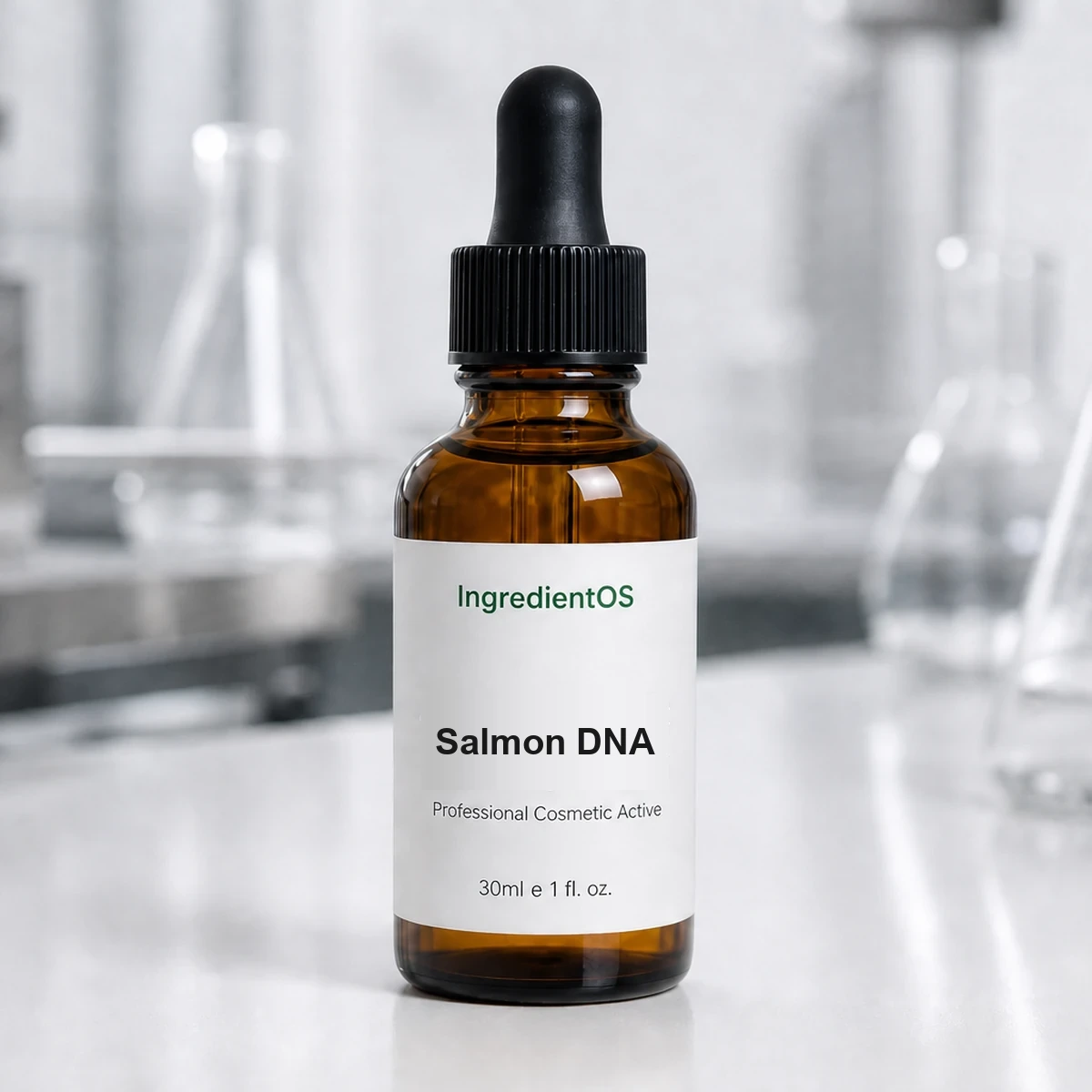
SKU: VV26051308
Salmon DNA
$15.99In stock
INCI: Sodium DNA
Usage Rate: Serums 0.1-2%, creams and emulsions 0.1-1%, gels 0.1-2%, professional concentrates up to 2%
Packaging
Liquid sizes — 0.33 oz (10 mL) sample through bulk (US · metric)
Ships from FloridaSecure checkoutUsually ships in 1–2 business daysFree US shipping on $50+
ApplicationApplications in various fields Skin cosmetics Serums Creams and emulsions Concentrates Post-procedure products Body cosmetics Regenerating creams Lotions Professional cosmetology Post-procedure programs Concentrates Hardware procedures SPA and wellness industry Regenerating complexes Care for stressed skin Dermatological developments Skin support formulas Complex active systems
AppearanceLiquid active concentrate
pH5.0–7.5
Description
Salmon DNA at a glance
Salmon DNA is a biotechnological active from South Korea. Its INCI is Sodium DNA. It is a clear to slightly yellowish, water-soluble liquid with a pH of 5.0 to 7.5. The supplier also lists it under the names PDRN, polydeoxyribonucleotide, salmon egg extract and DNA extract. It is used at low levels: 0.1 to 2% in serums and gels and 0.1 to 1% in creams.
From salmon to skin care
DNA is the long molecule that carries genetic information in every living cell. For cosmetic use, DNA is taken from salmon, which is a rich and well known source, and purified to a high degree. The result is sodium DNA, a salt of DNA that dissolves in water. Its fragments are polydeoxyribonucleotides, PDRN for short, the ingredient behind one of the strongest trends in Korean skin care. The salmon story has become so popular that salmon serums and PDRN creams now appear in many K-beauty lines.
What the supplier describes
The supplier lists several roles. Salmon DNA is used in systems that support skin leave-on cosmetic use and renewal at the formulation level. It helps improve the texture and appearance of the skin. It has moisturizing and protective properties and supports the barrier function. It is used in appearance-focused cosmetic and cosmetic appearance support products and suits stressed looking skin.
Why DNA moisturizes
DNA is a long, charged polymer that binds a lot of water, a little like hyaluronic acid. On the skin it leaves a light, moisture holding film. This explains the immediate smooth, plumped feel that many PDRN serums are known for.
How to formulate
Add Salmon DNA to the water phase at cool-down, below 40 °C. It is water-soluble and works in clear serums and gels as well as creams. Keep the finished product between pH 5.0 and 7.5, ideally around 5.5 to 6.5. Avoid strong acids and long heating, which can break the DNA chains. For a complete renewal serum, combine it with niacinamide and hydrolyzed sodium hyaluronate. More biotech actives are in the cosmetic actives section.
Dosing by product
Serums use 0.1 to 2%. Creams and emulsions use 0.1 to 1%. Gels use 0.1 to 2%. Professional concentrates use up to 2%.
Product ideas
Salmon or PDRN serums, renewal creams, hydrating gels, concentrated ampoules, sheet masks, post procedure comfort creams, body lotions and salon programs with device based care are the main concepts.
Sample recipe: salmon DNA ampoule, 100 g
Distilled water 88.80 g, Salmon DNA 1.00 g, glycerin 3.00 g, propanediol 3.00 g, niacinamide 2.00 g, hydroxyethylcellulose 0.60 g, panthenol 0.50 g, preservative 1.00 g, citric acid solution 0.10 g. Dissolve niacinamide in the water, disperse the cellulose, add glycerin, propanediol and panthenol, cool below 40 °C, add Salmon DNA and the preservative, and adjust to about pH 6.
Professional programs
The supplier lists post procedure programs, concentrates, device based procedures and the SPA and wellness industry. In a salon, an ampoule with up to 2% Salmon DNA can follow a facial and support the skin's comfort, while a cream at 0.5% continues care at home.
Stability tips
DNA is a sensitive polymer. Keep it away from strong acids and oxidizers, add it as one of the last steps and avoid high shear mixing after it is in. Store finished products in opaque packaging and check viscosity and clarity during stability tests at room temperature and at 40 °C.
Building a K-beauty line
A salmon line can follow the classic Korean layering routine: a hydrating toner with a little Salmon DNA, an ampoule at 1 to 2%, a cream at 0.5% and a weekly sheet mask. One active and one story carry through all steps.
Labeling
Sodium DNA is a fish derived ingredient, so it is not suitable for vegan lines. Mention the source where customers expect it.
Storage
Store in a dry, cool room in a tightly closed container, protected from light. A certificate of analysis comes with every lot.
Product Specifications
INCISodium DNA
Usage RateSerums 0.1-2%, creams and emulsions 0.1-1%, gels 0.1-2%, professional concentrates up to 2%
SolubilityWater-soluble
StorageStore tightly closed in a cool, dry place away from light and heat. Respect the shelf life on the CoA.
TDS / CoA available on request. Contact us
Frequently Asked Questions
What is the INCI of Salmon DNA?
Sodium DNA.
How much should I use?
0.1 to 2% in serums and gels, 0.1 to 1% in creams and emulsions, up to 2% in professional concentrates.
Is it the same as PDRN?
Salmon DNA is a source of polydeoxyribonucleotides, which is why it is also sold under the PDRN name.
What pH does it have?
5.0 to 7.5.


