SKU: TM21052309
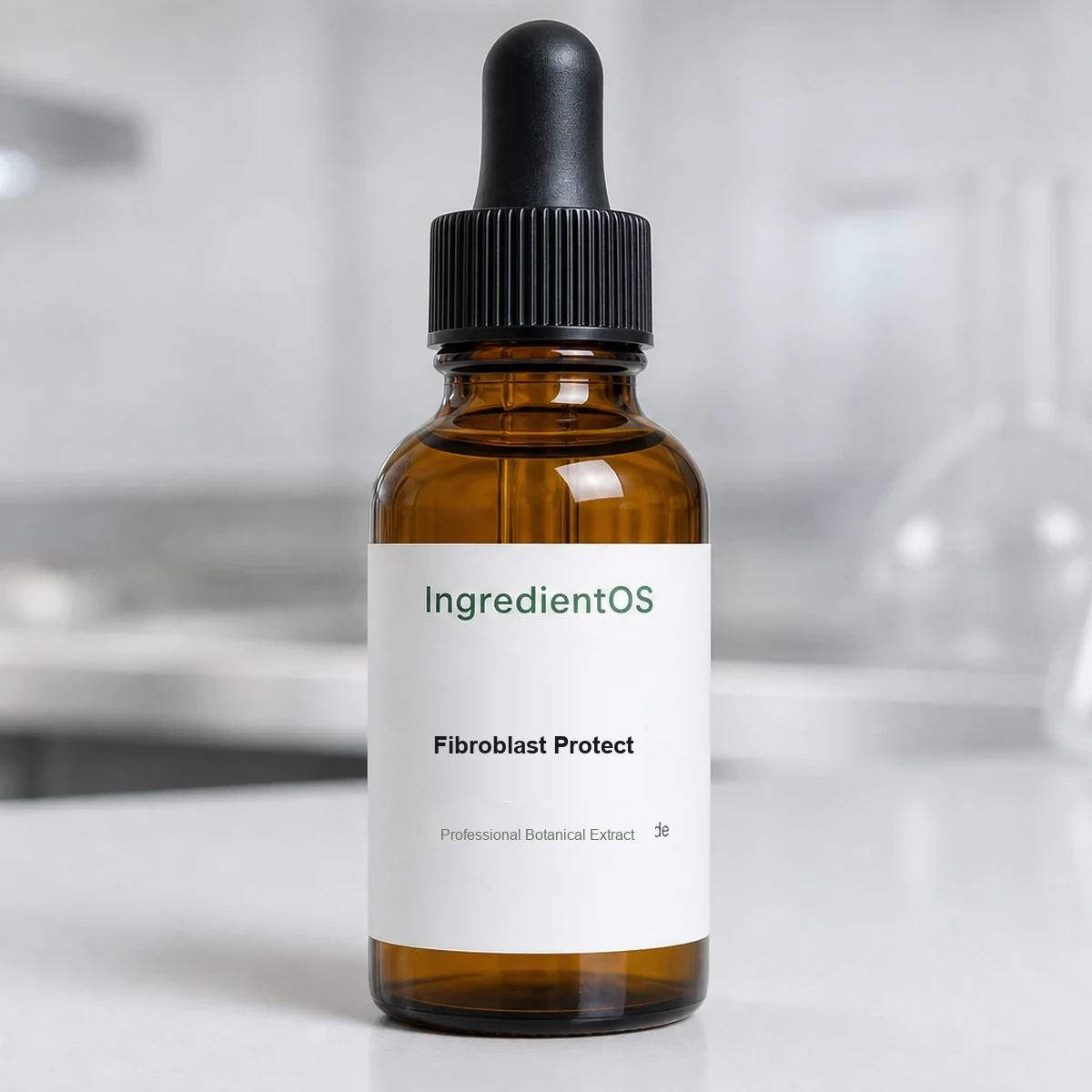
Fibroblast Protect
$15.99In stock
INCI: Glycerin, Water, Kombu Extract
Usage Rate: 1-5% of the finished formula
Packaging
Liquid sizes — 0.33 oz (10 mL) sample through bulk (US · metric)
Ships from FloridaSecure checkoutUsually ships in 1–2 business daysFree US shipping on $50+
Applicationanti-age cosmetics, creams and serums to reduce the length and depth of wrinkles, lifting systems that stimulate the production of own collagen, serums and creams - free radical scavengers
AppearanceLiquid active concentrate
pH5.0 - 6.0
Description
Fibroblast Protect at a glance
Fibroblast Protect is a marine appearance-focused cosmetic extract made from kombu, a brown seaweed of the kelp family harvested on the French coast. The seaweed is extracted with water, and the extract is carried in glycerin, which gives the INCI Glycerin, Water, Kombu Extract. The liquid is light brown to brown, dissolves in water and has a pH of 5.0 to 6.0. It is used at 1 to 5% of the finished product. Its name points to its role: fibroblasts are the cells in the skin that produce collagen and elastin.
Kombu as a cosmetic source
Kombu is well known in Japanese cooking, where it gives the savory umami taste to broths. That taste comes from glutamic acid, an amino acid that kombu contains in high amounts. Glutamic acid is also a building block of skin proteins and part of the skin's natural moisturizing factor. Together with the minerals and polysaccharides of the seaweed, this makes kombu a valuable base for skin care.
What it does
The supplier presents Fibroblast Protect as an extract that supports the skin's own renewing cells and their collagen production. In cosmetic terms, products with it help wrinkles look shorter and less deep, make the skin surface look smoother and more refined and give skin a firmer, more youthful look. The supplier also lists it for formulas with an antioxidant message. On the pack, keep claims visual and avoid cell level promises that cannot be seen.
How to formulate
Add the extract to the water phase of a gel or serum, or to an emulsion at cool-down below 40 °C. Its pH of 5.0 to 6.0 matches most face care, so no adjustment is usually needed. Use 1 to 3% in daily creams and up to 5% in intensive serums and lifting products. The light brown color can show in clear gels at higher levels. For an appearance-focused cosmetic serum, it combines well with hyaluronic acid and with a vitamin C derivative such as magnesium ascorbyl phosphate. Compare more marine and plant extracts in the botanical extracts section.
Product ideas
Anti-wrinkle creams, firming serums, lifting gels, night creams, eye creams, antioxidant day creams and marine themed lines built around French seaweed are the main uses.
Sample recipe: kombu smoothing night serum, 100 g
Distilled water 86.20 g, glycerin 3.00 g, propanediol 3.00 g, Fibroblast Protect 4.00 g, sodium hyaluronate 0.30 g, hydroxyethylcellulose 0.50 g, panthenol 1.00 g, preservative 1.00 g, citric acid solution 1.00 g. Hydrate sodium hyaluronate and the cellulose in water, add glycerin, propanediol and panthenol, then the kombu extract and the preservative, and check that the pH sits at about 5.5.
Marine story and labeling
On the ingredient list the extract appears as Glycerin, Water and Kombu Extract. Marine brands can tell the story of French seaweed and its natural amino acids. The name kombu is familiar from food culture and easy For formulators building consumer-facing cosmetics to remember, and the French origin adds a touch of coastal heritage.
Claims and testing
Wrinkle and smoothness claims are best supported with skin replicas or 3D skin imaging before and after eight weeks of use, combined with a consumer questionnaire. Keep all statements about the look of the skin.
Sustainability
Seaweed is a renewable resource that grows quickly without fresh water, fertilizers or farmland. Brands with a sustainability message can highlight the marine origin, while checking with the supplier about harvesting practices and certifications for their documentation.
Storage
Store in a dry, dark place in a tightly closed container. A certificate of analysis comes with every lot.
Product Specifications
INCIGlycerin, Water, Kombu Extract
Usage Rate1-5% of the finished formula
SolubilityWater-soluble
StorageStore tightly closed in a cool, dry place away from light and heat. Refrigerate opened material where practical; respect supplier shelf life.
TDS / CoA available on request. Contact us
Frequently Asked Questions
What is the INCI of Fibroblast Protect?
Glycerin, Water, Kombu Extract.
How much should I use?
1 to 5% of the finished product.
What is kombu?
Kombu is a brown seaweed of the kelp family, here harvested on the French coast. It is naturally rich in glutamic acid.