SKU: VV17050815
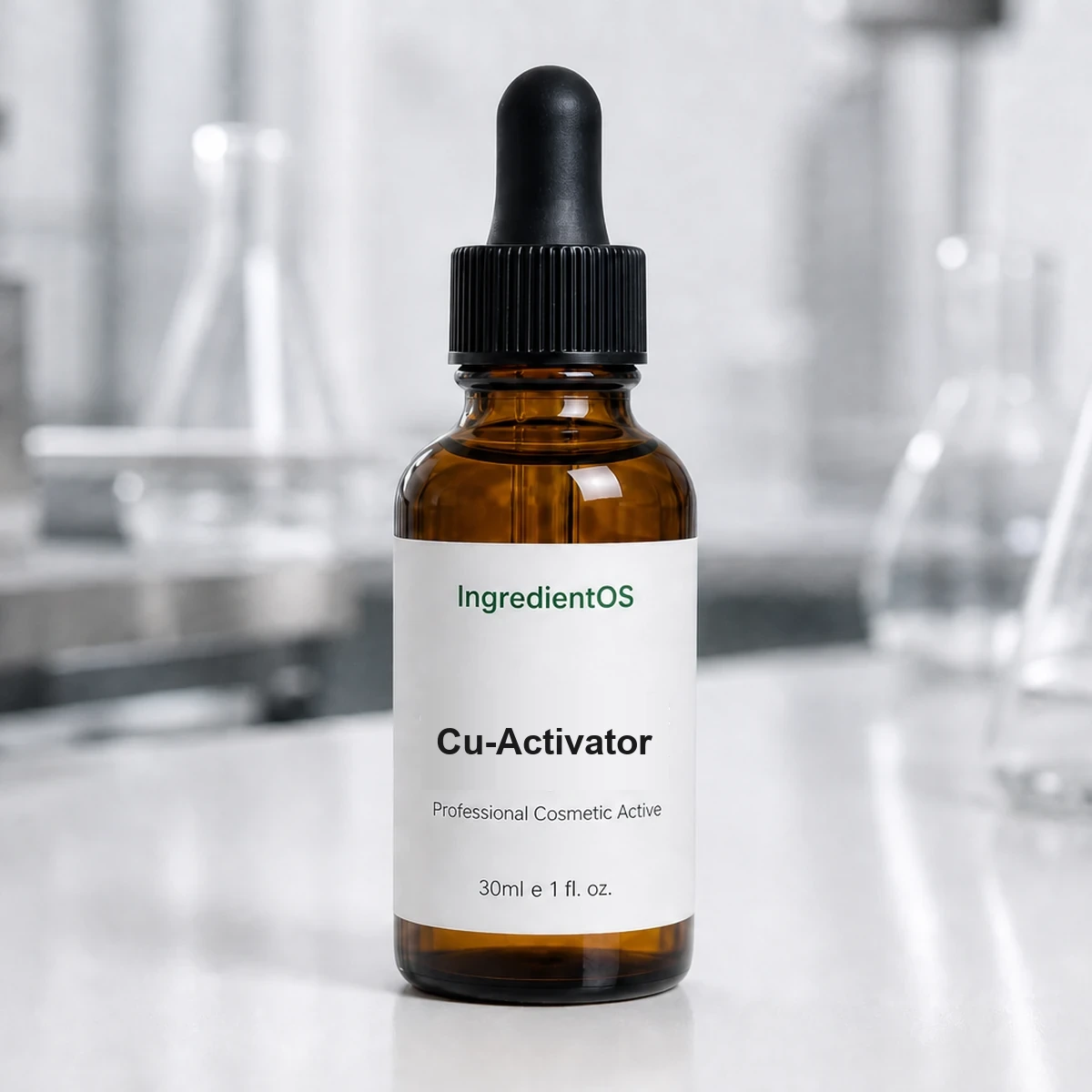
Cu-Activator
$15.99In stock
INCI: Hydrolyzed Soy Protein, Water, Mannitol, Tromethamine, Panthenol, Glycine, Glutamic Acid, Arginine, Alanine, Aspartic Acid, Lysine, Leucine, Valine, Phenylalanine, Isoleucine, Tyrosine, Histidine Hydrochloride, Copper Tripeptide-1
Usage Rate: 1-4% depending on the product
Packaging
Liquid sizes — 0.33 oz (10 mL) sample through bulk (US · metric)
Ships from FloridaSecure checkoutUsually ships in 1–2 business daysFree US shipping on $50+
AppearanceLiquid active concentrate
pH6-7
Description
Cu-Activator at a glance
Cu-Activator is a ready made copper peptide complex. The full INCI is Hydrolyzed Soy Protein, Water, Mannitol, Tromethamine, Panthenol, Glycine, Glutamic Acid, Arginine, Alanine, Aspartic Acid, Lysine, Leucine, Valine, Phenylalanine, Isoleucine, Tyrosine, Histidine Hydrochloride, Copper Tripeptide-1. The liquid is yellow beige, water-soluble, has a pH of 6 to 7 and is used at 1 to 4%. It comes from France.
Why copper peptides
GHK is a small peptide of three amino acids, glycine, histidine and lysine, that occurs naturally in the body and binds copper. In skin care the copper complex, GHK-Cu, is one of the most studied peptides for skin that looks firmer, smoother and more resilient, and for a refined skin texture. It has become a favorite of advanced appearance-focused cosmetic serums. The challenge is that pure copper peptide is sensitive to pH and to some other ingredients. A complex like Cu-Activator gives the peptide a stabilizing environment of amino acids and buffers.
The support system
The amino acids in the complex, from glycine and arginine to leucine and tyrosine, are the building blocks of skin proteins and part of the natural moisturizing factor. Hydrolyzed soy protein adds a soft, smoothing film. Panthenol, provitamin B5, brings comfort and hydration. Mannitol and tromethamine keep the pH stable near neutral. Together they make the copper peptide easier to formulate and add their own hydrating benefit.
How to formulate
Dose and pH
Use 1 to 4%. Light daily products can sit at 1 to 2%, intensive serums at up to 4%. Keep the finished pH near neutral, between about 5.5 and 7. Strong acids and low pH formulas can release copper from the peptide.
Partners and things to avoid
Avoid strong chelating agents at high levels, pure ascorbic acid and strongly acidic exfoliants in the same product. Good partners are humectants, niacinamide and other peptides. For a full copper story, the complex works well next to copper PCA, which adds a copper salt, and with hyaluronic acid for hydration. More appearance-focused cosmetic actives are listed in the cosmetic actives section.
Product ideas
Copper peptide serums, firming night creams, eye creams, neck creams, moisturizing day creams and lotions are the main uses. The supplier also mentions after-sun care, where the complex can add a care message to after-sun and daily protection products.
Sample recipe: copper peptide serum, 100 g
Distilled water 88.00 g, glycerin 3.00 g, propanediol 3.00 g, Cu-Activator 3.00 g, sodium hyaluronate 0.30 g, hydroxyethylcellulose 0.50 g, panthenol 1.00 g, preservative 1.00 g, sodium hydroxide solution 0.20 g. Hydrate sodium hyaluronate and the cellulose in water, add glycerin, propanediol and panthenol, add Cu-Activator and the preservative below 40 °C and check that the pH sits between 6 and 7.
Color and stability
Copper complexes can give a faint blue or green tint at higher levels, which is a sign of the copper and not a defect. Run a stability test at 40 °C and record color and pH, and pack the finished serum in opaque bottles.
Labeling and claims
The long INCI list shows consumers a rich formula of amino acids and a copper peptide, which works well for premium positioning. Claims should stay visual: skin that looks firmer and smoother, a more refined looking texture and a more radiant, resilient look. Photos before and after eight weeks of use and a consumer questionnaire are a practical way to support them.
Storage
Store in a cool, dry place protected from light. A certificate of analysis comes with every lot.
Product Specifications
INCIHydrolyzed Soy Protein, Water, Mannitol, Tromethamine, Panthenol, Glycine, Glutamic Acid, Arginine, Alanine, Aspartic Acid, Lysine, Leucine, Valine, Phenylalanine, Isoleucine, Tyrosine, Histidine Hydrochloride, Copper Tripeptide-1
Usage Rate1-4% depending on the product
SolubilityWater-soluble
StorageStore tightly closed in a cool, dry place away from light and heat. Refrigerate opened material where practical; respect supplier shelf life.
TDS / CoA available on request. Contact us
Frequently Asked Questions
What is the active peptide in Cu-Activator?
Copper tripeptide-1, also known as GHK-Cu, supported by hydrolyzed soy protein, amino acids and panthenol.
How much should I use?
1 to 4% of the finished product, depending on the product type.
What pH does it need?
The complex has a pH of 6 to 7. Keep the finished product near neutral and avoid strong acids.
Can I combine it with vitamin C?
Pure ascorbic acid at low pH is not a good partner for copper peptides. Choose a stable vitamin C derivative and test the formula.