
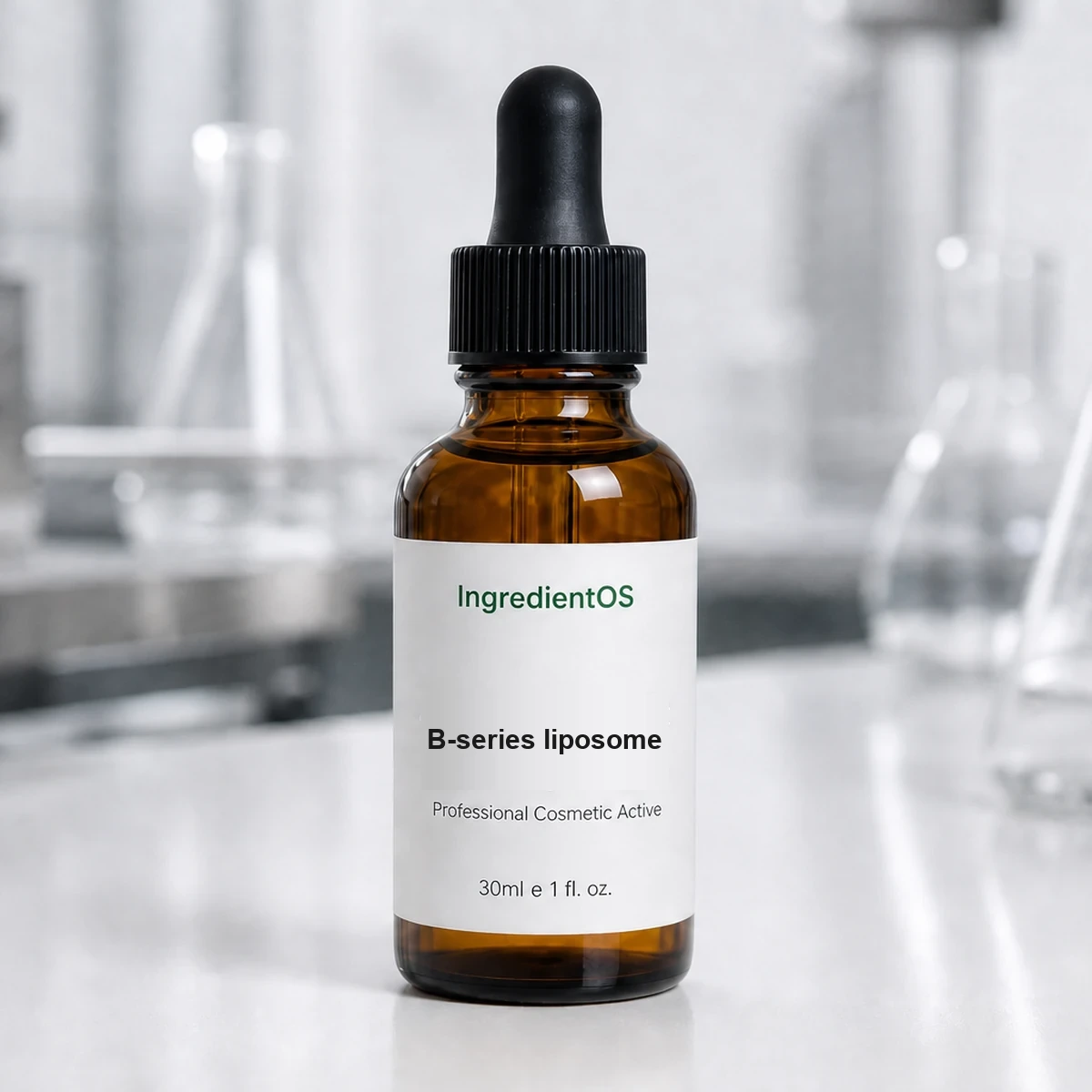
SKU: VV17022110
B-series liposome
$15.99In stock
INCI: Phosphatidylcholine (Lecithin), Glycerin, Thiamine, Niacinamide, Panthenol, Pyridoxine, Biotin, Glyceryl Linoleate, Glyceryl Linolenate, Resveratrol
Usage Rate: 2-10% of the finished formula
Packaging
Liquid sizes — 0.33 oz (10 mL) sample through bulk (US · metric)
Ships from FloridaSecure checkoutUsually ships in 1–2 business daysFree US shipping on $50+
Applicationanti-aging serums and gels, cosmetics for aging and aging skin, cosmetics for problem skin, moisturizing cosmetics
AppearanceLiquid active concentrate
pH3.6-7.4
Description
B-series liposome at a glance
B-series liposome is a vitamin complex in liposomes. A full B group set, vitamins B1, B3, B5, B6 and B7, is combined with vitamin F, the glyceryl esters of linoleic and linolenic acids, and with resveratrol, an antioxidant from grapes. All of this is enclosed in vesicles made of phosphatidylcholine, the main lipid of lecithin, in a glycerin base. The INCI lists Phosphatidylcholine, Glycerin, Thiamine, Niacinamide, Panthenol, Pyridoxine, Biotin, Glyceryl Linoleate, Glyceryl Linolenate and Resveratrol. The liquid is opalescent, mixes with water, has a pH of 3.6 to 7.4 and is used at 2 to 10%. It comes from Spain.
What each vitamin brings
Niacinamide and panthenol
Vitamin B3, niacinamide, is one of the most popular actives in skin care, known for a more even looking tone, smaller looking pores and a stronger barrier. Vitamin B5, here as its pantothenic form, is the classic moisturizing and comfort vitamin.
Thiamine, pyridoxine and biotin
Vitamin B1 thiamine and vitamin B6 pyridoxine are linked to the energy and balance of the skin, and B6 is often used in care for oily skin. Vitamin B7 biotin is the best known vitamin for hair and nails and also supports a smooth skin surface.
Vitamin F and resveratrol
Linoleic and linolenic acids, known together as vitamin F, are essential fatty acids that the skin uses to build its barrier lipids. Resveratrol adds antioxidant protection against daily environmental stress.
Why liposomes
Liposomes are tiny spheres made of the same type of lipids as cell membranes. They hold water-soluble vitamins in their core and fatty acids in their walls, so one carrier can deliver both. The lecithin also leaves a soft, conditioning feel on the skin. For formulators building consumer-facing cosmetics, liposome is a familiar technology word that suggests advanced care.
How to formulate
Add the liposomes at cool-down, below about 40 °C, after any homogenization, and stir slowly. Avoid high levels of ethanol and strong surfactants, which can break the vesicles. The pH range of 3.6 to 7.4 covers almost all face care. Use 2 to 5% in daily creams and gels and up to 10% in intensive serums. The vitamin story can be extended with niacinamide as a separate active for a higher B3 level, and with biotin liposomes in a hair and scalp line. Explore more vitamin actives in the cosmetic actives section.
Product ideas
appearance-focused cosmetic serums and gels, creams for mature and tired looking skin, balancing fluids for oily skin, moisturizing day creams, vitamin booster ampoules and sheet masks are the main uses. A multi vitamin serum with a clear label story is the simplest and most effective concept.
Sample recipe: vitamin B booster gel, 100 g
Distilled water 84.20 g, glycerin 3.00 g, propanediol 3.00 g, hydroxyethylcellulose 0.80 g, B-series liposome 6.00 g, preservative 1.00 g, panthenol 1.00 g, sodium hyaluronate 0.20 g, citric acid solution 0.80 g. Hydrate sodium hyaluronate and the cellulose in water, add glycerin, propanediol and panthenol, then below 40 °C add the liposomes and the preservative with slow stirring, and adjust to about pH 5.5.
Labeling and claims
On the ingredient list each vitamin appears under its own INCI name, which gives a long, rich label. Claims can speak of energized, smoother and more even looking skin, smaller looking pores and a more comfortable, hydrated feel. A short consumer panel over four weeks is a practical way to support such claims.
Stability
Vitamins are sensitive to light and air. Pack the finished product in opaque or airless containers and run a stability test at 40 °C to check color and odor. A slight change in color of the opalescent liquid between lots is normal.
Storage
Store in a cool, dark place in a tightly closed container. A certificate of analysis comes with every lot.
Product Specifications
INCIPhosphatidylcholine (Lecithin), Glycerin, Thiamine, Niacinamide, Panthenol, Pyridoxine, Biotin, Glyceryl Linoleate, Glyceryl Linolenate, Resveratrol
Usage Rate2-10% of the finished formula
SolubilityWater-soluble (opalescent liposome dispersion)
StorageStore tightly closed in a cool, dry place away from light and heat. Refrigerate opened material where practical; respect supplier shelf life.
TDS / CoA available on request. Contact us
Frequently Asked Questions
Which vitamins does B-series liposome contain?
Vitamins B1 thiamine, B3 niacinamide, B5 pantothenic acid, B6 pyridoxine and B7 biotin, together with vitamin F lipids and resveratrol.
How much should I use?
2 to 10% of the finished product.
What pH does it work in?
The dispersion has a pH of 3.6 to 7.4 and fits most skin care formulas.
Can I homogenize it?
Add the liposomes after homogenization, at cool-down with slow stirring, so the vesicles stay intact.


