SKU: VV24071806
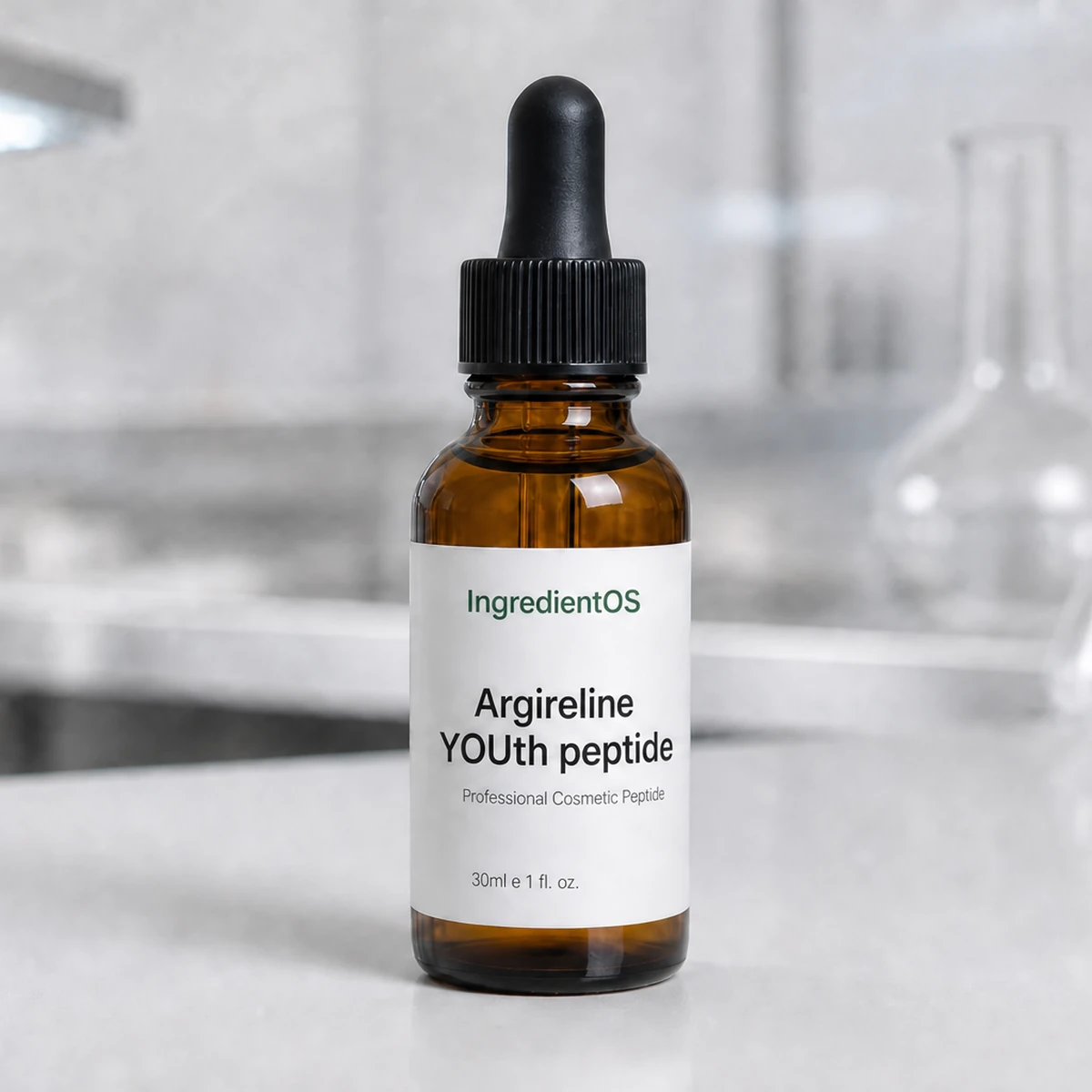
Argireline YOUth peptide
For cosmetic formulation use only.
Not intended for ingestion, medical use, or dietary supplementation.
- Softens dynamic expression lines (forehead, frown, crow's-feet)
- Oil-soluble — enables facial oils, balms, and anhydrous serums
- Lipophilic delivery aligned with the skin's lipid-rich barrier
- Rich, nourishing textures ideal for dry and mature skin
- Differentiated, premium positioning vs. water-soluble peptides
INCI: Acetyl Hexapeptide-8 (in a lipophilic carrier such as Caprylic/Capric Triglyceride; confirm full INCI and active % on supplier CoA).
Usage Rate: Typical: dose the oil-soluble concentrate to the supplier's recommended in-use level of Acetyl Hexapeptide-8 in the oil phase. Follow supplier active %; begin at the recommended level.
Packaging
Liquid sizes — 10 mL sample through bulk (US · metric)
Description
Argireline YOUth Peptide is an oil-soluble adaptation of the famous expression-line active Acetyl Hexapeptide-8, supplied as an oily liquid that dissolves in oils, esters, and alkanes rather than in water. This is a meaningful and relatively rare innovation in the peptide world: the vast majority of cosmetic peptides are water-soluble, which confines them to the water phase of a formula and excludes them from anhydrous (water-free) products and the oil phase of emulsions. By rendering Argireline oil-dispersible, this ingredient unlocks an entirely new range of formats — facial oils, anhydrous serums, balms, oil-based "dry" serums, and the oil phase of emulsions — while leveraging the lipophilic nature of the skin barrier to support delivery.
The active and its core benefit are the same as classic Argireline. Acetyl Hexapeptide-8 is a six-amino-acid peptide modeled on the SNAP-25 protein involved in the SNARE complex that governs acetylcholine release at the neuromuscular junction — the trigger for the muscle contractions that create dynamic wrinkles. By gently and reversibly softening these surface contractions, the peptide helps the forehead, frown lines, and crow's-feet appear smoother with continued use. The oil-soluble "YOUth" version delivers this trusted, reversible, needle-free smoothing while opening up lipophilic delivery and luxurious, oil-rich textures.
The strategic value of an oil-soluble peptide is significant. First, it enables peptide-powered facial oils and anhydrous serums — fast-growing, premium categories where consumers expect rich, nourishing textures but where water-soluble peptides simply cannot be used. Second, the skin's outermost barrier is lipid-rich, so an oil-compatible carrier can support the peptide's interaction with and journey across the stratum corneum. Third, anhydrous formats are inherently more stable and require less (or no) traditional preservation, which appeals to "clean" and "minimalist" formulation philosophies. For a brand, an oil-soluble Argireline allows a differentiated, premium "peptide facial oil" or "anhydrous peptide concentrate" that competitors using only water-soluble peptides cannot easily replicate.
For formulators, Argireline YOUth is incorporated into the oil phase rather than the water phase. It is soluble in cosmetic oils, esters (such as caprylic/capric triglyceride), and alkanes, making it easy to build into facial oils, balms, and the oil phase of emulsions. Because it is oil-based, it is gentle on the peptide and avoids the heat- and electrolyte-sensitivity challenges of aqueous systems, though formulators should still avoid prolonged high heat and protect the finished product from oxidation (antioxidants such as tocopherol are helpful in oil-rich systems). In emulsions, it can be combined with water-soluble peptides in the water phase to create dual-phase, multi-peptide products. Its oily-liquid form integrates smoothly into lipophilic textures.
Compatibility within oil systems is broad. Argireline YOUth pairs naturally with nourishing plant oils, squalane, esters, and lipophilic antioxidants (vitamin E, bakuchiol, oil-soluble vitamin C derivatives), as well as with ceramides and other barrier lipids. In an emulsion, it can complement water-phase hydrators (hyaluronic acid) and water-soluble peptides for a comprehensive, multi-phase appearance-focused cosmetic product. It is non-irritating and suitable for sensitive and dry skin, and its oil-based delivery is especially comfortable for mature, dehydrated, or barrier-compromised complexions that benefit from richer textures.
The consumer benefits are both familiar and differentiated: the trusted Argireline expression-line smoothing, now in nourishing, luxurious oil-based and anhydrous formats; enhanced lipophilic delivery aligned with the skin's barrier; and rich, comforting textures ideal for dry and mature skin. For a launch collection, Argireline YOUth Peptide enables a standout "peptide facial oil," an anhydrous "peptide concentrate," or a premium oil-rich night cosmetic product — products that combine the marketing power of Argireline with a unique, premium, oil-based delivery story.
The formulation disciplines are tailored to oil systems: incorporate into the oil phase, avoid prolonged high heat, protect against oxidation with antioxidants, and respect the supplier's recommended use level. Handled correctly, Argireline YOUth Peptide brings the most trusted expression-line benefit in skincare into the premium world of facial oils and anhydrous serums — a rare, differentiated, oil-soluble hero for an appearance-focused cosmetic launch.
Product Specifications
Frequently Asked Questions
How is this different from regular Argireline?
It is oil-soluble, so it can be used in facial oils and anhydrous serums rather than the water phase.
Why use an oil-soluble peptide?
It enables rich oil-based textures and supports lipophilic delivery through the skin's lipid barrier.
Can I use it in a water-based serum?
No — it is for the oil phase; for water systems, use a water-soluble Acetyl Hexapeptide-8.
Is it good for dry or mature skin?
Yes — its nourishing oil base is especially comfortable for dry, mature, or sensitive-skin cosmetic formulas.
Does it need preservation?
Anhydrous formats need less traditional preservation, but protect against oxidation and follow good manufacturing practice.