SKU: TM17032612
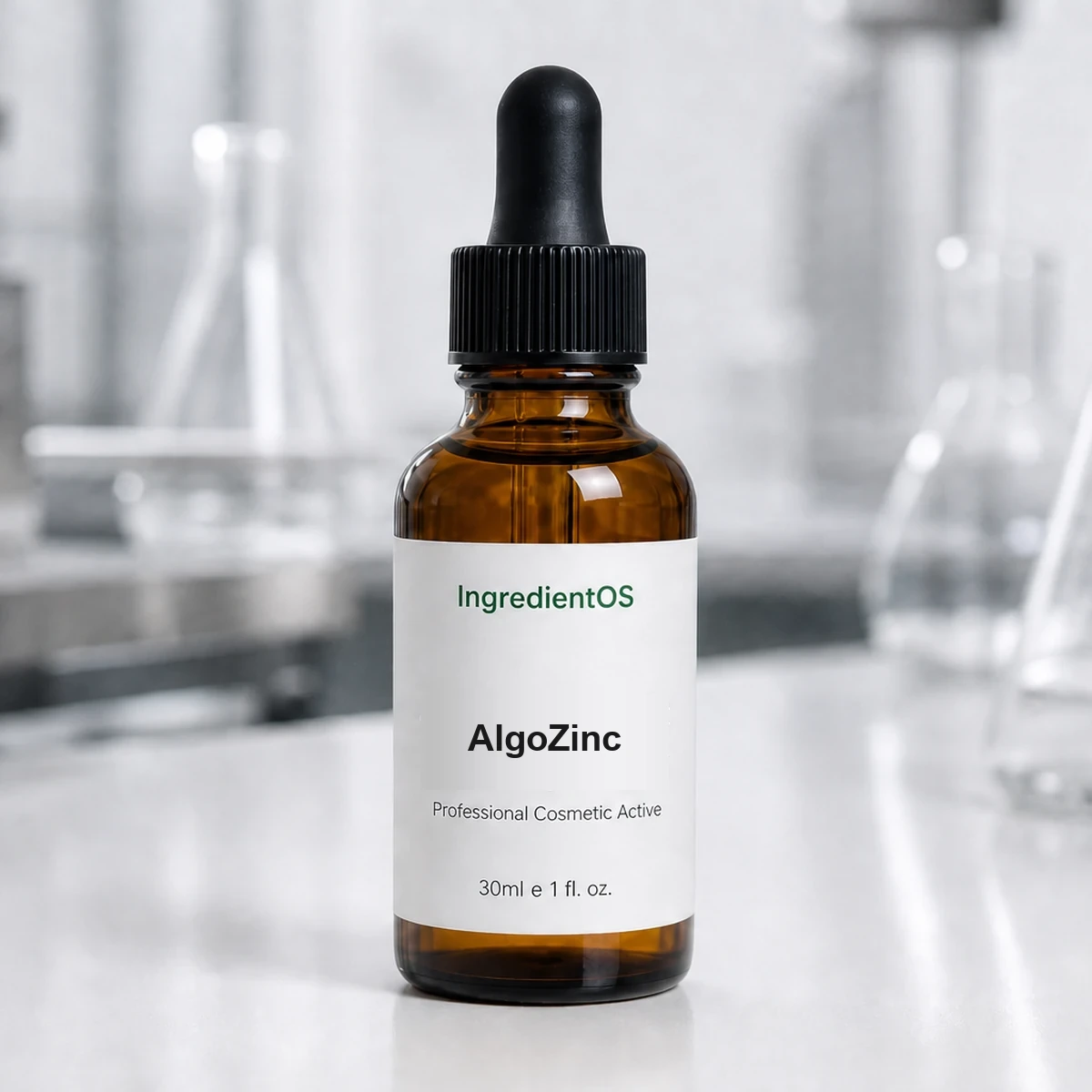
AlgoZinc
$15.99In stock
INCI: Water, Glycerin, Hydrolyzed Algin, Zinc Sulfate
Usage Rate: 1-5%, added at the end of the process at 40 °C or below
Packaging
Liquid sizes — 0.33 oz (10 mL) sample through bulk (US · metric)
Ships from FloridaSecure checkoutUsually ships in 1–2 business daysFree US shipping on $50+
Applicationhelps reduce the look of flakes on the scalp, soothes the look of redness, sebum regulating effect, active for oily skin
AppearanceLiquid active concentrate
Description
AlgoZinc in brief
AlgoZinc is a marine mineral complex for oily skin and scalp care. It joins zinc sulfate with hydrolyzed algin, a polysaccharide from the brown seaweed Laminaria digitata, in a base of water and glycerin. The INCI is Water, Glycerin, Hydrolyzed Algin, Zinc Sulfate. The liquid ranges from light yellow to orange, and a slight white deposit may form without affecting quality. It dissolves in water, is used at 1 to 5% and is added at the end of the process, at 40 °C or below. It is produced in France.
Why zinc and algae
Zinc is the most widely used mineral in care for oily skin. It is associated with a less shiny, more balanced look and with a clean, fresh feel. Simple zinc salts, however, can feel astringent and can interact with other ingredients. In AlgoZinc the zinc is bound to hydrolyzed algin, a soft, film forming marine sugar that brings a more comfortable skin feel and a natural sea story. Laminaria digitata, also called oarweed, grows along the cold Atlantic coasts of Brittany and is one of the classic seaweeds of French marine cosmetics.
What it does
For the face, AlgoZinc supports skin that looks less oily and more matte, pores that look less visible and a clearer, more balanced looking complexion. For the scalp, the supplier lists shampoos for a scalp that looks free of flakes and feels comfortable, with less itch and a cleaner, fresher feel. Keep claims cosmetic and focused on look and feel.
How to formulate
Addition and dose
Use 1 to 5%. Cleansers and shampoos can use 2 to 5%, leave-on creams and lotions 1 to 3%. Add the complex at the end of the process, at 40 °C or below, and stir well. Shake or stir the raw material before weighing in case a deposit has formed.
Compatibility
Zinc salts can affect some thickeners, especially carbomers and other anionic polymers, and can lower the viscosity of surfactant systems. Run a small test batch and adjust thickener levels if needed. Keep the finished product in a skin friendly pH range of about 5 to 6.
Partners
For a balancing face care line, AlgoZinc combines well with niacinamide for a more even looking tone and with zinc PCA for a stronger mineral profile. Other actives for oily skin and scalp care can be found in the cosmetic actives section.
Product ideas
Balancing face washes and cleansing gels, mattifying day lotions and fluids, toners for oily skin, cleansing milks, shampoos for oily roots and scalps that look flaky, and scalp lotions are the main uses. A men's line with a marine story is another good fit.
Sample recipe: balancing face wash, 100 g
Distilled water 63.30 g, sodium cocoyl isethionate solution 15.00 g, cocamidopropyl betaine 10.00 g, decyl glucoside 5.00 g, glycerin 2.00 g, AlgoZinc 3.00 g, panthenol 0.50 g, preservative 1.00 g, citric acid solution 0.20 g. Mix the surfactants into the water with glycerin, cool to below 40 °C if warmed, add AlgoZinc, panthenol and the preservative, check viscosity and adjust the pH to about 5.5.
Labeling
On the ingredient list the complex appears as Water, Glycerin, Hydrolyzed Algin and Zinc Sulfate. In marketing copy, marine zinc or seaweed zinc complex is a clear and accurate description that consumers understand.
Testing
Sebum and shine claims are easy to support with simple tests: blotting papers or a sebumeter before and a few hours after application, plus a short consumer questionnaire. For shampoos, a panel that rates scalp comfort and the look of flakes over four weeks works well.
Storage
Store at room temperature away from moisture, direct sunlight and heat. A certificate of analysis comes with every lot.
Product Specifications
INCIWater, Glycerin, Hydrolyzed Algin, Zinc Sulfate
Usage Rate1-5%, added at the end of the process at 40 °C or below
SolubilityWater-soluble
StorageStore tightly closed in a cool, dry place away from light and heat. Refrigerate opened material where practical; respect supplier shelf life.
TDS / CoA available on request. Contact us
Frequently Asked Questions
What is the INCI of AlgoZinc?
Water, Glycerin, Hydrolyzed Algin, Zinc Sulfate. The algin comes from the brown seaweed Laminaria digitata.
How much should I use?
1 to 5% of the finished product.
When do I add it?
At the end of the process, at 40 °C or below.
Is the white deposit a problem?
No. The supplier notes that a slight white deposit can form and does not affect quality. Shake or stir before use.