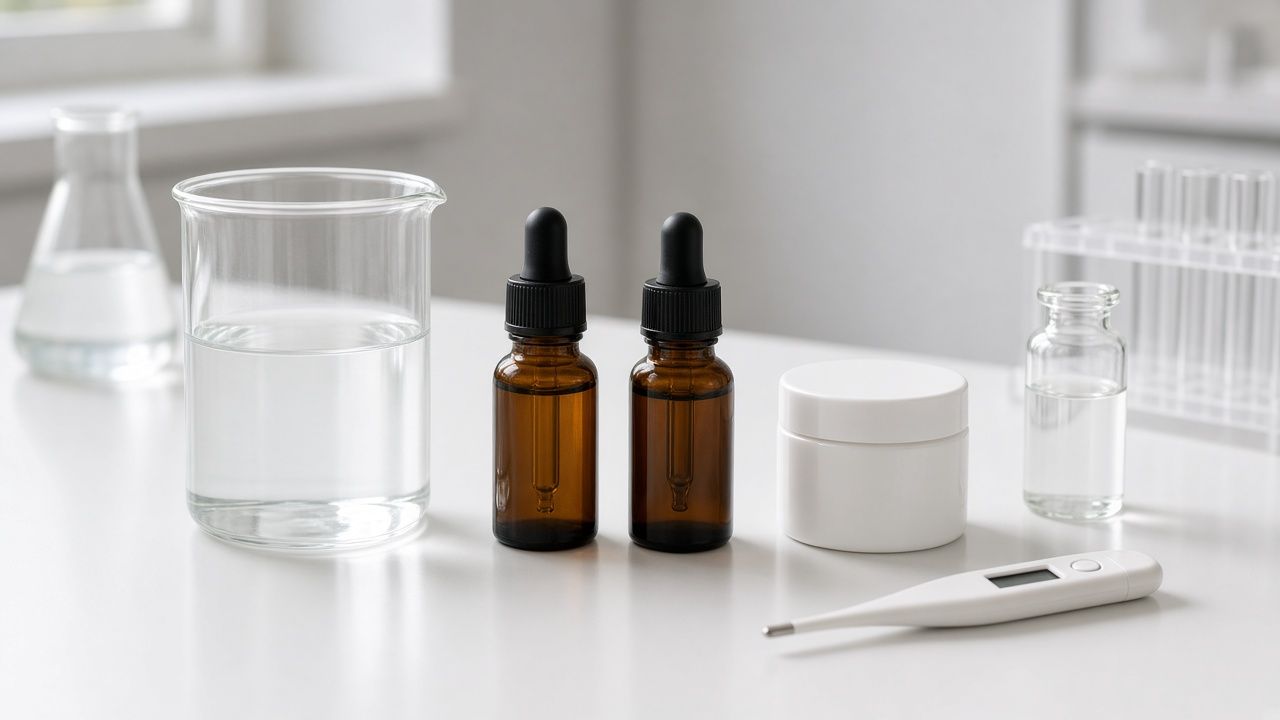
Venuceane is a liquid cosmetic active based on a ferment of Thermus thermophilus, a microorganism from hot springs, supplied in glycerin. In cosmetics it is used at 3 to 5% in day creams, fluids, after-sun lotions and tinted products, added to the water phase or to an emulsion once it has cooled below 35 °C. The supplier safety data sheet gives a pH of 7.0 to 8.0 and asks for cold storage at 4 to 7 °C, which shapes how you buy, store and dose it.
This guide is written for formulators and small brands who want to buy Venuceane and use it well, not for shoppers comparing finished creams. It covers what the ingredient is, what the supplier documents actually say, how to place it in a formula, which partners make sense, and how to word a product built around it without crossing from cosmetic into drug territory.
What Venuceane Is
Identity and INCI
Venuceane is a trade name from Sederma. The published INCI on our Venuceane product card is Thermus Thermophillus Ferment, Glycerin, with the double l that appears in the official INCI listing. The material is a clear liquid, so you weigh or pipette it into the batch rather than dissolving a powder. Glycerin acts as the carrier, which also means a 5% dose adds a small amount of humectant to your formula, worth noting if you are already close to the stickiness limit of a light fluid.
Why a Heat-Loving Microorganism
Thermus thermophilus grows in hot springs at temperatures that would denature most proteins. The enzymes it produces have to stay folded and working under heat and light stress, and that robustness is the story behind the ingredient. Sederma positions the ferment as an active that helps skin look protected against the visible effects of sun exposure and everyday environmental stress. For a brand this is a useful narrative because it is concrete and easy to explain on a label, as long as the wording stays on appearance and comfort.
What the Supplier Documents Say
pH, Preservation and Storage
The Sederma safety data sheet lists a pH of 7.0 to 8.0 for the supplied liquid. It is preserved with 1% phenoxyethanol and 0.1% potassium sorbate, and the recommended storage temperature is 4 to 7 °C. That last point matters more than it looks. Our product card describes storage in general terms as cool, dry and away from light, but the supplier asks for refrigeration, and for an enzyme-based ferment that is the instruction to follow. Put the pack in a lab fridge on arrival, keep it tightly closed, and avoid leaving it on the bench through a long production day.
Potassium sorbate is most effective in acidic conditions, and the material itself sits near neutral, so the preservation it carries is designed to protect the raw material in the drum, not your finished product. Your formula still needs its own preservative system, chosen for the final pH. If you plan a formula around pH 5.5, sorbate from the raw material will contribute slightly, but do not count on it in a challenge test.
Use Level and Temperature
The recommended use level is 3 to 5%. Add Venuceane below 35 °C, either directly into the water phase of a cold-process gel or fluid, or into an emulsion during cool-down. The card on our site gives about 40 °C as the upper limit; the supplier figure of 35 °C is stricter, and we suggest working to it. Even though the source organism tolerates heat, the finished ferment in a cosmetic batch is better protected when it is exposed to heat for as short a time as possible.
How to Formulate With Venuceane
Emulsions and Day Creams
The most common home for Venuceane in cosmetics is a day cream or a light day fluid. Build your emulsion as usual, cool it with stirring, and add the active at 3 to 5% once the batch is below 35 °C, together with other heat-sensitive ingredients such as fragrance and extracts. Check the pH after the addition. Because the raw material reads 7.0 to 8.0, a 5% dose can nudge a lightly buffered formula upward, so take the reading after all actives are in and adjust with citric acid or lactic acid if your target is around pH 5 to 6.
Gels, Serums and After-Sun Lotions
In a water-based gel the ingredient mixes easily because it is water-soluble and already liquid. Add it after the thickener has hydrated and the gel has been neutralized. In after-sun lotions, a soothing, comfortable feel is the goal, so Venuceane fits next to humectants, panthenol and light emollients. Keep alcohol levels modest, since high ethanol content is not a friendly environment for protein-based actives.
Tinted Products and Makeup
The supplier application list includes foundations, makeup bases and lipsticks. For tinted emulsions, follow the same cool-down rule. Anhydrous lipsticks are harder, because the liquid is glycerin-based and will not dissolve in waxes and oils; you would need an emulsified or water-in-oil base, or a dispersing system, and a careful compatibility check. Most brands start with day fluids and bases before trying stick formats.
Partners and Compatibility
Venuceane pairs well with antioxidants in day care. A natural partner is ferulic acid, which brings its own antioxidant story to a daily defense serum; keep in mind that ferulic acid prefers a lower pH, so settle the final pH of the formula before deciding on the dose of each. For after-sun lotions, soothing actives such as ectoin or panthenol sit comfortably alongside it. You will find more options for antioxidant and age-care formulas in our cosmetic actives section, and if you are building a fuller daily defense range, our guide to adenosine serum formulating covers another water-phase active that adds well at cool-down.
Avoid combining Venuceane with strong oxidizers, high concentrations of free acids added after the active, or processing steps that hold the batch hot after it has been dosed. Run a short stability set at room temperature, 40 °C and in the fridge, and watch for changes in color, odor and pH over at least four weeks before scaling up.
Claims: What You Can and Cannot Say
Venuceane is not a sunscreen filter. It does not provide an SPF, and a product containing it must not be described as protecting from the sun or preventing sunburn unless it also contains approved UV filters and has been tested and regulated as a sunscreen. That is a separate product category with its own rules. The same applies to medical wording: avoid statements about treating, healing or preventing skin conditions.
Safe cosmetic wording focuses on appearance and feel. Phrases such as helps skin look protected against daily environmental stress, supports a more even-looking complexion, or leaves skin feeling comfortable after time outdoors keep the product in cosmetic territory. If you use any supplier test data on a label or a sales page, quote it accurately, name the test conditions, and keep the claim about how skin looks.
Buying Venuceane Wholesale
If you want to buy Venuceane for testing, a 1 oz pack covers several lab batches at 3 to 5%. Production runs usually move to 16 oz or 32 oz packs, and wholesale volumes above that are quoted on request. Because the supplier recommends refrigerated storage, order a size you can use within the shelf life stated on the certificate of analysis, and plan to store it cold from the day it arrives. Ask for the CoA and TDS with each lot, record the lot number on every batch sheet, and compare cost per kilogram of finished product rather than cost per pack when you decide on a size.
Our packs ship from Florida, usually within one to two business days. For a wholesale quote or the supplier documents, contact us through the product card before you place a large order.
Sources
Sederma, Venuceane safety data sheet: pH 7.0 to 8.0, preservation with 1% phenoxyethanol and 0.1% potassium sorbate, storage at 4 to 7 °C. Distributor technical literature (Trulux): recommended use level of 3 to 5%. Sederma example formulas: addition below 35 °C. Product data: IngredientOS Venuceane product card and supplier certificates of analysis.
Frequently asked questions
What is the use level of Venuceane in cosmetics?
The recommended use level is 3 to 5% in leave-on products such as day creams, fluids and after-sun lotions. Add it to the water phase or to an emulsion below 35 °C.
How should Venuceane be stored?
The supplier safety data sheet recommends storage at 4 to 7 °C. Keep the pack tightly closed in a fridge, away from light, and respect the shelf life on the certificate of analysis.
Does Venuceane give a product an SPF?
No. Venuceane is not a UV filter and does not provide sun protection. A product can only make SPF claims if it contains approved UV filters and is tested and regulated as a sunscreen.
Where can I buy Venuceane wholesale?
You can buy Venuceane from IngredientOS in packs from 1 oz to 32 oz, with wholesale quotes for larger volumes on request. Every lot ships with a CoA available.
Try it with a 1 g sample pack
Neat peptide powders in 1 g packs, INCI on every page, shipped from Florida.
Shop peptide powders