
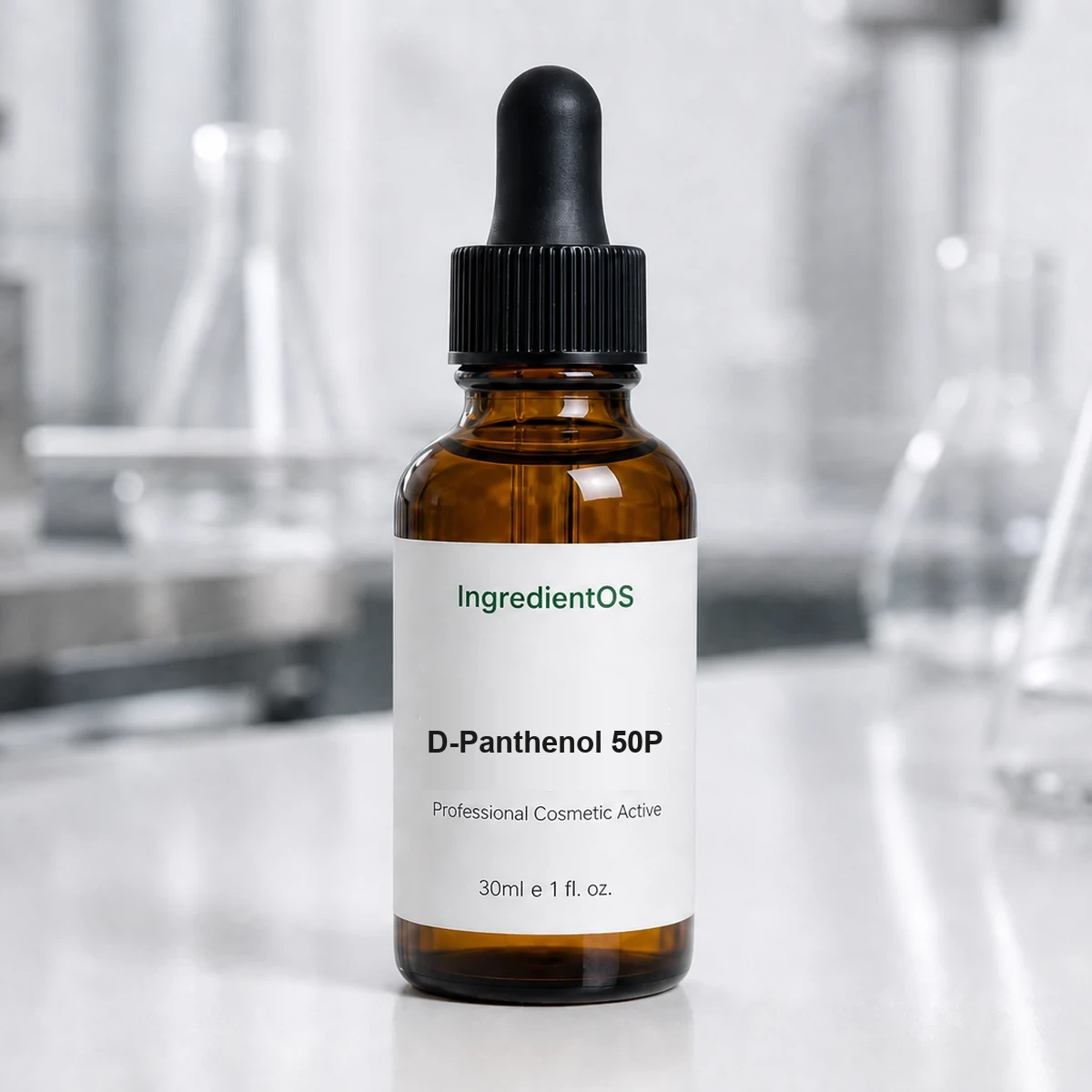
SKU: 750033
D-Panthenol 50P
$15.99In stock
Usage Rate: 3-6% of the finished formula
Packaging
Liquid sizes — 0.33 oz (10 mL) sample through bulk (US · metric)
Ships from FloridaSecure checkoutUsually ships in 1–2 business daysFree US shipping on $50+
AppearanceLiquid active concentrate
Description
D-Panthenol 50P at a glance
D-Panthenol 50P is a liquid form of provitamin B5 with the INCI Panthenol. Pure D-panthenol is an extremely thick, honey like liquid that is hard to pour and weigh. The 50P grade is a ready to use solution that pours easily and dissolves quickly in water, which makes it a practical choice for daily production. It is colorless to pale yellow with a mild characteristic odor and comes from Germany. The supplier recommends 3 to 6% of the finished product and asks that it is not heated above 50 °C.
What panthenol does
Panthenol is one of the most trusted ingredients in skin and hair care. On the skin it is converted to pantothenic acid, vitamin B5, a natural part of skin metabolism. It attracts and holds water, making skin feel softer, smoother and more supple. It supports the barrier and is famous for comfort: skin that feels tight, dry or stressed after sun, shaving or cold weather feels calmer and more comfortable. In hair, panthenol forms a film that holds moisture, adds shine and softness and gives a fuller feel to fine hair. In nails, it supports a smoother, more flexible look.
About the 50P grade
The name 50P points to the solution grade of this panthenol. When you calculate the amount of pure panthenol in a formula or on a claim, use the content stated on the certificate of analysis of the lot. The 3 to 6% dose recommended by the supplier refers to the 50P liquid.
How to formulate
Temperature
Panthenol is sensitive to long heating. Keep it at no more than 50 °C. In a hot process emulsion, add it at cool-down. In a cold gel or toner, add it directly to the water.
pH
Panthenol is most stable in a pH range of about 4 to 7.5, which covers nearly all skin and hair care. Avoid strongly acidic or alkaline products.
Partners
Panthenol works with almost everything. For comfort creams it combines well with allantoin and bisabolol. Our catalog also lists D-panthenol powder as a separate grade. More vitamins and comfort actives are listed in the cosmetic actives section.
Product ideas
Moisturizing creams and lotions, after-sun gels, aftershave balms, baby creams and diaper area creams, hand creams, lip balms with a water phase, shampoos, conditioners, leave-in sprays, hair masks and nail serums. Panthenol is also a standard ingredient in products for skin that feels dry and tight in winter.
Sample recipe: panthenol after-sun gel, 100 g
Distilled water 85.70 g, D-Panthenol 50P 6.00 g, glycerin 3.00 g, aloe vera juice 2.00 g, allantoin 0.20 g, hydroxyethylcellulose 1.00 g, preservative 1.00 g, fragrance 0.10 g, citric acid solution 1.00 g. Dissolve allantoin in warm water, cool, disperse the cellulose, add glycerin, aloe, panthenol, preservative and fragrance below 40 °C, and adjust to about pH 5.5.
Labeling and claims
On the ingredient list it appears simply as Panthenol. Consumers know it as provitamin B5, and claims such as soothing feel, deep hydration, softer skin and shinier, softer hair are easy to support with simple sensory panels.
Hair care focus
Panthenol is one of the few actives that shows a clear effect in rinse-off hair products. In shampoos and conditioners at 3 to 5% it leaves a moisture holding film on the hair that survives rinsing. Leave-in sprays and masks give an even stronger effect, with more shine, easier combing and a fuller feel. For fine hair, choose a light leave-in spray with panthenol rather than a heavy mask.
Baby and sensitive care
Panthenol is gentle and well tolerated, which is why it is a standard ingredient in baby creams, diaper area creams and products for sensitive skin. Keep such formulas short and fragrance free.
Storage
Store in a cool, dark place in a tightly closed container. A certificate of analysis comes with every lot.
Product Specifications
Usage Rate3-6% of the finished formula
SolubilityWater-soluble
StorageStore tightly closed in a cool, dry place away from light and heat. Refrigerate opened material where practical; respect supplier shelf life.
TDS / CoA available on request. Contact us
Frequently Asked Questions
What is the INCI of D-Panthenol 50P?
Panthenol.
How much should I use?
3 to 6% of the finished product.
Can I heat it?
Heat it to no more than 50 °C. Add it to the water phase at cool-down in hot process emulsions.


