GHK-Cu
$19.99
SKU: M10001
Pack size: 0.17 oz sample (imported 5 g)
INCI: Copper Tripeptide-1 (commonly supplied as Water (Aqua), Copper Tripeptide-1; confirm full INCI and active % on supplier CoA).
Usage Rate: Typical: 1–4% of the supplied solution in leave-on serums and creams (follow supplier active %, commonly delivering ~0.05–0.2% GHK-Cu). Begin at the recommended level and adjust.
Liquid sizes (US · metric)
Pricing available on request — wholesale quotes by packaging size.
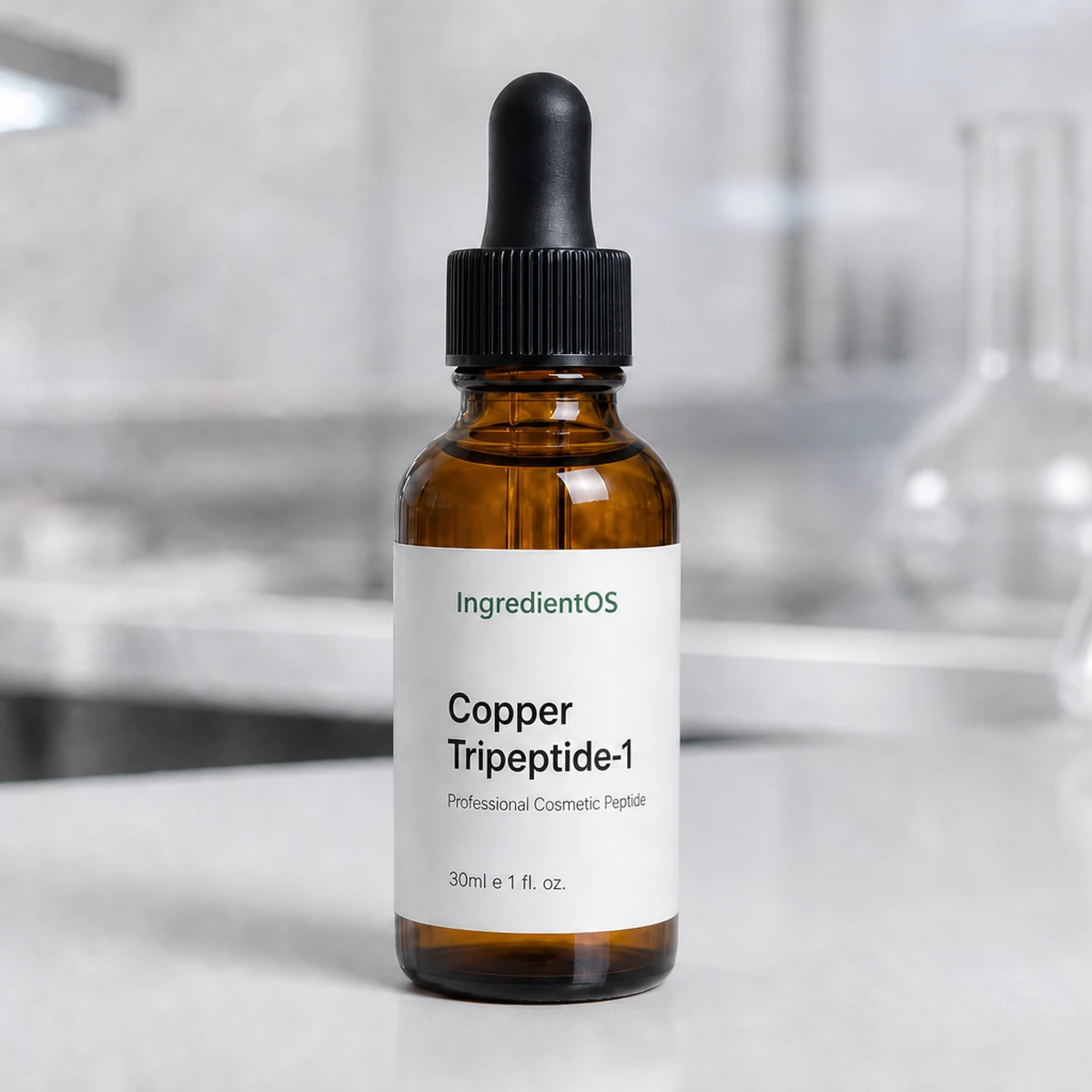
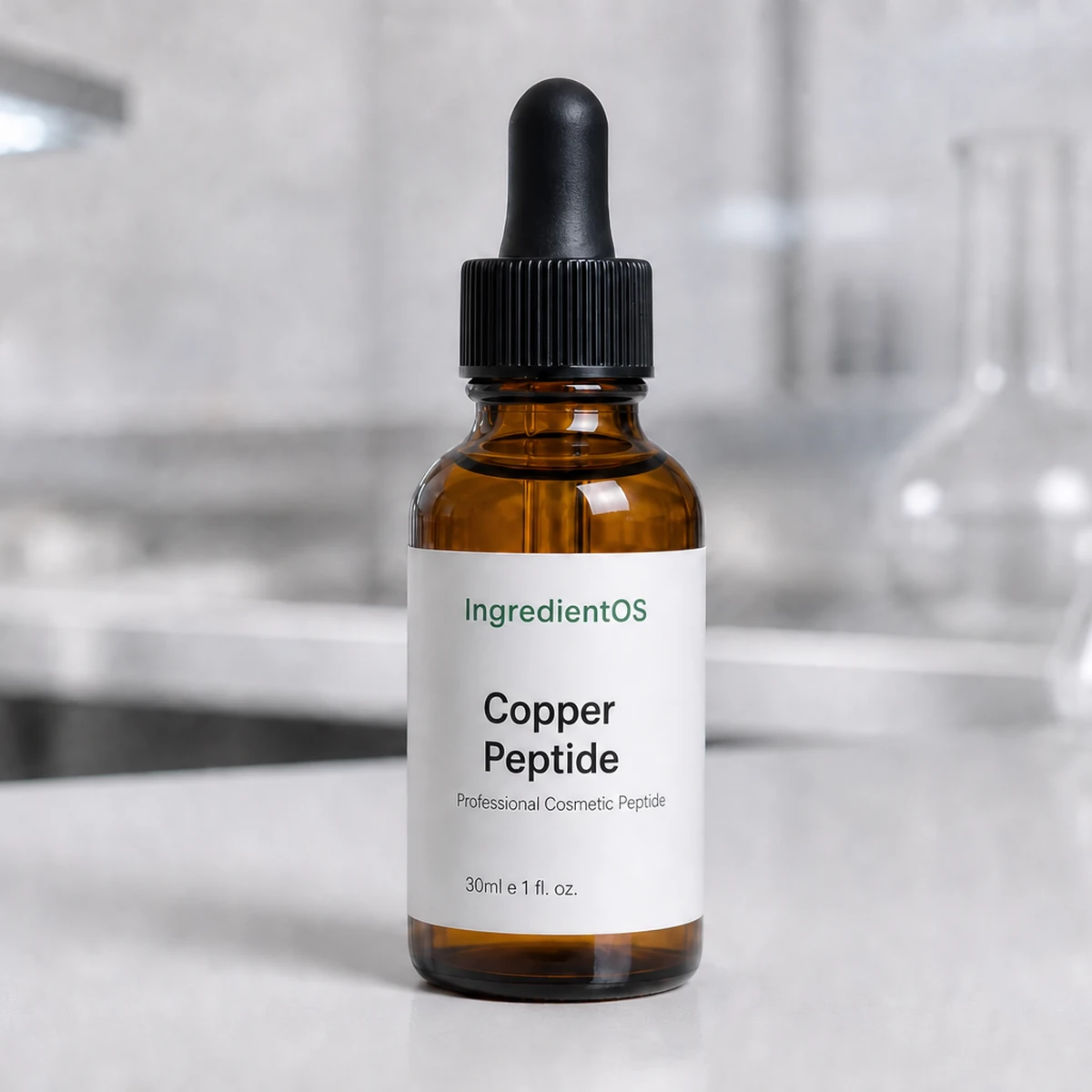
Copper Peptide is one of the most celebrated and scientifically studied actives in all of skincare, referring to the copper-bound tripeptide complex GHK-Cu (Copper Tripeptide-1). It is a naturally occurring molecule — a chain of three amino acids (glycyl-L-histidyl-L-lysine) complexed with a copper ion — that the human body produces and that plays a central role in tissue remodeling, wound healing, and skin renewal. First discovered in human plasma and later found to decline significantly with age, GHK-Cu has become a cornerstone of "skin repair," "regeneration," and "anti-aging" cosmetic positioning, backed by an unusually deep body of research.
The biology of GHK-Cu is remarkable in its breadth. As a copper-carrying peptide, it delivers copper — an essential cofactor for key skin enzymes — directly to cells in a bioavailable form. It has been shown in research to support the synthesis of collagen and elastin, to influence the production of glycosaminoglycans (such as hyaluronic acid and dermatan sulfate) that keep skin hydrated and plump, and to modulate the activity of enzymes involved in both building and remodeling the dermal matrix. It also has antioxidant and anti-inflammatory associations and has been studied for its role in supporting the skin's natural repair and renewal processes. The net effect is a peptide with a genuinely multi-functional, "regenerative" profile: it supports firmness, density, smoothness, wound and barrier repair, and overall skin quality.
For consumers, this translates into one of the most compelling anti-aging stories available: firmer, more resilient skin; improved smoothness and reduced appearance of fine lines; better-looking skin density and texture; and support for the skin's own repair after stress, irritation, or procedures. Copper peptides are especially valued in "repair" and "recovery" positioning — post-procedure, post-sun, and barrier-recovery products — as well as in premium anti-aging serums and creams. The distinctive blue color of copper peptide solutions also serves as an instantly recognizable visual cue that signals "copper peptide" to informed consumers, reinforcing the product's premium, science-forward identity.
This particular Copper Peptide is supplied as a slightly dense, transparent (characteristically blue) liquid, making it convenient to dose and incorporate. For formulators, GHK-Cu is water-soluble and added to the water phase, ideally during the cool-down stage to protect the peptide from heat. Crucially, copper peptides require thoughtful formulation: the copper-peptide bond and copper's reactivity mean GHK-Cu should be kept away from strong chelators (which can strip the copper), from high concentrations of pure vitamin C (ascorbic acid), and from ingredients like strong reducing agents or certain sulfur compounds and high levels of direct acids that can disrupt the complex or be destabilized by copper. It performs best at a mild, appropriate pH and benefits from being formulated as the star of its own product or paired only with compatible actives. Robust preservation is essential, and the regenerative benefit is cumulative, so leave-on formats are required.
In terms of compatibility, Copper Peptide pairs beautifully with hyaluronic acid and other humectants, with soothing and barrier-supporting ingredients (panthenol, ceramides, centella), and with gentle hydrating systems that complement its repair narrative. It is generally best to avoid combining it in the same formula with high-dose vitamin C, strong acids (AHAs/BHAs at low pH), and retinoids at high strength — not because it is unsafe, but because these can compromise the copper complex or create instability; many brands instead position copper peptides for "AM repair" or "PM recovery" steps used separately from acid/vitamin C steps. It is non-irritating and suitable for sensitive and compromised skin, which is part of its appeal for recovery-focused products.
The consumer benefits are powerful and premium: firmer, denser, smoother, more resilient skin; visible support for repair and renewal; improved overall skin quality and tone; and a recognizable, research-backed "copper peptide" story. For a launch collection, Copper Peptide (GHK-Cu) is a flagship anti-aging and repair hero — arguably one of the most credible and sought-after actives a brand can feature. It can anchor a premium repair serum, a recovery treatment, or a high-end anti-aging cream, and its strong recognition and visual signature make it a natural centerpiece for the range.
The formulation disciplines are specific but manageable: dose to the supplier-recommended level, add to the water phase during cool-down, maintain an appropriate pH, avoid chelators and incompatible actives (high-dose vitamin C, strong acids), and preserve robustly. Handled correctly, Copper Peptide (GHK-Cu) delivers a uniquely broad, research-supported regenerative benefit — a truly flagship hero for premium anti-aging and repair launches.
It is the copper-bound tripeptide GHK-Cu (Copper Tripeptide-1), a research-backed active for repair and renewal.
The copper ion gives copper-peptide solutions their characteristic blue color.
It is best kept separate from high-dose vitamin C and strong acids, which can destabilize the copper complex.
It supports collagen, elastin, and GAG synthesis for firmer, smoother, more resilient, better-repaired skin.
Yes — its repair and soothing profile makes it popular in recovery and post-procedure products.