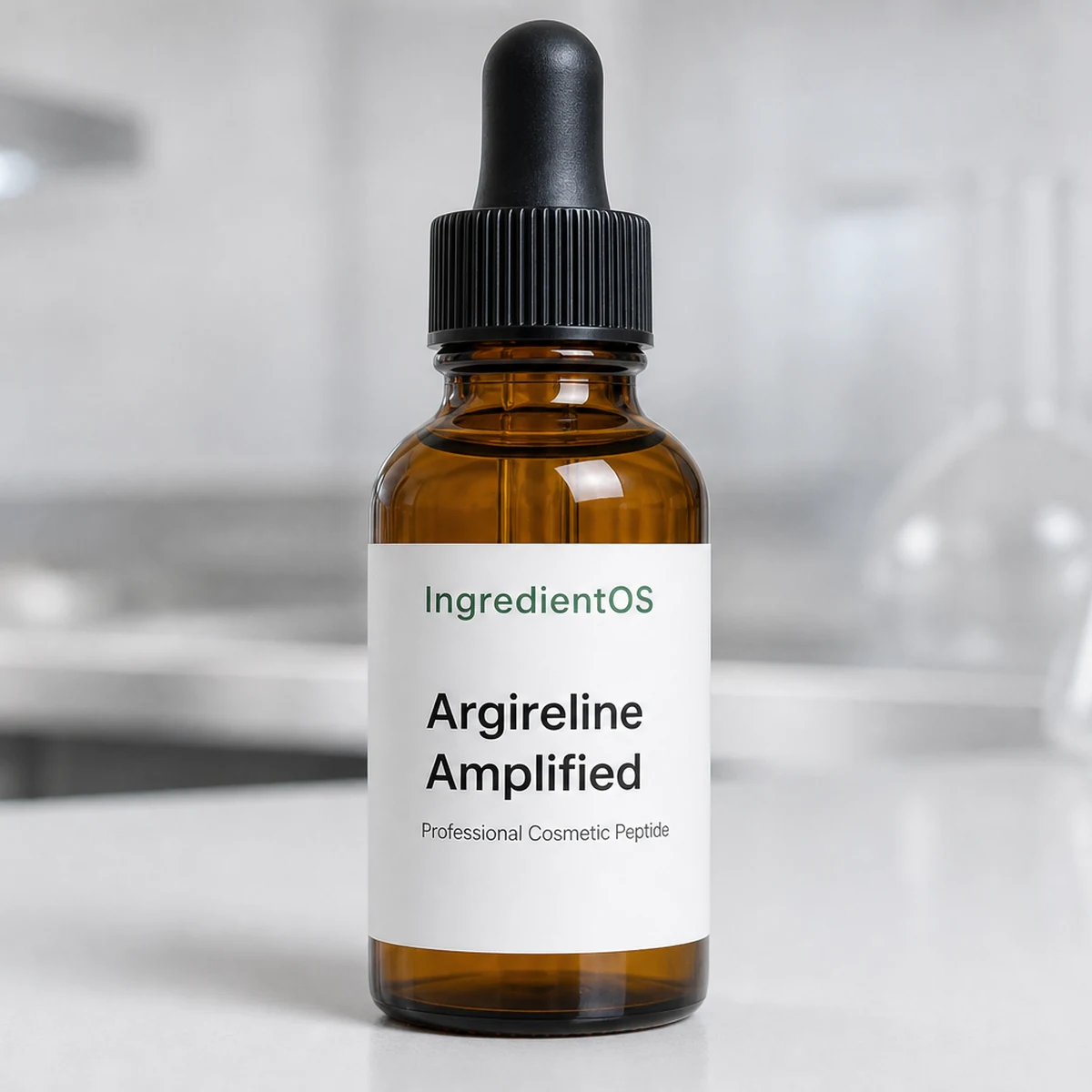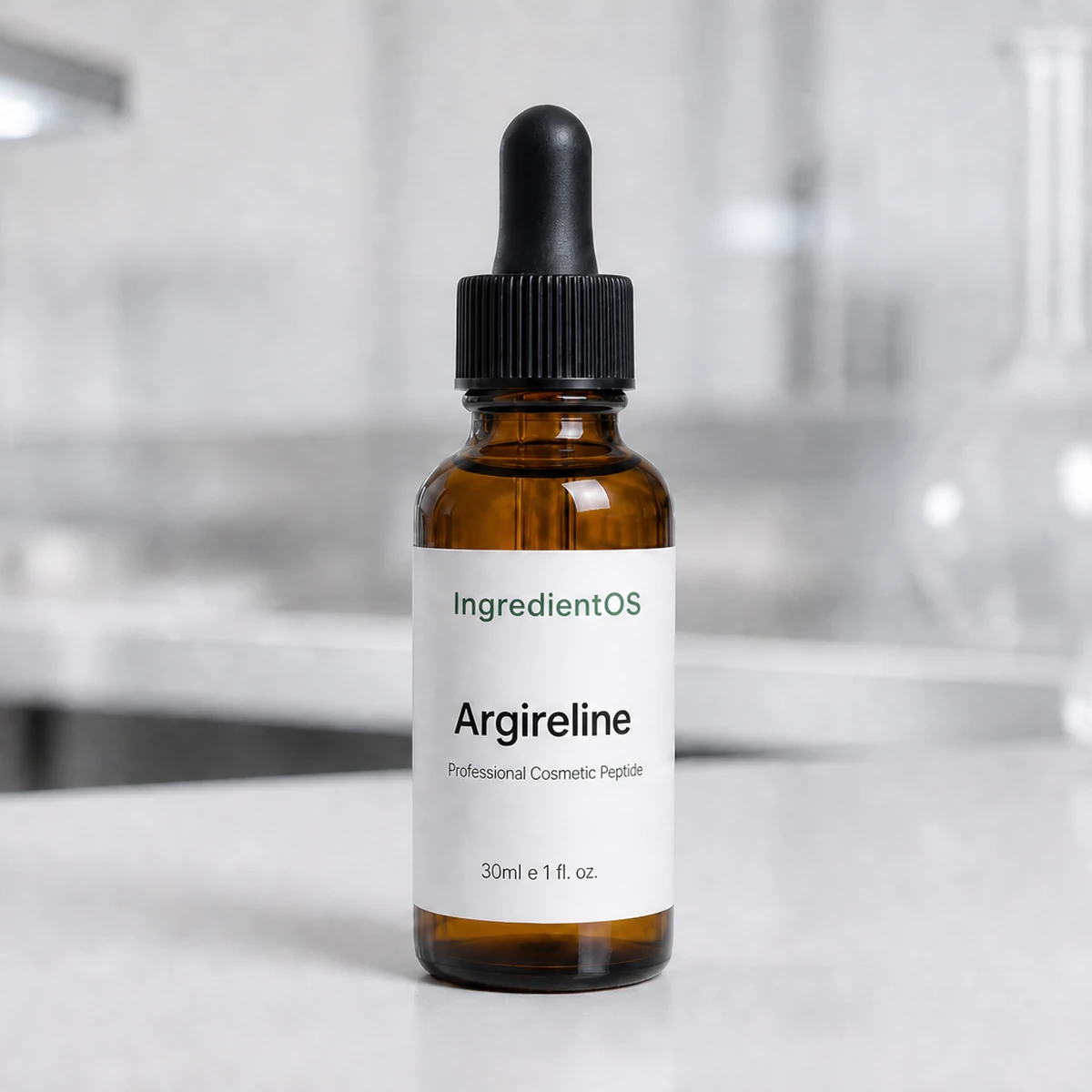
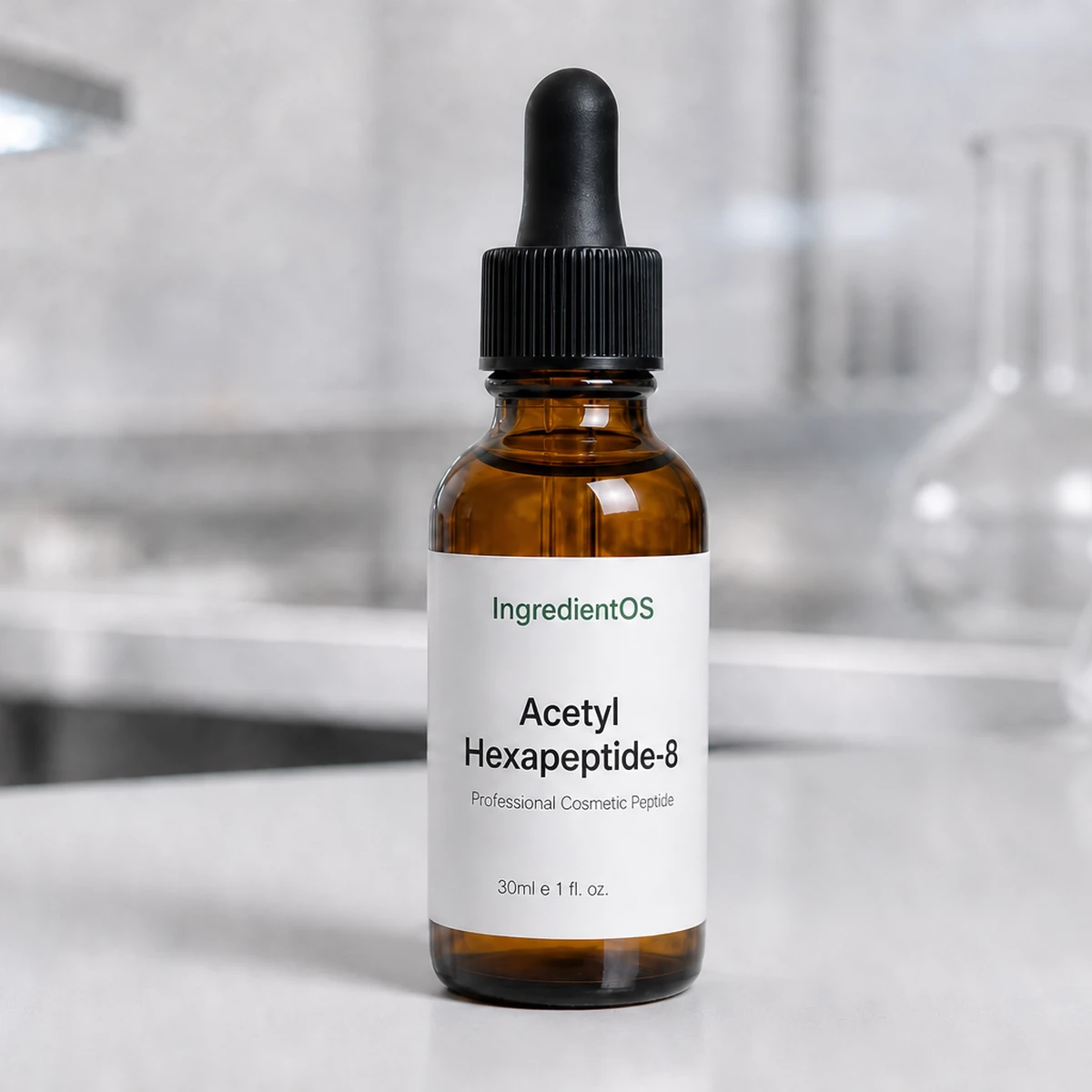
Argireline
$19.99
SKU: VV26050703
Pack size: 0.33 oz sample (imported 10 ml)
INCI: Acetyl Hexapeptide-8 (commonly supplied as Water (Aqua) (and) Acetyl Hexapeptide-8, optionally with a preservative such as Sodium Benzoate / Phenoxyethanol).
Usage Rate: Typical: 3–10% of a standardized active solution in leave-on serums (follow supplier active %); for powder, dose to the supplier-recommended active level. Begin at the studied use level and adjust.
Liquid sizes (US · metric)
Pricing available on request — wholesale quotes by packaging size.
Acetyl Hexapeptide-8 is one of the most recognized anti-aging peptides in modern cosmetic chemistry and the active behind the well-known trade name Argireline. It is a synthetic chain of six amino acids (acetylated at the N-terminus for stability) developed to soften the appearance of expression lines — the dynamic wrinkles that form from repeated facial movements such as frowning, squinting, and raising the brows. Because of its mechanism, it is frequently described in consumer marketing as a "topical alternative to neurotoxin injections," and it has become a cornerstone ingredient in the "needle-free" anti-wrinkle category.
The peptide's proposed mechanism is rooted in the biology of muscle contraction. Facial muscles contract when nerve endings release the neurotransmitter acetylcholine across the neuromuscular junction; this release depends on a protein complex known as the SNARE complex, of which SNAP-25 is a key component. Acetyl Hexapeptide-8 is modeled on the N-terminal end of SNAP-25 and is thought to gently and reversibly modulate the formation of this complex, mildly reducing the intensity of muscle contraction at the surface. The practical, visible consequence is that the skin over highly mobile areas — forehead, glabella (the "11" lines between the brows), and the crow's-feet around the eyes — appears smoother, with expression lines looking softened over time. Importantly, this is a cosmetic, surface-level smoothing effect and is fully reversible, not a medical paralysis of muscle.
For consumers, the appeal is straightforward: a topical, non-invasive way to reduce the look of fine dynamic lines with continued use, typically described over a course of several weeks of twice-daily application. Clinical-style testing reported in the supplier and peer literature has associated regular use with measurable reductions in wrinkle depth in treated areas. Because the effect builds gradually and depends on consistent use, Acetyl Hexapeptide-8 lends itself well to "treatment serum" and "eye serum" positioning, where a daily ritual and a multi-week results story are part of the product narrative.
For formulators, Acetyl Hexapeptide-8 is highly practical. It is water-soluble and supplied either as a powder or, very commonly, as an aqueous solution (often around a standardized active concentration). It is added to the water phase, ideally during the cool-down stage of a formulation, because peptides can be sensitive to prolonged high heat. It performs best at a mildly acidic to near-neutral pH and should be protected from strong oxidizers and high electrolyte concentrations, which can compromise peptide stability and solution clarity. Its low color and clean solubility make it ideal for elegant, transparent serums, essences, and lightweight eye gels.
A major advantage of this peptide is its excellent tolerability. It is non-irritating, suitable for sensitive skin, and pairs well with virtually every other category of active. It is frequently combined with hyaluronic acid and other humectants for a "smooth-and-hydrate" claim, with niacinamide for barrier and tone support, with other peptides (such as Acetyl Octapeptide-3 or Acetyl Tetrapeptide-2) for multi-peptide "complex" serums, and with antioxidants for daytime protection narratives. Because it is so widely recognized by name, it also carries strong marketing equity: consumers actively search for "Argireline" and Acetyl Hexapeptide-8 by name, which supports both SEO discoverability and on-pack ingredient callouts.
In formulation, the most common pitfalls are over-heating (degrading the peptide), pairing with incompatible high-ionic-strength systems, and under-dosing relative to the studied use levels. Formulators should respect the supplier's recommended active concentration, build in robust preservation, and avoid extreme pH. The ingredient is leave-on by design; it has little relevance in rinse-off formats where contact time is too short to deliver its cumulative benefit.
Positioned within a launch collection, Acetyl Hexapeptide-8 is a natural "hero" for an anti-wrinkle or "expression-line" serum and a compelling component of a peptide-eye treatment. It offers a clear, easily communicated benefit (softer-looking expression lines), an excellent safety and tolerability profile, broad formulation compatibility, and one of the strongest brand-recognition footprints of any cosmetic peptide. Whether featured as a standalone star active or as the headline peptide in a multi-peptide complex, it provides a credible, search-friendly, and consumer-trusted anti-aging story.
Yes — Argireline is the best-known trade name for the peptide Acetyl Hexapeptide-8.
It is thought to gently and reversibly soften surface muscle contraction, reducing the appearance of expression lines over time.
No — it is a cosmetic, reversible, surface-level smoothing active, not a medical treatment.
Typically several weeks of consistent twice-daily use; benefits are cumulative.
Yes — it is commonly paired with HA, niacinamide, and complementary peptides.